
Explore our core manufacturing technological capabilities spanning Sintered Gears, MIM Complex Geometries, and High-Precision Automotive Components designed for Tier-1 suppliers worldwide.





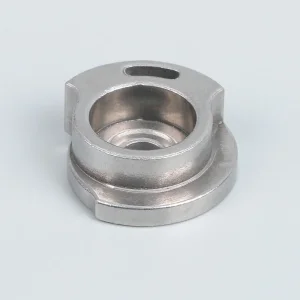


In modern automotive safety architecture, the Anti-Lock Braking System (ABS), Electronic Stability Control (ESC), and Traction Control System (TCS) rely fundamentally on precise, real-time angular velocity feedback from the vehicle's wheel hubs. At the core of this telemetry loop is the Automotive Wheel Hub ABS Ring (also designated as an ABS Reluctor Ring, Tone Wheel, or Magnetic Pulse Ring). As Tier-1 global automotive manufacturers scale production toward electric vehicles (EVs) and autonomous drive-by-wire platforms, sourcing requirements for these components have escalated from basic dimensional compliance to stringent metallurgical, magnetic, and environmental performance benchmarks.
Global procurement teams across North America, Europe, and Asia-Pacific are shifting away from traditional low-volume stamping and labor-intensive CNC machining toward mass-scale Powder Metallurgy (PM) and Metal Injection Molding (MIM) solutions. The demand is driven by three macro-economic and engineering imperatives:
Safety-critical automotive components demand PPM defect rates nearing zero. Automated optical inspection (AOI) and 100% magnetic pole pitch testing ensure flawless signal delivery to wheel speed sensors (WSS).
Near-net-shape PM and MIM processes eliminate material waste, scrap rates, and secondary gear-hobbing cycles, lowering landed unit cost by 30% to 50% relative to conventional subtractive machining.
Operating near wheel hubs exposes ABS rings to thermal shocks (-40°C to +150°C), road salt, brake dust, and moisture. Advanced zinc-nickel plating and e-coating provide up to 720 hours of salt spray resistance.
Selecting the appropriate manufacturing route for automotive wheel hub ABS rings is a pivotal strategic decision for automotive design engineers and procurement officers. The geometry of an ABS ring typically features a multi-toothed profile (passively inducing magnetic pulse changes in Hall-effect or VR sensors) or a smooth elastomeric metal ring bonded with a multipole magnetic rubber matrix (active magnetic encoder rings).
| Evaluation Parameter | Powder Metallurgy (PM Sintering) | Metal Injection Molding (MIM) | Stamping / Fine Blanking | CNC Turning & Milling |
|---|---|---|---|---|
| Geometric Complexity | High (2.5D stepped profiles & teeth) | Extreme (3D undercuts, micro-teeth) | Low to Medium (Flat sheet profiles) | Medium (Tool accessibility bound) |
| Dimensional Tolerance | ISO IT-8 to IT-7 (Tight & repeatable) | ISO IT-7 to IT-6 (Ultra-high precision) | ISO IT-10 to IT-9 (Prone to springback) | ISO IT-6 (High cost per unit) |
| Material Utilization Rate | 95% – 98% (Near-net shape) | 98% – 100% (Reclaimable feedstock) | 60% – 75% (High sheet metal scrap) | 30% – 50% (Heavy chip loss) |
| Magnetic Property Uniformity | Excellent (Isotropic density spread) | Superior (High sintered density >97%) | Moderate (Grain directionality bias) | Good (Depends on raw bar stock) |
| Mass Production Unit Cost | Lowest (Ideal for >10,000 pcs) | Very Low (Ideal for complex micro-rings) | Low (High initial die wear) | Prohibitively High at Scale |
Engineering Insight (Information Gain): While fine blanking/stamping historically dominated budget passenger car ABS rings, modern high-speed vehicles require significantly narrower pitch error allowances and concentricity runouts under 0.03 mm. Stamped sheet metal rings suffer from residual stress distortion during heat treatment and press operations, leading to signal jitter. In contrast, Powder Metallurgy Sintering and MIM form isotropic metallic bonds with uniform density distribution (ranging from 6.8 g/cm³ to 7.5 g/cm³), completely eliminating micro-vibrational signal noise in active wheel speed sensors.
As a premier OEM manufacturer of ABS reluctor rings and sintered structural components, our metallurgical roadmap integrates proprietary powder formulations aligned with international standards including MPIF Standard 35, DIN 3977, and ISO 5755.
We utilize high-compressibility atomized iron powders alloyed with Nickel (1.5% - 4.0%), Copper (1.0% - 3.0%), and Molybdenum (0.5% - 1.5%) (e.g., F-0008, FN-0208, and FD-0405 grades). Sinter-hardening in continuous mesh-belt atmosphere furnaces yields tensile strengths exceeding 750 MPa and apparent hardness up to HRB 85-95 without requiring post-sintering quench distortion risk.
Passive ABS rings rely on high magnetic permeability ($\mu_r$) to maximize magnetic flux disturbance when teeth pass the sensor head. Our controlled dewaxing and high-temperature sintering ($1120^\circ\text{C} - 1250^\circ\text{C}$) under endothermic or synthetic hydrogen-nitrogen atmospheres ensure minimal interstitial carbon contamination, maximizing soft magnetic response.
Wheel hub assemblies reside in aggressive environments. We apply multi-layer corrosion defense:
- Zinc-Nickel Plating (Zn-Ni 12-15%): Exceeds 720 hours neutral salt spray testing (ASTM B117).
- Cathodic Electro-Coating (E-Coat): Provides uniform film thickness (15-25 $\mu\text{m}$) over complex tooth valleys.
- Steam Blacking (Fe3O4 Conversion): Seals microporosity with a hard magnetite layer.
The rapid transition to Electric Vehicles (EVs) and Level 3+ Autonomous Driving systems is redefining the functional requirements of wheel speed feedback mechanisms. Unlike internal combustion engine (ICE) vehicles, electric vehicles feature instant torque delivery and regenerative braking systems that demand ultra-fast sensor response cycles.
EV traction control systems require up to 96 or 128 pulse poles per wheel revolution (compared to 48-60 teeth on legacy ICE rings). Achieving this high spatial frequency requires micro-MIM injection moulding capabilities capable of shaping pitch widths as narrow as 0.8 mm without tooth deflection.
Modern wheel hub units (Gen 3 Hub Bearings) integrate the ABS target ring directly into the bearing seal cassette. Our engineering team co-develops low-profile, high-adhesion metal rings designed for overmolding with elastomeric magnetic compounds (HNBR/FKM filled with strontium ferrite particles).
High-voltage EV architectures generate intense electromagnetic interference (EMI). Our powder metal formulations incorporate soft magnetic alloys with high saturation induction ($B_s$) to preserve signal-to-noise ratios (SNR) against high-power inverter noise.
Ningbo Jiehuang Chiyang Electronic Tech Co., Ltd. operates in strict alignment with international automotive quality standards. Our OEM manufacturing facility leverages robust quality control framework protocols to guarantee zero-defect shipments across international borders.
Audited and certified automotive quality management system governing all tooling, pressing, sintering, and secondary operations.
Complete Production Part Approval Process deliverables including FMEA, Control Plans, MSA studies, and dimensional CMM reports.
Non-destructive electromagnetic testing to detect surface cracks, internal micro-porosity pockets, and density anomalies automatically.
Flexible VMI (Vendor Managed Inventory), consignment stocking, and DDP shipping options serving Tier-1 assembly plants globally.
Direct answers to the most common engineering and commercial inquiries submitted by OEM buyers and procurement managers.
Discover our extended line of precision hardware, custom auto spare parts, medical MIM components, and sintered ceramic assemblies.





Accelerate Your Automotive OEM Project Today
Send us your 2D/3D CAD models (PDF, STEP, IGES) for a complete DFM analysis, material evaluation, and transparent quotation within 48 hours.