
Featured Precision Automotive & Hardware Components
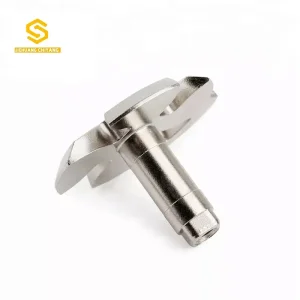
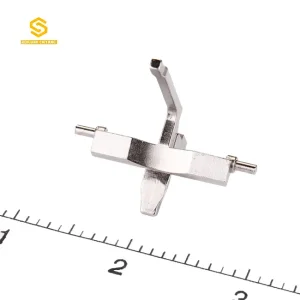
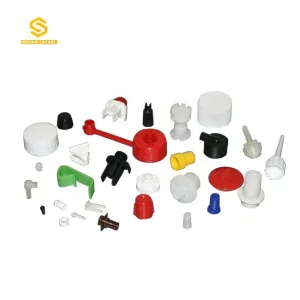
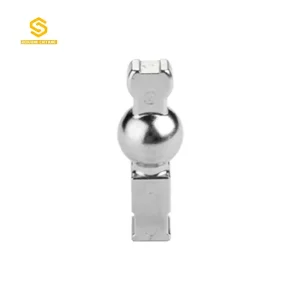
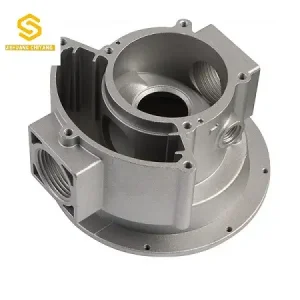
Explore our primary tier of engineered components. Designed for demanding automotive, mechanical, and industrial assemblies, these parts leverage state-of-the-art Metal Injection Molding (MIM), Sintered Powder Metallurgy (PM), and Precision Die Casting to achieve near-net-shape accuracy and superior fatigue strength.
Global Commercial & Industrial Status of Wiper Linkage Bushings
In the automotive sector, windshield wiper mechanisms represent a critical safety system. The wiper linkage bushing serves as the pivotal bearing connection point between the wiper motor crank arm, drive links, and pivot shafts. Despite its compact physical footprint, the performance of this elastomeric or metallic-polymer bushing directly dictates wiper system articulation accuracy, noise generation, dynamic chatter, and overall system longevity.
Market Growth & CAGR Trends
Driven by rising worldwide vehicle production—exceeding 90 million units annually—and stringent active safety regulations (such as Euro NCAP and US FMVSS 104 standards), the global automotive wiper system market is projected to reach USD 11.8 Billion by 2030. Sourcing demand for high-durability replacement and OEM linkages is shifting rapidly toward precision engineered polymer and sintered self-lubricating bushings.
Extreme Operating Environment Stressors
Wiper linkage bushings endure severe environmental degradation. They must withstand operational temperature swings ranging from -40°C in Arctic climates to +85°C engine cowl temperatures, continuous UV exposure, ozone attack, road salt slurry corrosion, and up to 1.5 million wipe cycles over an OEM vehicle lifespan without excessive joint play or pop-off failure.
NVH (Noise, Vibration, Harshness) Demands
Modern Electric Vehicles (EVs) have eliminated internal combustion engine (ICE) masking noise. Consequently, mechanical squeaks, linkage binding, or radial play within the wiper cowl assembly become immediate passenger cabin quality complaints. Modern tier-1 suppliers demand zero-backlash, self-damping bushing designs.
Material Engineering Breakdown for Linkage Bushings
Selecting the optimal polymer matrix or metallic compound is fundamental to preventing premature wiper linkage dislodgement (pop-off) and joint wear. Automotive engineers typically evaluate four primary material pathways based on load vectoring, rotational velocity, and environment:
| Material Category | Tensile Strength (MPa) | Coeff. of Friction (µ) | Thermal Deflection (HDT @1.8MPa) | Primary Industrial Advantage |
|---|---|---|---|---|
| POM (Polyoxymethylene / Acetal) | 65 - 75 | 0.15 - 0.25 | 110°C - 136°C | High fatigue resistance, excellent dimensional stability, low moisture absorption. Standard OEM choice. |
| Nylon 66 (PA66 + 30% Glass Fiber) | 175 - 190 | 0.28 - 0.35 | 240°C - 250°C | Exceptional structural rigidity and impact resistance for heavy-duty commercial truck wiper arms. |
| PTFE-Filled PEEK Composite | 95 - 110 | 0.08 - 0.12 | 260°C - 300°C | Ultra-low friction, zero stick-slip effect, maintenance-free dry lubrication for luxury EV wiper systems. |
| Sintered Bronze / MIM Steel (PM) | 250 - 600 | 0.10 - 0.18 (Oil-Impregnated) | > 400°C | Heavy payload handling, extreme micro-yield resistance, superior torque transfer integrity for industrial buses. |
Tribological Self-Lubrication Mechanisms
Modern wholesale wiper linkage bushings engineered by leading Chinese suppliers incorporate micro-encapsulating lubricating additives directly within the polymer matrix. During initial wiper movement, solid lubricant particles (PTFE, MoS2, or silicone oil emulsion) bleed to the contact interface via shear force. This creates a durable transfer film over the metal ball-joint stud, maintaining a dynamic coefficient of friction below 0.12 µ without requiring external grease replenishment.
China's Manufacturing Efficiency & Cost Structure Supremacy
China’s automotive component manufacturing ecosystem—centered in industrial clusters such as Ningbo and Zhejiang—delivers unmatched competitive capabilities for tier-1 buyers and aftermarket global importers. Combining vertical metal-powder synthesis, multi-cavity precision tooling, and automated robotic assembly, Chinese factories offer distinct operational advantages:
30% to 50% Tooling & Unit Cost Efficiency
Through localized mold construction, high-speed CNC EDM machining, and consolidated raw material supply chains, tooling NRE (Non-Recurring Engineering) costs in Ningbo are up to 60% lower than European or North American counterparts. Production run unit prices routinely yield 30-50% net procurement savings.
Rapid DFM & Prototype Turnaround
Utilizing state-of-the-art Moldflow® simulation software alongside metal 3D printing (SLM) and rapid polymer tooling, top Chinese OEM suppliers provide comprehensive DFM (Design for Manufacturability) analysis within 48 hours and physical prototype samples within 7-10 business days.
End-to-End Quality Validation (PPAP Level 3)
Leading suppliers enforce full TS 16949 / IATF 16949 quality protocols. Sourcing partners receive comprehensive Production Part Approval Process (PPAP) documentation, including CMM dimensional inspection reports, IMDS material registration, gage R&R studies, and salt spray test certificates.
Targeted Application Scenarios Across Vehicle Platforms
Automotive wiper linkage bushings are not "one-size-fits-all." Mechanical load profile, articulation angle, push-rod speed, and space envelope dictate distinct design configurations across automotive segments:
1. Passenger Vehicles (Sedans, SUVs, Crossovers)
Requires lightweight, low-friction snap-on POM socket bushings. Designed for high-speed dual-blade tandem or opposed wiper arms. Focuses on silent articulation, low motor amp draw, and high push-out force retaining tolerances (typically > 350 N retention load).
2. Heavy Commercial Trucks & Transit Buses
Demands heavy-duty bronze-sleeved or MIM stainless steel hybrid linkage bushings. Must handle large wiper blade drag forces on vertical windshields under heavy snow loads, delivering push-out resistance exceeding 1,200 N and high torsional yield strength.
3. Rear Window Wiper Linkages & Tailgate Actuators
Compact space constraints requiring sub-miniature injection molded or MIM linkage joints. Exposed to aggressive rear-car aerodynamic vortex turbulence containing water spray, highway road dirt, and de-icing chemicals.
Industry Trends & Next-Gen Wiper Actuation Technologies
The automotive industry's transformation toward electrification and autonomous driving is fundamentally redefining wiper linkage engineering requirements. Key emerging trends include:
Acoustic Damping Polymer Formulations
With cabin noise levels dropping by up to 10 dB in electric vehicles, component vibration dampening is critical. Next-generation bushings integrate dual-durometer co-injected TPU/POM structures, absorbing mechanical harmonics before they resonate through the chassis bulkhead.
Autonomous LiDAR / Camera Wiper Integration
Level 3+ autonomous vehicles utilize dedicated micro-wiper linkages to clean optical sensors, cameras, and LiDAR glass. Bushings in these miniature linkages require extreme precision, zero hysteresis, and operation across tens of millions of rapid micro-wiping bursts.
Sustainable & Recycled Tribo-Polymers
Global OEMs are enforcing strict scope 3 carbon reduction targets. Wholesale factories are introducing bio-based polyamide matrices reinforced with sustainable mineral additives, maintaining ISO/IATF compliance while reducing product carbon footprint by up to 40%.
Global Enterprise Buyer Sourcing & Audit Checklist
When evaluating wholesale automotive wiper linkage bushing suppliers and factories in China, enterprise purchasing directors should audit suppliers against five technical milestones:
1. Retention & Pop-Off Load Verification
Ensure the supplier possesses calibrated tensile test fixtures. Bushings must be tested for axial pop-off force (retaining the linkage rod onto the ball stud under extreme load) both before and after environmental thermal aging.
2. In-House Mold Design & Tooling Shop
Direct factory suppliers should control mold tooling in-house. Check for hot-runner injection capabilities, multi-cavity balancing (e.g., 16 or 32 cavity tools), and automated optical sorting machines (AOI) to eliminate flash or short shots.
3. Material Traceability & RoHS/REACH Compliance
Request lot-specific raw material certifications (such as DuPont Delrin® or Celanese Hostaform® POM datasheets). Verify compliance with IMDS (International Material Data System), ELV, RoHS, and REACH directives.
Frequently Asked Questions (Q&A) for B2B Procurement
Find clear, engineering-grade answers to common questions regarding wiper linkage bushing manufacturing, tolerances, MOQs, and lead times.
Additional High-Precision Manufacturing Capabilities
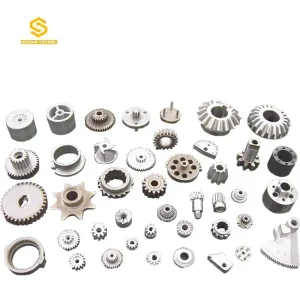
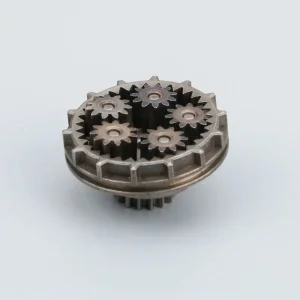
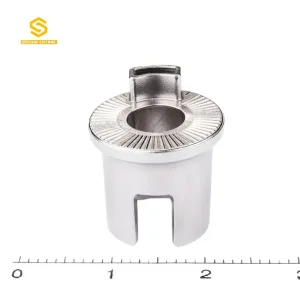
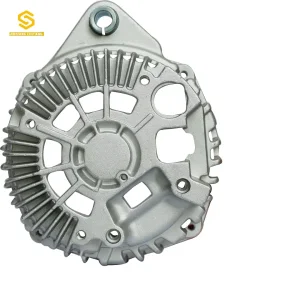
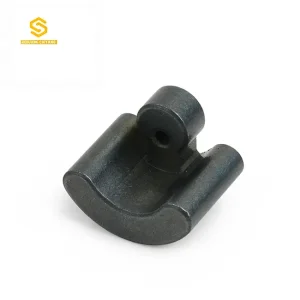
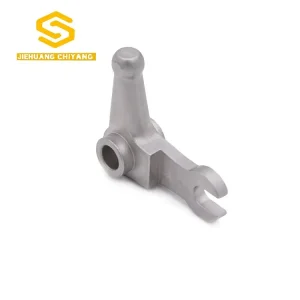
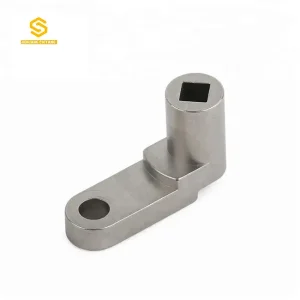
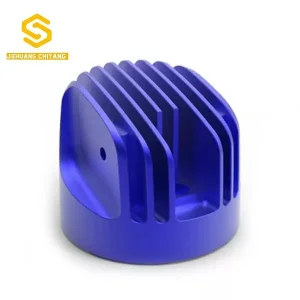
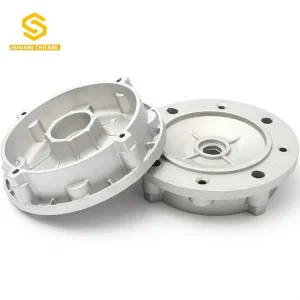
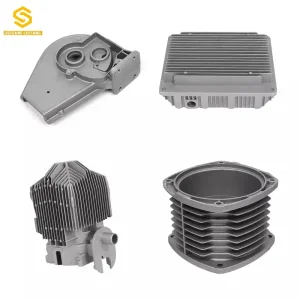
In addition to wiper linkage components, our automated factories produce a broad spectrum of high-density powder metallurgy assemblies, die-cast structural housings, and metal injection molded hardware engineered for heavy industrial and automotive sub-systems.
Optimize Your Automotive Component Supply Chain Today
Partner directly with a certified Chinese OEM manufacturing facility. Submit your 2D/3D CAD drawings (STEP, IGES, PDF) to receive a comprehensive DFM evaluation, mold flow analysis, and transparent volume quotation within 48 hours.
Request Engineering Consultation & Quote