
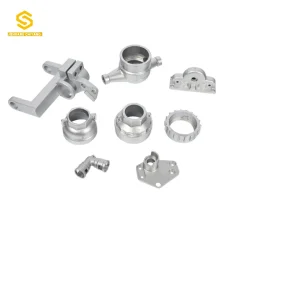
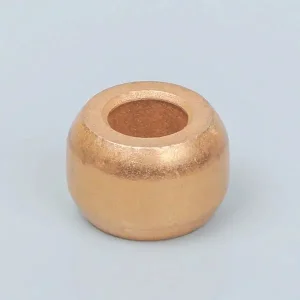
Precision OEM/ODM Component Portfolio (Batch 1)
Explore our high-precision sintered, MIM, and die-cast mechanical components designed for automotive, industrial machinery, and power tool applications.





Executive Summary: Navigating Modern Bevel Gear Manufacturing
In modern mechanical power transmission, bevel gears—including straight bevel, spiral bevel, zerol bevel, and hypoid configurations—serve as critical nodes for changing axis orientation and torque distribution. As global equipment design trends prioritize higher power density, lower noise-vibration-harshness (NVH) profiles, and compact geometric envelopes, procurement teams and design engineers face complex manufacturing decisions.
This technical whitepaper provides a comprehensive analysis of modern bevel gear manufacturing paradigms. We evaluate traditional 5-axis CNC gear cutting against advanced net-shape technologies, specifically Powder Metallurgy (PM) sintering and Metal Injection Molding (MIM). By addressing key engineering requirements such as AGMA/ISO precision classes, microstructural grain integrity, and dynamic loading limits, global original equipment manufacturers (OEMs) can optimize both cost efficiency and mechanical endurance across mass production cycles.
Core Technical Advantage: Utilizing Metal Injection Molding (MIM) and advanced Powder Metallurgy (PM) for bevel gear manufacturing reduces raw material waste by up to 60%, slashes machine cycle times, and provides precision tolerances compliant with AGMA Class 9/ISO Class 8 standards without requiring extensive secondary gear hobbing or shaping.
Metallurgical Deep-Dive: Manufacturing Methodologies Comparison
Choosing the correct production technology for wholesale bevel gears requires evaluating structural fatigue limits, tooth flank geometry accuracy, alloy flexibility, and production volume scaling. Below is a comparative engineering assessment of primary gear fabrication processes.
Metal Injection Molding (MIM)
Ideal For: Small, high-complexity straight and spiral bevel gears (< 150 grams) requiring complex internal bores, splines, or integrated multi-gear clusters.
MIM combines fine metal powders with a polymer binder matrix, injected into precision molds. Following debinding and high-temperature vacuum sintering, final densities reach 96%–99% of theoretical wrought density.
- Excellent tensile strength & surface finish
- Eliminates secondary gear tooth machining
- Supports 17-4PH, 316L, 8620, and 42CrMo4
Powder Metallurgy (PM Sintering)
Ideal For: Medium-to-large bevel gear sets produced at ultra-high volumes (50,000+ units) where unit price minimization is paramount.
Cold compaction of alloyed iron powders inside hardened carbide dies followed by continuous belt conveyor sintering. Secondary surface densification and case hardening deliver robust fatigue performance.
- Unmatched unit cost efficiency
- Self-lubricating porous matrix options
- Compliant with MPIF Standard 35
5-Axis CNC Milling / Gleason Hobbing
Ideal For: Custom, large-diameter bevel gears, low-volume prototypes, and ultra-high precision AGMA Class 12+ aerospace drive units.
Subtractive cutting from solid wrought bar stock or forged blanks. While offering high structural integrity, material utilization is significantly lower (up to 50% scrap rate) with higher per-unit machine time costs.
- Zero tooling mold investment required
- Maximum bending fatigue resistance
- Suitable for heavy industrial mining gearboxes
Technical Specification Comparison: MIM vs. Sintered PM vs. Machined Bevel Gears
| Engineering Metric | Metal Injection Molding (MIM) | Powder Metallurgy (PM) | Subtractive CNC Milling |
|---|---|---|---|
| Dimensional Tolerance | ±0.3% (Up to ±0.015 mm) | AGMA Class 7 - Class 9 | AGMA Class 10 - Class 13 |
| Material Density | 7.5 – 7.8 g/cm³ (>97%) | 6.8 – 7.4 g/cm³ (88-94%) | 7.85 g/cm³ (100% Wrought) |
| Surface Roughness ($Ra$) | 0.8 – 1.6 µm | 1.6 – 3.2 µm | 0.4 – 1.2 µm (Ground) |
| Tooth Profile Complexity | Extreme (Undercuts, Micro-gears) | Moderate (2.5D Straight Bevel) | High (Spiral / Hypoid Gear Flanks) |
| Production Volume Break-Even | > 2,000 pcs / Year | > 5,000 pcs / Year | 1 – 1,000 pcs / Year |
| Raw Material Utilization | ~95% Net-Shape | ~98% Net-Shape | 40% – 60% (High Scrap Rate) |
Global Enterprise Procurement Trends & Search Intent Analysis
Modern supply chain executives and technical sourcing leaders evaluate potential bevel gear manufacturers beyond initial unit pricing. The total cost of ownership (TCO), supplier risk mitigation, and Design-for-Manufacturability (DFM) technical support govern vendor qualification.
1. NVH & Contact Tooth Flank Optimization
Global buyers in the automotive EV steering and power tool sectors require bevel gears with minimal backlash and optimized flank contact patterns (tooth crown and end relief). Sintered and MIM processes allow precise micro-geometry replication without tool chatter marks, leading to significant reduction in high-frequency acoustic emissions.
2. Case Hardening & Surface Metallurgy Treatments
Raw gears often fail under severe fatigue without appropriate heat treatment. Leading wholesale manufacturers integrate continuous mesh belt carburizing, carbonitriding, plasma nitriding, and induction quenching to establish deep case depths (0.4–1.2 mm) with high core toughness (HRC 58-62 surface, HRC 30-40 core).
3. Comprehensive DFM Engineering Reviews
Successful sourcing hinges on early engineering engagement. OEMs seek manufacturing partners offering preliminary CAD simulation, mold filling analysis, shrinkage factor calculations, and prototype rapid sampling via metal 3D printing (DMLS) prior to hard tooling steel sign-off.
4. Supply Chain Transparency & Lead Time Security
Mitigating geopolitical and maritime logistics disruptions requires localized component staging, dual-sourcing options, clear raw material batch certification (RoHS, REACH, conflict-free minerals), and reliable IATF 16949 quality system compliance.
China Industry 4.0: Modernizing Precision Gear Supply Chains
The manufacturing ecosystem in Ningbo and Eastern China has evolved from high-volume standardized processing into a sophisticated, highly automated Industry 4.0 hub. Advanced precision gear facilities leverage digital control towers, automated closed-loop sintering furnaces, and direct port connectivity.
Automated Compacting & Molding
Deploying 1000-ton hydraulic CNC compaction presses and electric injection molding machines equipped with robotic pick-and-place arms ensures consistent green-part weight control within ±0.1% tolerances.
Smart Atmosphere Vacuum Sintering
Continuous monitoring of hydrogen-nitrogen protective atmospheres and multi-zone heating profiles prevents decarburization, residual stress formation, and dimensional distortion on complex bevel gear pitch cones.
In-line 100% CMM & Optical Inspection
Integrated Zeiss Coordinate Measuring Machines (CMM) and Gleason Gear Measurement Systems automatically verify pitch error, tooth runout, and flank topography against CAD models in real time.
Localized Application Scenarios: Where Precision Bevel Gears Drive Performance
Precision bevel gear sets engineered via powder metallurgy and MIM are installed across a diverse array of demanding mechanical ecosystems globally.
Automotive Differentials & Actuators
Spiral and straight bevel differential side gears, seat recliners, electronic parking brake (EPB) gearboxes, and power tailgate drives requiring high surface durability under shock loads.
Industrial Power Tools & Angle Grinders
90-degree right-angle transmission bevel gear pairs operating at high RPMs (>10,000 RPM). Powder metallurgy gears offer embedded lubrication pores for lower heat generation and extended service life.
Robotic Actuators & Medical Devices
Micro bevel gears integrated into robotic joint drive modules, surgical articulation instruments, and industrial automation grippers, benefiting from MIM's complex net-shape capability.
Frequently Asked Questions (FAQ) for Technical Sourcing
Key engineering and procurement insights for high-volume wholesale bevel gear orders.
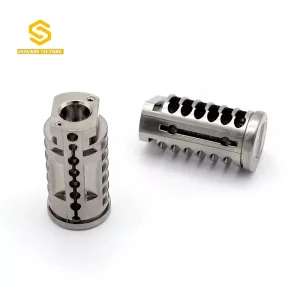
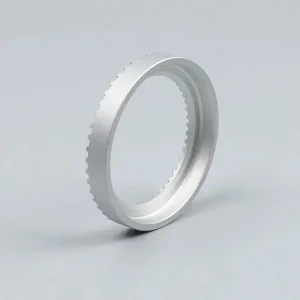
Precision OEM/ODM Component Portfolio (Batch 2)
Explore additional metal injection molded, die-cast, and sintered structural components from our accredited Ningbo manufacturing facilities.




Partner with an IATF 16949 Certified Precision Manufacturer
Optimize your bevel gear manufacturing costs with comprehensive DFM feedback and fast 48-hour engineering quotes.