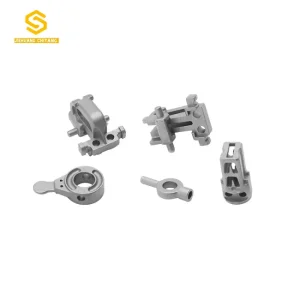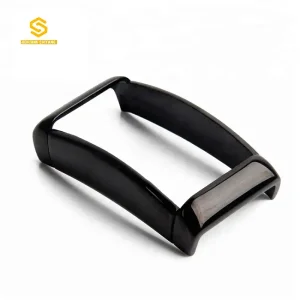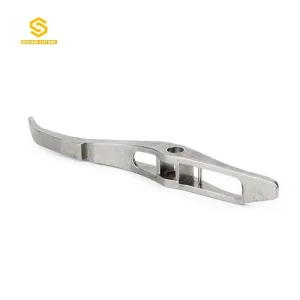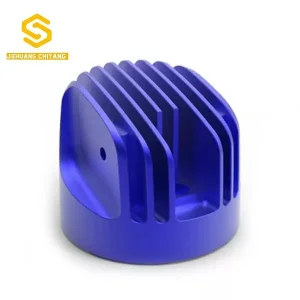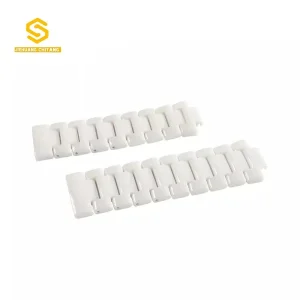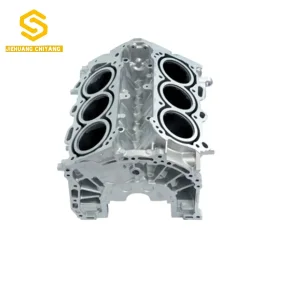
Primary Industrial Components & Wholesale Gear Solutions
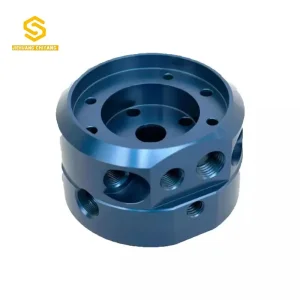
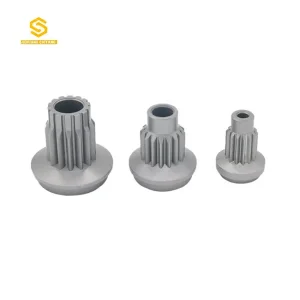
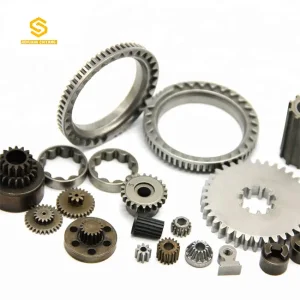
Explore our flagship OEM products, engineered via precision Powder Metallurgy (PM), Metal Injection Molding (MIM), High-Pressure Die Casting, and 5-Axis CNC Machining. Designed for high torque, low noise, and strict dimensional tolerances.
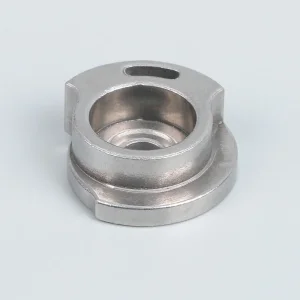
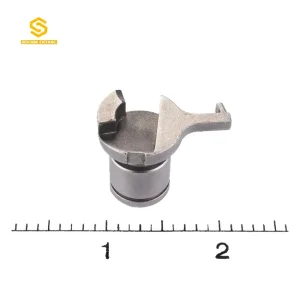
Executive Summary: The Evolution of Wholesale Bevel Gear Manufacturing
In modern mechanical power transmission, bevel gears serve as the indispensable core for intersecting shaft motion, transferring high torque at 90-degree angles (or customized angular offsets). As global OEM industries transition toward higher energy efficiency, compact powertrain envelopes, and reduced Noise, Vibration, and Harshness (NVH) profiles, the demand placed upon a premier wholesale bevel gears manufacturers supplier & factory has undergone a seismic shift.
Traditional gear subtractive manufacturing—dominated purely by hobbing, shaping, and extensive CNC 5-axis gear cutting—is increasingly augmented and transformed by advanced net-shape technologies. As a leading manufacturer, Ningbo Jiehuang Chiyang Electronic Tech Co., Ltd. (JHMIM) integrates Powder Metallurgy (PM), Metal Injection Molding (MIM), high-precision forging, and automated gear grinding into unified macro-industrial solutions. This whitepaper analyzes modern bevel gear engineering parameters, global procurement shifts, metallurgical material selection, and future manufacturing roadmaps for tier-1 industrial buyers.
Bevel Gear Taxonomy & Micro-Topology Selection
When global procurement officers search for a wholesale bevel gear supplier, selecting the proper gear tooth geometry is paramount to balancing dynamic performance with unit economics. Bevel gears are categorized into distinct structural topographies based on the curvature of the tooth trace:
Straight Bevel Gears
Featuring straight tooth lines that converge at the pitch cone apex, straight bevel gears represent the most economical design for low-speed and medium-load applications. They are ideal for powder metallurgy compaction and precision drop forging.
Spiral Bevel Gears
Designed with curved gear teeth set at an angle to the shaft axis, spiral bevel gears provide continuous, gradual tooth contact. This profile significantly reduces operating vibration and acoustic signature under heavy rotational torque.
Hypoid Bevel Gears
Resembling spiral bevel gears, hypoid gears feature non-intersecting offset axes. This allows for larger pinion diameters, providing maximum tooth engagement strength for automotive differentials and heavy machinery drives.
Zerol Bevel Gears
Zerol gears feature curved teeth but maintain a zero spiral angle. They combine the low-thrust force characteristics of straight bevel gears with the smooth operation and localized contact pattern of spiral geometries.
Global Bevel Gear Manufacturing Trends & OEM Sourcing Needs
The global gear market, projected to reach over USD 35 Billion by 2030, is experiencing structural changes driven by electrification, industrial automation, and smart manufacturing. Enterprise procurement officers are shifting away from traditional gear machine shops toward fully integrated wholesale manufacturing factories capable of delivering complex engineering solutions.
1. Shift Toward Near-Net-Shape Powder Metal (PM & MIM)
Traditional gear cutting involves high material waste (chip generation) and multi-step CNC grinding operations. Modern OEM procurement departments favor suppliers offering Sintered Powder Metallurgy and Metal Injection Molding. Near-net-shape manufacturing achieves over 95% material utilization, drastically lowering per-unit production costs for high-volume sector gears, bevel pairs, and differential assemblies.
2. Electric Vehicle (EV) NVH & High-RPM Requirements
The rapid expansion of Electric Vehicles requires bevel and differential gears to operate at rotational speeds exceeding 15,000 RPM. Electric powertrains eliminate internal combustion engine noise, making gear whine instantly noticeable. Global procurement mandates high micro-geometry control (pitch error, tooth radial runout) down to DIN 4 / AGMA 12 standards.
3. Supply Chain Resilience & Fully Certified Quality Systems
Post-disruption procurement strategies emphasize working directly with certified manufacturing factories that manage raw material blending, compacting, vacuum sintering, heat treatment, and CMM dimensional inspection in-house. ISO 9001 and IATF 16949 certifications are non-negotiable prerequisites for tier-1 industrial contracts.
4. Lightweighting via Advanced Powder Metallurgy Alloys
Weight reduction in aerospace, robotics, and handheld power equipment drives demand for specialized sintered alloys. By utilizing copper-infiltrated iron, nickel-steel compositions (MPIF FN-0208), and titanium MIM formulations, gear weight can be minimized without sacrificing fatigue limit or shear strength.
Manufacturing Process & Technical Specification Comparison
Selecting the optimal production route for bevel gears requires balancing dimensional precision, mechanical performance, tool lifecycle costs, and volume requirements. Below is an engineering comparison matrix curated by our technical directorship:
| Manufacturing Process | Typical Material Grades | Precision Standard | Surface Roughness (Ra) | Economic Order Range | Primary Industrial Use |
|---|---|---|---|---|---|
| Powder Metallurgy (PM) | MPIF FN-0208, FC-0208, Sintered Steel | DIN 7 - DIN 9 / AGMA 8-9 | 1.6 – 3.2 µm | 5,000 – 1,000,000+ pcs | Automotive gearboxes, power tools, appliances |
| Metal Injection Molding (MIM) | 17-4PH, 316L, 8620 Low-Alloy Steel | DIN 6 - DIN 8 / AGMA 9-10 | 0.8 – 1.6 µm | 2,000 – 500,000+ pcs | Miniature bevel gears, surgical tools, robotics |
| 5-Axis CNC Milling & Grinding | 20CrMnTi, AISI 8620H, 4340 Alloy Steel | DIN 4 - DIN 6 / AGMA 11-13 | 0.4 – 0.8 µm | 1 – 1,000 pcs (Low Volume) | Aerospace actuators, heavy industrial drives |
| Precision Hot Forging | 20CrNiMo, 42CrMo Stainless Steel | DIN 8 - DIN 10 / AGMA 7-8 | 3.2 – 6.3 µm | 3,000 – 100,000+ pcs | Heavy agricultural bevel differentials, construction machinery |
Macro Industry Solutions & Custom OEM Implementation
Different industrial operating environments present unique engineering challenges regarding load distribution, corrosion exposure, thermal stability, and lubricity. Our custom wholesale bevel gear solutions are tailored to specific macro industries:
Automotive & Powertrain Differentials
We engineer sintered sector gears, straight bevel pinion gears, and side bevel gears designed to handle extreme shock loads in vehicle differentials. Case-hardened to HRC 58-62, our parts ensure long-term durability and silent torque transmission.
Industrial Automation & Robotics
Robotic joints and servo-driven rotary actuators demand zero-backlash bevel gear assemblies. Utilizing ultra-precise MIM stainless steel and high-density powder metals, we produce micro bevel gear sets with modules as small as M0.5.
Agricultural Machinery & Heavy Duty Drives
Harvesters, tractors, and irrigation pumps operate in harsh environments. Our heavy-duty forged and sintered straight bevel gears offer exceptional fracture toughness and superior resistance to wear from debris exposure.
Electric Power Tools & Handheld Gearboxes
Angle grinders, cordless drills, and impact drivers require lightweight bevel gear pairs operating at high planetary ratios. We supply self-lubricating, oil-impregnated powder metal bevel gears optimized for mass production.
Metallurgical Advancements & Manufacturing Engineering Roadmap
To maintain an undisputed edge as a top-tier wholesale bevel gears manufacturer, JHMIM invests continuously in materials science and process automation. Our technical roadmap focuses on five core engineering pillars:
Pillar I Advanced Powder Densification
Utilizing warm compaction and double-press double-sintering (DPDS) techniques, our powder metallurgy facility achieves gear core densities exceeding 7.4 g/cm³. This yields tensile strength and bending fatigue limits comparable to wrought alloy steel.
Pillar II AI-Driven Tooth Contact Analysis (TCA)
We employ advanced computational simulation software to model localized gear tooth flank contact under dynamic loads. By micro-modifying tooth profiles (crown and tip relief), we proactively eliminate transmission errors prior to mold tool cut.
Pillar III Hybrid Metal Injection Molding (TiMIM)
For medical, aerospace, and defense applications requiring extreme strength-to-weight ratios, we have pioneered Titanium Metal Injection Molding (TiMIM). This enables fully dense, highly intricate titanium bevel gears without expensive 5-axis machining.
Pillar IV Automated 100% Optical & CMM Inspection
Our state-of-the-art quality control lab features automated vision inspection equipment and Japanese-imported Coordinate Measuring Machines (CMM). Every production batch undergoes strict verification for pitch circle diameter, lead error, and concentricity.
Quality Control, Intellectual Property & Global Logistics Support
For international procurement teams in North America, Europe, and Asia-Pacific, sourcing from overseas factories demands complete transparency, stringent IP protection, and reliable compliance standards.
Strict Non-Disclosure (NDA) Protection
We treat customer 2D/3D CAD drawings with military-grade data protection. Full bilateral Non-Disclosure Agreements (NDAs) are routinely executed prior to initial DFM (Design for Manufacturability) engineering reviews.
Rapid DFM & 48-Hour Turnaround Quote
Our dedicated engineering team analyzes drawing tolerances, mold draft angles, and raw material feasibility, providing a comprehensive technical DFM report and itemized quotation within 48 business hours.
Turnkey Logistics & Compliance Documentation
Every shipment includes complete Material Test Certificates (MTC), First Article Inspection (FAI) reports, CMM measurements, and full compliance with RoHS, REACH, and Conflict Minerals declarations.
Wholesale Bevel Gear Manufacturing FAQ
Detailed technical answers to the most critical questions asked by industrial procurement directors and senior mechanical engineers:
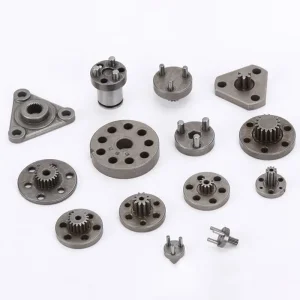
Additional Custom Metal Metallurgy & Gear Solutions
Browse our supplementary range of customized sintered steel, alloy die casting, and MIM structural hardware available for wholesale order and custom mold fabrication.