
Featured OEM/ODM Metal Precision Components
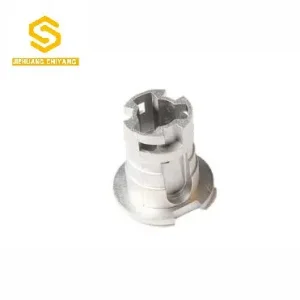
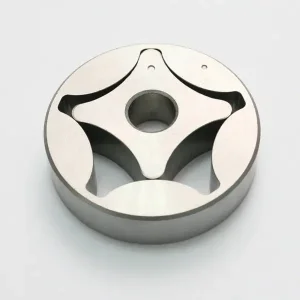
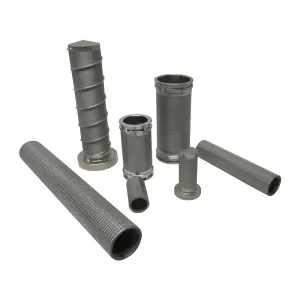
Explore our high-precision manufacturing solutions spanning micro metal injection molding (MIM), complex CNC finishing, powder metallurgy structural components, and custom alloy die-casting.





1. Technical Whitepaper: The Evolution of Roth Prescriptions via MIM Manufacturing
In modern orthodontic technology, the Roth Prescription remains one of the most widely adopted treatment systems globally. Designed to deliver pre-adjusted torque, tip, and in/out offsets built directly into the bracket slot, the execution of Roth brackets demands extreme dimensional fidelity. Traditionally, orthodontic brackets were produced via multi-axis CNC micro-milling or multi-piece brazed assemblies. However, these methods face severe limitations regarding slot roughness, internal stress, production yield, and material loss.
The introduction of Metal Injection Molding (MIM) transformed orthodontic hardware fabrication. By blending ultrafine spherical metal powders (typically 4–15 μm) with specialized thermoplastic binder systems, MIM enables the net-shape production of incredibly complex micro-components with 3D anatomical contours, undercut tie wings, integrated mechanical retention bases, and exact slot geometries in a single automated cycle.
Slot Tolerance & Geometry
Roth prescription mechanics rely entirely on the exact interaction between the archwire and the bracket slot walls. MIM molding yields consistent slot widths (.018" or .022") held within strict tolerances of ±0.005 mm (±5 microns), eliminating unwanted wire play and ensuring true expression of programmed torque and tip angles.
Surface Roughness & Friction
Internal slot friction directly impairs sliding mechanics during orthodontic space closure. MIM parts achieve exceptional post-sintering wall density. Followed by multi-stage electropolishing or chemically accelerated centrifugal tumbling, slot surface roughness drops to Ra < 0.2 μm, drastically shortening clinical treatment timelines.
Monoblock Integrity
Two-piece soldered brackets are susceptible to joint corrosion, localized discoloration, and catastrophic bond failures under heavy occlusal loads. MIM technology facilitates single-piece (monoblock) bracket manufacturing where the bracket body and mesh base form an integral, seam-free structure.
2. Metallurgical Selection: Materials Engineering for Medical-Grade MIM
Selecting the optimal alloy matrix is crucial for manufacturing brackets that withstand oral cavity fluids, mechanical stress from archwire ligation, and masticatory forces without deformation or nickel leaching.
| Alloy Standard | Metallurgical Composition | Tensile Strength (MPa) | Yield Strength (MPa) | Key Engineering Characteristics | Target Application |
|---|---|---|---|---|---|
| 17-4PH Stainless Steel (AISI 630 / UNS S17400) | 15-17.5% Cr, 3-5% Ni, 3-5% Cu, Nb+Ta Balance Fe | 1,150 – 1,350 | 1,000 – 1,170 | Precipitation hardening grade delivering extreme yield strength. Prevents tie-wing deformation under heavy torque forces. | Primary Choice Standard Roth brackets, self-ligating doors. |
| 316L Stainless Steel (AISI 316L / UNS S31603) | 16-18% Cr, 10-14% Ni, 2-3% Mo, Low Carbon | 520 – 620 | 220 – 300 | Superior pitting and crevice corrosion resistance in saline oral environments. Excellent ductility and biocompatibility. | Pitting-sensitive patient cases, custom hooks, lingual attachments. |
| Ti-6Al-4V Grade 5 (ASTM F2885 for MIM) | 6% Al, 4% V, Balance Titanium | 895 – 1,000 | 828 – 910 | 100% Nickel-free, absolute biocompatibility, 40% lighter than steel, immune to intraoral chemical degradation. | Hypoallergenic Patients with nickel hypersensitivity, premium lines. |
| Cobalt-Chromium (Co-Cr) Alloys (ASTM F75 / F1377) | 27-30% Cr, 5-7% Mo, Balance Cobalt | 950 – 1,200 | 650 – 850 | High hardness, zero nickel leaching, non-magnetic properties, exceptional wear resistance against coated wires. | Specialty aesthetic non-ferrous brackets, high-load auxiliaries. |
3. Global Procurement Trends & OEM Supply Chain Dynamics
The global market for orthodontic consumables is undergoing structural consolidation. Dental product brands, regional wholesale distributors, and hospital supply networks are optimizing their procurement models around three macro industry shifts:
1. Expansion of Direct-to-OEM Manufacturing
Intermediate trading steps are rapidly decreasing. Major regional distributors now partner directly with certified tier-1 MIM foundries capable of supporting custom branding, high-speed automated packaging, and pre-sorted kit setups. This direct supply chain reduces unit procurement costs by 35% to 50% while guaranteeing direct metallurgical traceability.
2. Rise of Aesthetic & Low-Profile Designs
Patient preference has shifted decisively toward discrete orthodontic appliances. Modern Roth MIM brackets demand ultra-low profiles, rounded tie-wings, and smooth mechanical contours that reduce soft-tissue irritation. Reaching these complex aesthetic radii without sacrificing structural slot strength requires advanced micro-injection tool design and mold flow simulation.
3. Automation in Bracket Base Design
Shear bond strength (SBS) consistency is a critical performance benchmark for orthodontists. Modern wholesale procurement specifications require bracket bases with integrated 80-mesh micro-lattices, laser-etched undercuts, or mechanical dovetail structures molded directly during the MIM process to ensure predictable debonding without damaging dental enamel.
4. Macro Industry Solutions: From Tooling Design to Finished Bracket
As a specialized contract manufacturer and wholesale supplier, our manufacturing infrastructure covers the entire MIM production life cycle in-house, ensuring complete control over material chemistry, sintering kinetics, and dimensional accuracy.
Micro-Mold Engineering
Tooling design accounts for isotropic linear shrinkage (typically 15%–20%) occurring during debinding and sintering. Multi-cavity hot-runner molds are engineered via CAD/CAE flow simulations to prevent weld lines across critical tie-wing junctions.
Catalytic Debinding
Utilizing nitric acid vapor catalytic debinding systems, the primary polyoxymethylene (POM) binder is extracted cleanly at low temperatures without disturbing the fragile green part structure, guaranteeing clean carbon control prior to sintering.
High-Vacuum Sintering
Sintering takes place in computer-controlled, high-vacuum or pure hydrogen atmosphere furnaces reaching up to 1,380°C. Precise thermal ramp rates eliminate residual micro-porosity, achieving densities upwards of 98.5% of theoretical solid metal.
Surface Finishing & Identification
Brackets undergo automated high-energy centrifugal disc polishing, followed by permanent laser-marking of quadrant ID indicators or tooth-specific color dots on tie-wings to streamline clinical placement.
5. Quality Assurance Framework & Medical Regulatory Compliance
Medical devices placed within the human oral cavity require rigorous proof of safety, structural stability, and biological neutrality. Our production lines operate under comprehensive international quality management systems:
ISO 13485:2016 Certified
Our manufacturing sites maintain audited Quality Management Systems specifically dedicated to Medical Devices. Every production lot undergoes strict traceability tracking from raw elemental powder batches to final packaged kits.
ISO 10993 Biocompatibility
All formulations (17-4PH, 316L, and Titanium) undergo full ISO 10993 testing protocols, including Cytotoxicity (ISO 10993-5), Sensitization/Irritation (ISO 10993-10), and Systemic Toxicity testing, confirming zero adverse tissue reactivity.
Automated Optical Inspection (AOI)
Given the minute scale of micro orthodontic components, 100% optical sorting systems utilizing high-resolution vision sensors check slot width, torque orientation, base geometry, and surface defects at speeds exceeding 300 parts per minute.
6. Technical Roadmap & Future Outlook (2025–2030)
As digital orthodontics expands through 3D intraoral scanning and CAD/CAM treatment planning, the demands placed on physical bracket manufacturers are changing rapidly. Our technological development roadmap focuses on four key frontiers:
- Customized Patient-Specific MIM Brackets: Integrating direct metal 3D printing (Binder Jetting / SLM) with conventional MIM tooling to produce fully customized Roth brackets mapped directly to individual patient tooth anatomy.
- Ultra-Low-Friction Nano-Coatings: Development of atomic layer deposition (ALD) physical vapor deposition (PVD) ceramic and diamond-like carbon (DLC) coatings on internal slot surfaces to reduce kinetic wire friction to near-zero levels.
- Nickel-Free High-Nitrogen Steels: Advancing nickel-free stainless steel MIM feedstocks that match the yield strength of 17-4PH while completely eliminating allergic responses in sensitive patient populations.
- Smart Self-Ligating MIM Mechanisms: Miniaturizing micro-spring mechanisms and rotating clips built seamlessly into Roth bracket housings via multi-material or co-injection MIM processes.
Secondary OEM Precision Manufacturing Portfolio
Additional specialized components and industrial manufacturing capabilities available for global export and custom contract production.







Frequently Asked Questions (FAQ) — OEM Engineering & Purchasing Guide
What is the dimensional tolerance capability for wholesale Roth MIM brackets?
Our standard production tolerances for micro-MIM medical parts comply with ISO 2768-f (Fine Class). Specifically for orthodontic bracket slots, we maintain critical slot dimensions (.018" or .022") within ±0.005 mm (±5 microns). Prescribed torque and tip angles are controlled within ±0.5° across high-volume automated production runs.
Why is 17-4PH stainless steel preferred over 316L for Roth orthodontic brackets?
While 316L offers excellent ductility and basic corrosion resistance, 17-4PH is a precipitation-hardening martensitic stainless steel that achieves significantly higher tensile strength (up to 1,350 MPa) and yield strength after heat treatment. This prevents tie-wing fracture and slot deformation under heavy archwire torque application, ensuring accurate prescription delivery.
What mechanical base configurations can be integrated directly into MIM brackets?
MIM allows complex 3D base features to be formed directly in the mold without secondary assembly. Popular configurations include integrated 80-mesh micro-lattices, spherical mechanical retention dots, anatomical micro-etched undercuts, and patented dovetail groove patterns designed to optimize shear bond strength (SBS) to tooth enamel.
What is the typical Minimum Order Quantity (MOQ) and lead time for custom OEM bracket development?
For standard catalog Roth bracket designs, wholesale MOQs start at 2,000 sets (or 40,000 individual bracket pieces). For fully customized OEM designs requiring new micro-MIM mold tooling, the lead time is typically 30 to 45 days for mold design, fabrication, and sample validation, followed by 21 days for mass production upon sample approval.
How do you ensure nickel compliance and biocompatibility for international export?
All raw material feedstocks are verified via inductively coupled plasma mass spectrometry (ICP-MS) and certified to ISO 10993 cytotoxicity standards. For European and North American markets with stringent nickel release regulations, we offer low-nickel or 100% nickel-free Titanium (Ti-6Al-4V Grade 5) MIM manufacturing options.
What secondary finishing and packaging options are provided?
We provide full turn-key solutions including chemically accelerated centrifugal polishing, electropolishing, laser marking (quadrant positioning and tooth location IDs), tie-wing color dot coding, and automated blister packaging in ISO Class 7 cleanrooms ready for sterile or non-sterile distribution.