
Precision Manufactured OEM Components & Hardware
Direct factory wholesale portfolio including sintered filters, precision die castings, metal and ceramic injection molded structural components, and high-tolerance CNC parts.

China Sintered Filter Manufacturer Supplier, Factory

Wholesale Best-Selling Aluminum Die Casting Factory Manufacturer for Valve/Pump/Motor Housing Suppliers, Factory

Wholesale Best Price for OEM Custom High Precision CNC Machining/Machined/Machine/Milling/Turning/Stamping/Die Casting Metal Aluminum Alloy Auto Spare Machinery Parts Manufacturers, Supplier

China Top Grade China Metal Injection Molding Parts (MIM) Suppliers, Factories

China OEM Customized Custom Powder Metallurgy Products, Processing Metal Powder Metallurgy Parts Suppliers, Factory
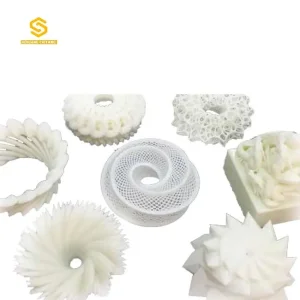
Wholesale Factory Outlets China Picture Printing with Anime Flip Effect Custom 3D Lenticular Poster Manufacturers, Supplier

Wholesale High Quality Stainless Steel Powder Metallurgy Bearing/Auto Parts/Motorcycle Parts/Household Electrical Bearing Parts/Made in China Supplier, Suppliers

Wholesale 2023 Good Quality China Factory Aluminium Alloy Die Casting with CNC Machining Manufacturers, Supplier
Global Commercial & Industrial Status of Ceramic Moulding
An authoritative whitepaper analyzing the technological advancements, macroeconomic forces, and wholesale procurement parameters governing advanced ceramic moulding manufacturing facilities worldwide.
The global industrial landscape for wholesale ceramic moulding and advanced ceramic manufacturing is undergoing a paradigm shift. Driven by relentless demand for extreme thermal stability, chemical inertness, dielectric strength, and mechanical wear resistance, advanced ceramics—specifically processed through Ceramic Injection Molding (CIM), gelcasting, and refractory ceramic core molding—have become indispensable across high-tech sectors.
Historically utilized for simple refractories and traditional pottery, ceramic moulding factories today operate at the intersection of nanotechnology, material science, and precision mechanical engineering. Advanced structural ceramics such as Alumina ($Al_2O_3$), Yttria-Stabilized Zirconia ($ZrO_2$), Silicon Nitride ($Si_3N_4$), and Silicon Carbide ($SiC$) can now be formed into highly complex, near-net-shape geometries with sub-micron tolerances, bypassing the prohibitively high costs associated with diamond grinding.
Global Tier-1 OEMs are rapidly shifting from multi-step subtractive machining toward high-volume ceramic moulding factories in China. By leveraging low-pressure and high-pressure ceramic injection molding combined with automated catalytic debinding and high-temperature vacuum sintering, OEMs realize part unit cost reductions ranging between 35% and 60% compared to traditional diamond machining of pre-sintered ceramic blanks.
Technical Material Matrix & Process Engineering
Comprehensive breakdown of advanced technical ceramic feedstocks, binder systems, debinding methodologies, and high-temperature sintering dynamics.
Alumina Ceramics ($Al_2O_3$)
Ranging from 95% to 99.8% purity, Alumina offers exceptional electrical insulation, high mechanical hardness, and extreme corrosion resistance. Ideal for electrical insulators, wear rings, and semiconductor components.
Zirconia Ceramics ($ZrO_2$)
Yttria-stabilized Tetragonal Zirconia Polycrystal (Y-TZP) possesses the highest fracture toughness and flexural strength among all technical ceramics. Frequently used in medical scalpels, dental implants, and high-wear pump components.
Silicon Nitride ($Si_3N_4$)
Characterized by outstanding thermal shock resistance, low density, and high dynamic fatigue strength. Silicon Nitride is preferred for high-speed ceramic bearings, EV motor insulators, and turbocharger rotors.
| Ceramic Material | Density ($g/cm^3$) | Hardness (HV) | Flexural Strength (MPa) | Thermal Cond. ($W/m·K$) | Primary Wholesale Applications |
|---|---|---|---|---|---|
| Alumina ($Al_2O_3$ 99.5%) | 3.92 | 1600 | 380 | 30 | Electrical / Wear Insulators, Thread Guides, Seals |
| Zirconia (Y-TZP) | 6.05 | 1250 | 1100 | 2.5 | Medical / Mechanical Structural Blades, Valve Balls, Dental |
| Silicon Carbide (SSiC) | 3.15 | 2200 | 450 | 120 | Extreme Thermal Pump Seals, Heat Exchangers, Armor |
| Silicon Nitride ($Si_3N_4$) | 3.25 | 1500 | 850 | 30 | Aerospace / Automotive Bearing Balls, Valve Train, Turbine Blades |
Future Trends & Technological Roadmap (2025–2035)
Strategic forecast of next-generation ceramic moulding methodologies, digital twin simulation tools, green binder technology, and additive-enhanced tooling.
1. Nanocrystalline Powder Synthesis
Factories are integrating plasma-synthesized nano-powders (<50nm particle size). Nano-ceramic feedstocks allow lower sintering temperatures, full theoretical density, and unprecedented surface smoothness ($Ra < 0.05\mu m$).
2. Eco-Friendly Water-Based Binders
Environmental regulations are compelling wholesale manufacturers to replace solvent-based binder systems with water-soluble agar or poly-ethylene glycol (PEG) systems, eliminating VOC emissions during debinding.
3. AI-Assisted Shrinkage Modeling
Ceramics experience 15% to 22% volumetric shrinkage during sintering. Machine learning algorithms now predict anisotropic thermal shrinkage with micron accuracy, reducing mold redesign iterations from 5 down to 1.
Localized Application Scenarios & Macro Industry Solutions
How specialized wholesale ceramic moulding factories deliver targeted solutions to critical global infrastructure, medical, and high-tech industries.
Aerospace & Defense
Wholesale production of soluble ceramic cores for investment casting of hollow turbine blades. These intricate silica and alumina cores survive melting temperatures above 1600°C while maintaining complex internal cooling channels.
Semiconductor Fabrication
High-purity alumina ($>99.8\%$) wafer chucks, end-effectors, and plasma-resistant etching chamber rings manufactured via ceramic injection molding and precision diamond polishing.
Medical Devices & Orthopedics
Biocompatible zirconia surgical handles, laparoscopic tool tips, dental brackets, and ceramic hip joint replacements providing zero ion release and superior bio-inertness.
OEM Custom Powder Metallurgy & Casting Solutions
Complementary metal injection molding (MIM), powder metallurgy, and precision casting products offered by direct factory suppliers.

China Trending Products China Metal Foundry Product Customized Aluminum Die Casting with Sand Casting Factory, Factories

Wholesale Cheap PriceList for China Precision Aluminum Vacuum Casting Die Casting A380 Gravity Casting ADC12 Motor Housing Manufacturer, Manufacturers

China 2019 Latest Design China Custom Injection Moulding Die Casting Auto Parts Tooling Steel Foundry Casting Moulds Auto Spare Car Parts Manufacturers, Factory

Wholesale Medical Dental Orthodontic Bracket by MIM Manufacturers, Factories

China Bottom price Metal Injection Molding for Irregular Customized Stainless Steel Parts Suppliers, Factories
Wholesale Chinese wholesale High Quality Stainless Steel Sintered Iron Powder Metallurgy Parts Suppliers, Factories

China Supply OEM/ODM China Factory Hot Sale High Quality Qear Custom Structural Parts Powder Metallurgy Parts Manufacturer, Manufacturers

Wholesale Medical Scalpel By Metal Injection Molding Process MIM Manufacturers, Factories
Technical & Wholesale FAQ for Engineering Buyers
Detailed technical responses to common sourcing, design rules, tolerance management, and manufacturing questions for ceramic moulding procurement.
Dry pressing is limited to simple 2.5D geometries (such as flat discs or rings) pressed uniaxially. Ceramic Injection Molding (CIM) mixes sub-micron ceramic powder with a thermoplastic binder system, allowing complex 3D shapes (threads, undercuts, cross-holes) to be molded in volume with net-shape precision.
Ceramic parts shrink 15% to 22% lineally during thermal sintering as binder voids close. Factories compensate by enlarging the mold cavity using a precise scale factor calculated via dilatometry and CAD shrink-factor software, achieving tight tolerances up to ±0.3% of nominal dimensions without post-machining.
Yes. Alumina and Zirconia ceramics can undergo molybdenum-manganese (Mo-Mn) or active metal brazing (AMB) processes. This creates a thin metallic coating on the ceramic surface, allowing it to be hermetically soldered or brazed to copper, stainless steel, or Kovar components.
As-sintered CIM parts typically achieve a surface roughness of $Ra\,0.8 - 1.2\,\mu m$. With secondary vibratory tumbling, diamond lapping, or magnetic polishing, surface finish can be refined down to optical mirror smoothness ($Ra\,0.02 - 0.05\,\mu m$).
Standard mold tooling and DFM engineering review take approximately 25 to 35 days. Sample approval requires 7 to 10 days post-tooling. Typical factory Minimum Order Quantities (MOQ) start at 2,000 to 5,000 pieces for standard parts, with prototype pilot runs supported via additive ceramic 3D printing.