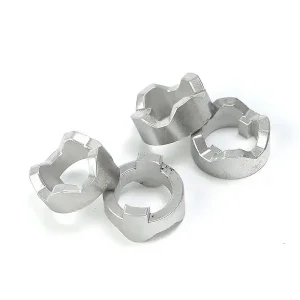
Featured OEM Die Casting & Sintered Hardware Portfolio
Direct factory solutions for precision aluminum die casting, powder metallurgy gears, and complex structural components.

China Cheap price Metal Powder Metallurgy Gear Parts Engine Parts Sprocket Supplier, Suppliers
View Product

China OEM/ODM China High Quality Molybdenum (moly) Boat for MIM Metal Powder Injection Molding Manufacturer, Supplier
View Product
China One of Hottest for Custom Zinc Die Casting Parts, Aluminum Casting Products, Die Casting Manufacturer OEM Manufacturer, Supplier
View Product
China Chinese Professional OEM Metal Injection Molding Process for Stainless Steel Parts Customized Hardware Suppliers, Factories
View Product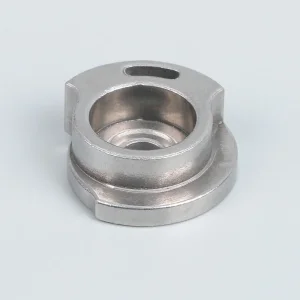

China OEM Customized China Customized ATV Parts Auto Aluminum Alloy Die Casting Household Appliance Cooling Fan Casing Axial Flow Fan Machine Parts, Aluminum Die Casting Manufacturers, Suppliers
View Product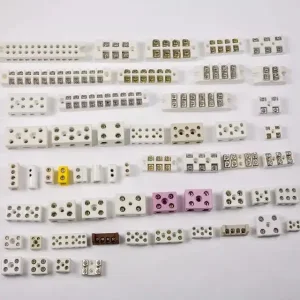
Global Industrial Landscape of Die Casting LED Housings
Analyzing market expansion, energy transition mandates, and the shift toward high-power solid-state thermal enclosures.
Thermal Dissipation Bottlenecks
Modern High-Power LED luminaires (100W–1000W+) convert nearly 70% of electrical energy into thermal energy. Without high-conductivity aluminum enclosures, junction temperature ($T_j$) exceeds critical limits ($>125^\circ\text{C}$), accelerating lumen depreciation and driver failure. High-pressure die casting (HPDC) provides thin-wall cooling fins engineered to optimize natural convection.
Smart City & IoT Integration
Urban lighting modernization demands housing architectures that integrate Zhaga Book 18 receptacles, NEMA 7-pin sockets, radar sensors, and 5G micro-cells. Die-cast aluminum housings offer precision cast-in internal bosses, wiring channels, and EMI/RFI shielding compartments impossible to achieve via traditional sheet metal stamping.
Severe Environment Compliance
From industrial chemical plants to coastal highways, die-cast enclosures must withstand IP66 to IP69K ingress protection alongside ASTM B117 salt spray testing exceeding 1000 to 3000 hours. Multi-stage pre-treatment and electrostatic thermosetting powder coatings ensure long-term structural integrity.
Industry Insight: Selecting the correct alloy and structural fin geometry directly impacts luminaire efficiency. Modern high-pressure die casting allows thin-wall cooling fins down to 1.5mm, reducing overall fixture weight by up to 35% while increasing convective surface area by 45%.
Comparative Alloy Engineering Matrix for LED Housings
Selecting the optimal die casting alloy requires balancing thermal conductivity, mechanical tensile strength, castability, and post-surface corrosion resistance.
| Alloy Grade | Thermal Conductivity (W/m·K) | Tensile Strength (MPa) | Yield Strength (MPa) | Fluidity & Castability | Corrosion Resistance | Primary Industrial Applications |
|---|---|---|---|---|---|---|
| ADC12 (Al-Si-Cu) | 96 - 100 | 310 | 150 | Excellent (5 Stars) | Moderate (Requires E-coating) | Standard Outdoor Streetlights, Commercial High Bays, Floodlights |
| A380 (ANSI) | 96 - 102 | 320 | 160 | Excellent (5 Stars) | Moderate | General Industrial Luminaire Housings, Automotive Lamp Bodies |
| A356 (Al-Si-Mg) | 150 - 160 | 230 - 290 | 180 | Good (4 Stars) | Superior (Low Copper) | Marine Lighting, Hazardous Explosion-Proof Fixtures, High Power Stadium Lights |
| AlSi10Mg | 110 - 130 | 300 - 350 | 220 | Very Good (4.5 Stars) | High | Complex Structural Automotive Headlight Heat Sinks, Compact Stadium Fixtures |
| Zamak 3 / Zamak 5 (Zinc) | 105 - 113 | 280 - 330 | 200 - 250 | Exceptional (Thin Walls <0.8mm) | High (Plated/Anodized) | Precision Architectural Downlight Bezel Rings, Mini Decorative LED Fittings |
High-Pressure Die Casting (HPDC) Dynamics
High-pressure die casting involves injecting molten aluminum into hardened steel dies under pressures ranging from 300 to 1200 bar at speeds up to 50 m/s. This process ensures rapid solidification, achieving tight dimensional tolerances (ISO 2768-mK) and fine grain structures ideal for rapid dissipation of heat from surface-mounted LED arrays (SMD/COB).
Vacuum-Assisted Die Casting
To eliminate internal gas porosity—a primary barrier to heat transfer and mechanical strength—our advanced vacuum-assisted die casting evacuates air from the mold cavity prior to shot injection. This achieves a residual gas level below 3cc/100g Al, making housings fully weldable and suitable for high-temperature heat treatment (T5/T6).
Optimizing LED Housing Fin Geometry & Ingress Protection
Engineering die-cast housings requires integrating computational fluid dynamics (CFD) with structural mold design to maximize longevity and minimize unit weight.
Fin Aspect Ratio & Draft Angles
Optimal thermal convection demands fin spacing between 6mm and 10mm with a height-to-thickness aspect ratio up to 20:1. Integrating a $1.5^\circ \text{ to } 2.0^\circ$ draft angle guarantees smooth ejection during mass production without distorting critical fin surfaces.
Integrated Thermal Interface Planes
The mounting surface for Metal Core PCBs (MCPCB) undergoes precision CNC face milling to achieve surface flatness within $\le 0.05\text{mm}$ and roughness $Ra \le 1.6\mu\text{m}$. This minimizes thermal contact resistance when paired with thermal grease or phase-change pads.
Hermetic Gasket Channels & IP68 Sealing
Form-in-place continuous silicone gaskets or molded fluororubber O-rings require cast groove profiles with strict depth tolerances ($\pm0.03\text{mm}$). Precision pressure-tight die casting prevents moisture ingress under extreme thermal cycling ($-40^\circ\text{C} \text{ to } +85^\circ\text{C}$).
Sector-Specific Application Scenarios for Die Cast LED Enclosures
Custom die-cast solutions engineered for diverse commercial, industrial, hazardous, and municipal lighting projects worldwide.
1. Municipal Smart Street & Highway Lighting
Design Focus: Aerodynamic drag reduction (EPA rating), modular LED engine bays, toolless latch access.
Material: ADC12 / A380 with low-copper passivation.
Key Feature: Integrated Zhaga Book 18 and 7-pin ANSI C136.41 NEMA receptacle bosses with IP66 wire pass-throughs, supporting 100kV surge protection enclosures.
2. Industrial High-Bay & Heavy Warehouse Lighting
Design Focus: High thermal dissipation density (up to 400W in compact footprint), ambient heat resistance ($+55^\circ\text{C}$).
Material: High-conductivity A356 alloy.
Key Feature: Radial thermal fin structure promoting vertical chimney-effect airflow, integrated driver compartment isolation to shield electrolytic capacitors from thermal radiation.
3. Hazardous Location & Explosion-Proof Luminaires
Design Focus: Flame-path joint design, high impact resistance (IK10+), heavy wall thickness.
Material: Copper-free aluminum (<0.1% Cu content) to prevent spark generation.
Key Feature: Rigorous Class I Division 2 / ATEX Zone 1 compliance testing, robust wall structures capable of containing internal explosions without fracturing.
4. Automotive LED Headlamp & Matrix Lighting Assemblies
Design Focus: Ultra-lightweight, tight mounting points ($\pm0.02\text{mm}$), vibration resistance.
Material: Thin-wall AlSi10Mg.
Key Feature: Cast-in heat pipe channels, direct integration with active cooling fan shrouds, IATF 16949 full traceably serialized production.
5. Architectural Facade & High-Lumen Stadium Lighting
Design Focus: Aesthetics, high lumen output (>1200W assemblies), extreme outdoor weatherability.
Material: Marine-grade A356 die cast alloy.
Key Feature: Dual-chamber housing decoupling thermal management of optical arrays and high-voltage power drivers, coated with fluorocarbon (PVDF) finish.
Quality Assurance Roadmap & Sustainable Manufacturing Protocols
Ensuring zero-defect execution through automated inspection, IATF 16949 audit compliance, and eco-friendly manufacturing.
Precision QC Inspection Arsenal
Every die-cast LED housing batch undergoes rigorous mechanical and thermal validation:
• Industrial X-Ray Computed Tomography (CT): Detects internal gas porosity, shrinkage pockets, and inclusions.
• Coordinate Measuring Machines (CMM) & 3D Optical Scanners: Verifies geometric dimensioning and tolerancing (GD&T) against STEP CAD models.
• Helium Mass Spectrometer Leak Testing: Guarantees hermetic sealing for underwater and IP68 enclosures.
• Spectrophotometer & Cross-Hatch Adhesion Testers: Validates powder coat thickness ($60 - 100\mu\text{m}$) and corrosion resilience.
Sustainability & Circular Metallurgy Roadmap
As global OEM buyers target Scope 3 emission reductions, our die casting foundry implements closed-loop sustainability:
• 100% Recyclable Secondary Aluminum: Utilizing secondary aluminum alloys reduces energy consumption by 95% compared to primary smelter aluminum.
• Closed-Loop Die Lubricant Recycling: Automated water-based mold spraying systems capture and purify runoff lubricant.
• Eco-Friendly Surface Pre-treatment: Zirconium-based conversion coatings replace traditional hexavalent chromium processes, ensuring full RoHS and REACH compliance.
Frequently Asked Questions (FAQ)
Technical and procurement answers for OEM buyers, lighting engineers, and supply chain managers.
Q1: What is the typical lead time for custom die casting tooling and initial samples?
For standard aluminum die cast LED housings, tool design and die fabrication (mold building) generally take 30 to 45 calendar days depending on cavity complexity and hydraulic core-pull requirements. First Article Inspection (FAI) samples with full CMM dimensional and material inspection reports are dispatched immediately following trial T1 shots.
Q2: How do you prevent air porosity in aluminum die cast housing fins?
We employ advanced MAGMAsoft® flow simulation software during mold design to optimize gate location, overflow wells, and venting channels. During production, vacuum-assisted die casting systems pull negative pressure in the cavity prior to injection, reducing internal gas porosity to under 1-3%, ensuring maximum thermal conductivity and pressure tightness.
Q3: Can die cast LED housings achieve IP68 waterproof ratings?
Yes. Achieving IP68 requires precision CNC machining of tongue-and-groove sealing channels, maintaining flat PCB seating surfaces ($\le 0.05\text{mm}$), and pairing with high-grade liquid silicone injection gaskets or continuous O-rings. Every unit undergoes automated pneumatic leak testing at 0.2 bar before surface painting.
Q4: Which alloy is best for coastal or marine LED fixture housings?
For severe marine or high-salinity coastal environments, low-copper aluminum alloys such as A356 or AlSi10Mg are recommended over standard ADC12. Paired with a chromate-free zirconium pre-treatment and a outdoor-grade AkzoNobel powder coating, these housings comfortably pass 1500+ to 3000-hour ASTM B117 salt spray tests.
Q5: What is the Minimum Order Quantity (MOQ) for custom die-cast housings?
Our standard production MOQ for aluminum and zinc die-cast housings is 2,000 pieces per order run, which optimizes machine setup, thermal balancing of steel dies, and unit powder coating costs. Prototype lots or low-volume pilot runs can be facilitated using rapid metal 3D printing or soft tooling.
Q6: Do you offer secondary CNC precision machining and finishing in-house?
Yes. We provide complete vertically integrated turn-key manufacturing: high-pressure die casting, 4-axis and 5-axis CNC precision milling, thread tapping, shot blasting, E-coating, powder coating, laser marking, and final sub-assembly with gaskets and optical lenses.
Additional OEM Precision Die Casting & MIM Solutions
Explore our specialized sintered metal components, ceramic insulators, and high-precision cast automotive parts.
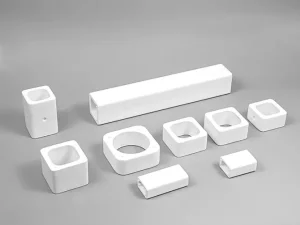

Wholesale Online Exporter Wholesale Custom High Precision MIM Metal Injection Molding Powder Metallurgy MIM Small Metal Parts Manufacturer, Factory
View Product
China Fast delivery China Precision Sintered High Quality Drinking Water Filter Funnel Suppliers, Factories
View Product
China Cheapest Factory Customized Powder Metallurgy Partspowder Metallurgy Sintering Iron Mini Bevel Gear Manufacturers, Factories
View Product
China Supply ODM Aluminum Alloy Precision Squeeze Die Casting Sand Casting for Vehicle/Railway/Train/Valve/Automotive/Scooter/Auto Spare Part Supplier, Factories
View Product
China Rapid Delivery for Custom Stainless Steel Die Casting Parts Metal Work Shenzhen Supplier Manufacturers, Supplier
View Product