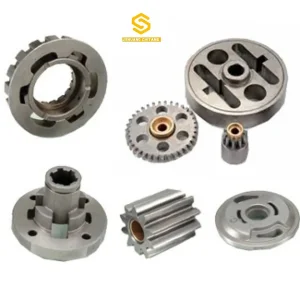
Featured Precision Die Casting & Sintered Component Showcase
Explore our advanced engineered component solutions, spanning high-pressure aluminum die casting, powder metallurgy gears, and complex MIM components designed for extreme structural integrity.






1. Executive Summary & Macro Industrial Die Casting Trends
The global high-pressure die casting (HPDC) and precision metal casting market is undergoing a structural paradigm shift. Driven by automotive lightweighting imperatives, the rapid expansion of Electric Vehicle (EV) powertrains, and the integration of structural gigacasting architectures, global OEMs are increasingly seeking Tier-1 and Tier-2 wholesale die casting part manufacturers capable of delivering zero-defect, high-density metal components at scale.
As modern engineering applications demand tighter tolerances (down to ±0.005mm post-CNC machining) and elevated thermal conductivity for electronics cooling, standard foundry casting processes no longer suffice. Contemporary die casting manufacturing relies on real-time vacuum assistance, thermal imaging monitoring of mold cavities, computerized shot sleeve monitoring, and automated multi-axis robot trimming.
Information Gain Insights: Transitioning from traditional subtractive CNC machining to near-net-shape high-pressure aluminum die casting (HPDC) or Metal Injection Molding (MIM) slashes raw material waste by up to 65% while accelerating cycle times from hours per part to seconds.
2. Global Enterprise Procurement Demands & Strategic Sourcing
Procurement directors and supply chain managers in North America, Europe, and Asia-Pacific face unprecedented supply chain pressures. Sourcing high-volume metal components requires balancing unit landed cost with structural compliance, risk mitigation, and environmental standards (ESG).
Automotive & E-Mobility
Demand for ultra-lightweight aluminum ADC12, A380, and A356 alloy battery enclosures, motor housings, inverter heat sinks, and structural brackets. Requires 100% X-ray porosity testing and IATF 16949 PPAP Level 3 compliance.
Industrial Machinery & Hydraulics
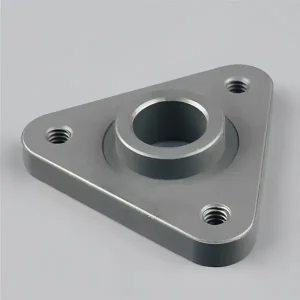
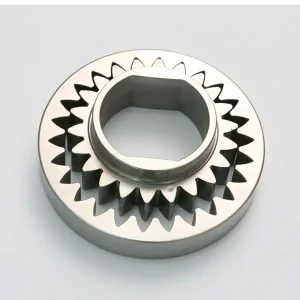
High-torque sintered oil pump gears, hydraulic valve bodies, and pump flanges requiring high fatigue strength, superior density distribution, and wear-resistant tribological surface treatments.
Medical Devices & Consumer Electronics
Micro-precision 316L stainless steel MIM components, titanium housings, and ceramic terminal strips where complex geometries require non-porous biocompatible surfaces and flawless optical aesthetics.
3. Comprehensive Engineering Metallurgy & Process Selection
Selecting the appropriate manufacturing route—whether High-Pressure Die Casting (HPDC), Metal Injection Molding (MIM), or Powder Metallurgy (PM)—depends heavily on part volume, dimensional geometry, wall thickness, and mechanical stress requirements.
| Process | Material Alloys | Tensile Strength (MPa) | Dimensional Tolerance | Min Wall Thickness | Ideal Application Fit |
|---|---|---|---|---|---|
| Aluminium HPDC | ADC12, A380, A356, AlSi10Mg | 220 – 320 MPa | ±0.05mm (Cast) / ±0.005mm (CNC) | 1.2 mm | Automotive housings, cooling fans, engine brackets |
| Zinc Die Casting | Zamak 3, Zamak 5, ZA-8 | 280 – 330 MPa | ±0.02mm (Cast) | 0.6 mm | High-precision hardware, connectors, decorative parts |
| Magnesium Die Casting | AZ91D, AM60B | 230 – 260 MPa | ±0.04mm (Cast) | 1.0 mm | Ultra-lightweight aerospace & portable power tool frames |
| Metal Injection Molding (MIM) | 316L, 17-4PH, Fe-Ni alloys, Ti-6Al-4V | 520 – 1150 MPa | ±0.3% of nominal dim | 0.4 mm | Complex surgical tools, watch cases, textile & gun locks |
| Powder Metallurgy (PM) | Fe-Cu-C, Sintered Bronze, Alloy Steel | 350 – 850 MPa | ±0.03mm (Pressed) | 1.5 mm | High-volume spur gears, oil pump gears, water pump flanges |
4. Design for Manufacturability (DFM) & Defect Elimination Roadmap
Achieving structural integrity in high-pressure aluminum and zinc die casting requires rigorous pre-production simulation. Our engineering team utilizes MAGMASOFT® mold flow analysis to predict molten metal velocity, air entrapment risk, thermal stress concentration, and solidification shrinkage before cutting tool steel.
Optimizing Draft Angles & Wall Thickness
Uniform wall thickness is crucial to eliminate shrinkage porosity and sink marks. For aluminum die casting, maintaining a wall thickness between 1.5mm and 4.0mm ensures optimal cycle times. Ejection draft angles should ideally be set at 1.0° to 2.0° for internal cores and 0.5° to 1.0° for outer walls.
Vacuum-Assisted Porosity Control
To produce structural automotive parts capable of undergoing post-casting heat treatment (T6) and laser welding, we implement high-vacuum chill blocks (<50 mbar absolute cavity pressure). This evacuates gas prior to liquid metal injection, reducing internal gas porosity to near zero.
5. Quality Assurance Standards & International Compliance
As a premier wholesale die casting part manufacturer, our quality control ecosystem adheres strictly to global industrial metrics. Every production lot undergoes end-to-end traceably verified testing protocols.
3D Coordinate Inspection
Zeiss CMM laser scanning ensures high-precision geometrical dimensioning and tolerancing (GD&T) alignment against native STEP 3D CAD models.
Industrial X-Ray NDT
Non-destructive radiographic testing (NDT) detects subsurface blowholes, inclusions, and shrinkage cavities inside load-bearing die cast housings.
Salt Spray Testing
ASTM B117 salt spray chambers validate surface protection durability across electroplated, powder-coated, anodized, and e-coated finishes (up to 1,000 hrs).
Spectrochemical Analysis
Optical Emission Spectrometers (OES) verify incoming ingot raw material heat chemistries to prevent alloy degradation.
6. Industry 4.0 Technology Roadmap & Sustainability Horizon
The future of wholesale die casting part manufacturing lies at the intersection of automated artificial intelligence, real-time sensor feedback, and green metallurgy. Our manufacturing facilities are actively transitioning toward decarbonized zero-emission production models.
AI-Powered Real-Time Monitoring
Integrated thermal sensor networks continuously capture temperature profiles across die mold inserts, dynamically adjusting cooling water flow to maximize mold life and guarantee dimensional stability.
Robotic Cell Automation
100% automated robotics perform die spraying, casting extraction, quenching, and press trimming, eliminating human operational error and optimizing cycle times by up to 25%.
Closed-Loop Recycled Alloys
In-house re-melting systems process runner gates and overflow wells directly, utilizing secondary aluminum scrap to reduce carbon footprints by up to 90% compared to primary smelter ingots.
7. Frequently Asked Engineering & Sourcing Questions
Clear, authoritative answers to critical procurement and design queries regarding high-volume die casting and sintered metal production.
High-Pressure Die Casting (HPDC) forces molten metal into sealed steel molds under extreme hydraulic pressures (300 to 4,000 tons of clamping force). Compared to gravity or sand casting, HPDC yields significantly higher production speeds, smoother surface finishes (Ra 1.6 – 3.2 µm), much thinner achievable wall thicknesses (down to 1.2mm), and tight dimensional tolerances that reduce or eliminate post-cast machining.
Tooling life depends on the alloy poured, casting temperature, and tool steel grade (e.g., premium H13, Dievar, or Böhler W400). Standard aluminum die casting molds typically yield 80,000 to 150,000 shots before requiring major retooling or cavity replacement. Zinc die casting molds, operating at lower melting temperatures, routinely exceed 500,000 to 1,000,000 shots.
We combine high-vacuum evacuation systems (<50 mbar) with optimized gate runner placement and multi-stage shot controls. Squeeze pins are additionally deployed in heavy wall sections to feed solidifying metal, effectively consolidating internal voids and allowing parts to pass rigorous X-ray inspection (ASTM E505 level 1/2 standard).
We provide comprehensive turn-key surface treatments in-house, including CNC precision machining, shot blasting, vibratory tumbling, anodizing (Type II/III), electroplating (nickel/chrome), e-coating (electrophoretic painting), powder coating, and passivation.
Upon receiving complete 2D/3D CAD drawings, our engineering team issues a formal DFM report within 24–48 hours. Mold design and tool fabrication take approximately 25 to 35 calendar days, followed immediately by T1 sample casting and complete First Article Inspection (FAI) dimensional reporting.
Our standard wholesale production MOQ is 2,000 pieces per batch for aluminum/zinc die casting and MIM, and 5,000 pieces for high-volume powder metallurgy components. We also support rapid prototyping and low-volume pre-series runs during early product development phases.
Related High-Precision Hardware & Custom Sintered Products
Browse our expanded portfolio of custom sintered iron hardware, stainless steel MIM components, CNC machined die cast bodies, and specialized mechanical spare parts.