
Featured Precision Manufacturing Solutions
Explore our primary product lines spanning Ceramic Injection Molding, Powder Metallurgy, MIM, and Die Casting.





Industrial Whitepaper: Advanced Ceramic Injection Molding (CIM) Manufacturing Architecture
A Comprehensive Engineering Blueprint for Global OEM Purchasing Directors, System Integrators, and Technical Procurement Teams
In the contemporary landscape of high-precision component manufacturing, Ceramic Injection Molding (CIM) and its sister technology, Metal Injection Molding (MIM), represent the pinnacle of near-net-shape metallurgical and ceramic engineering. As global OEMs in automotive electronics, medical devices, semiconductor capital equipment, and aerospace push for unprecedented dimensional accuracy, thermal resistance, and mechanical durability, conventional CNC machining, investment casting, and press-and-sinter powder metallurgy reach their fundamental physical and economic limits.
This technical whitepaper examines the strategic advantages, feedstock thermodynamics, sintering physics, and localized compliance framework offered by leading Chinese manufacturing ecosystems—specifically engineered for global buyers seeking uncompromising quality at wholesale production scales.
Complex Geometry Capability
CIM allows the mass production of 3D complex shapes featuring internal threads, cross-holes, thin walls under 0.4mm, and intricate undercuts without multi-axis post-machining operations.
Superior Material Density
Achieves relative sintered densities exceeding 98.5% to 99.8% of theoretical density, guaranteeing exceptional mechanical strength, dielectric insulation, and chemical inertness.
Scalable Cost Economics
Reduces component cost by 30% to 60% compared to traditional CNC grinding of pre-sintered ceramic blanks, with tooling amortization offering exponential savings past 5,000 units.
Material Engineering Matrix: Ceramic & Metal Powder Formulations
Selecting the optimal inorganic substrate for critical wear, electrical, thermal, and structural application environments.
| Material Designation | Primary Composition | Flexural Strength (MPa) | Vickers Hardness (HV) | Max Temp (°C) | Target Applications |
|---|---|---|---|---|---|
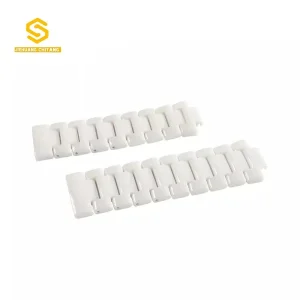
| Y-TZP Zirconia | ZrO₂ + 3mol% Y₂O₃ | 1,000 - 1,200 | 1,250 - 1,350 | 1,000°C | Watch straps, medical scalpels, optical fiber ferrules, pump shafts |
| High-Purity Alumina | Al₂O₃ (99.5% - 99.8%) | 350 - 450 | 1,600 - 1,750 | 1,600°C | Semiconductor insulators, wear nozzles, electrical substrates |
| Silicon Nitride | Si₃N₄ | 800 - 950 | 1,500 - 1,650 | 1,200°C | Turbocharger rotors, high-speed bearings, automotive engine valves |
| 17-4PH Stainless Steel | Fe-17Cr-4Ni-4Cu | 1,150 (H900) | 380 - 420 (HB) | 450°C | Surgical instruments, aerospace latches, custom hardware tools |
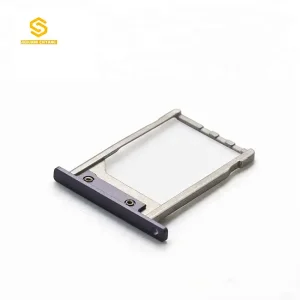
| 316L Stainless Steel | Fe-18Cr-12Ni-2.5Mo | 520 - 600 | 150 - 180 (HB) | 800°C | SIM card trays, wearable watch cases, corrosion-resistant valves |
Strategic Procurement: China's Integrated Powder Metallurgy Ecosystem
Why Tier-1 Automotive and Medical Device Brands Partner with Ningbo Manufacturing Hubs for High-Volume OEM Orders
End-to-End Feedstock Preparation
By controlling in-house thermal debinding formulations, catalytic binder preparation, and gas-atomized powder blending, Chinese factories reduce feedstock cost variability and eliminate supply bottlenecks.
In-House Precision Tooling Toolrooms
Equipped with modern CNC wire EDM, high-speed CNC milling, and mirror spark machines, tool fabrication lead times drop from 8 weeks (Western standard) down to 20–30 calendar days.
Automated Sintering & Debinding Scale
Continuous debinding furnaces and high-vacuum sintering chambers operating under partial pressure inert gas protection guarantee batch-to-batch repeatability across multi-million piece orders.
Localized Support, Regulatory Compliance & Quality Assurance
Eliminating International Sourcing Risk Through Rigorous Audits, Certification Frameworks, and Dedicated DFM Engineering Support
IATF 16949 & ISO 9001 Systems
Our manufacturing protocols adhere strictly to IATF 16949 automotive standards. PPAP (Production Part Approval Process) Level 3 documentation, FMEA analysis, and Control Plans are standard for all custom tooling runs.
Full Regulatory Compliance
All ceramic feedstocks, metallic powders, and surface finishes strictly comply with EU RoHS 3, REACH, and FDA biocompatibility standards (for medical Y-TZP zirconia surgical handles and dental implants).
48-Hour DFM & Technical Support
Our English-speaking application engineering team conducts thorough Design for Manufacturability (DFM) reviews, providing wall-thickness simulation, shrinkage factor analysis, and mold-flow optimization before tool cutting.
Quality Control Laboratory Equipment Integration
To guarantee physical property compliance, every shipment undergoes non-destructive 3D CMM coordinate measurement, optical profile projection, laser diffraction powder particle size testing, density measurement via Archimedes principle, and Vickers micro-hardness testing.
Industrial Application Scenarios Across High-Tech Verticals
How Ceramic Injection Molding and MIM Components Power Next-Generation Engineering Applications Globally
Automotive & EV Systems
Turbocharger vanes, fuel injection nozzles, sensor bosses, ceramic seal rings for coolant pumps, and VVT solenoid internal cores operating under extreme temperatures and pressures.
Medical & Dental Technology
Endoscopic surgical instrument claws, ceramic dental abutments, Y-TZP zirconia scalpel handles, ceramic watch straps for health monitoring wearables, and orthodontic brackets.
Consumer Electronics
Smartwatch ceramic bezels, precision metal SIM card slots, camera lens rings, folding smartphone hinge mechanisms, and wear-resistant audio headphone connector housings.
Semiconductor & Industrial
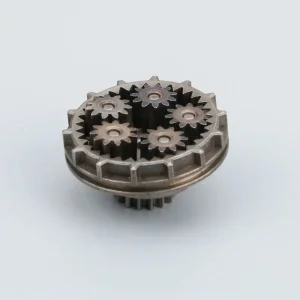
High-purity alumina wafer processing end-effectors, plasma-resistant ceramic nozzles, thread guides for textile machinery, and high-torque powder metallurgy planetary gears.
Industry Trends & Technological Innovations in Ceramic Sintering
How AI-Driven Simulation, Nanocrystalline Feedstocks, and Hybrid Additive Manufacturing Are Reshaping the CIM Landscape
Nanocrystalline Powder Feedstocks
The transition toward sub-micron and sub-50nm ceramic powder starting materials enables lower sintering thermal thresholds, higher flexural toughness, and flawless mirror-grade mechanical polishing results.
AI Mold Flow & Thermal Rheology
Integrating artificial intelligence neural networks into finite element mold-filling analysis prevents jetting, air traps, and binder-powder separation during micro-injection cycles into multi-cavity tooling.
Green Debinding Eco-Processes
Next-generation water-soluble and nitric acid catalytic debinding systems dramatically reduce processing cycle times while eliminating volatile organic compound (VOC) emissions during debinding and pre-sintering.
Expanded Product Portfolio & Custom OEM Components
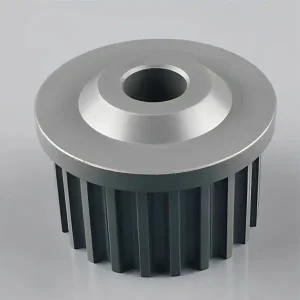
Browse additional precision die casting, sintered gear, and MIM structural parts produced at our Ningbo factory facilities.






Frequently Asked Questions (FAQ) for Global Procurement Officers
Expert Engineering Guidance on Minimum Order Quantities, Tolerances, Shrinkage Management, and Shipping Protocols