
Precision OEM Medical Components & Assemblies
Explore our precision-engineered injection molded components, micro-metallurgy parts, and custom medical hardware assemblies designed for extreme reliability and bio-compatibility.

China New Product Die Castings Anodized Powder Coating Precision Pressure Parts Enclosure
View Details
Wholesale Short Lead Time for China Mobile Phone Accessories Metal Injection Molding Manufacturers
View Details
Wholesale Factory wholesale Auto Parts Accessory Sintered Engine Parts Tensioner Spare Powder Metallurgy
View Details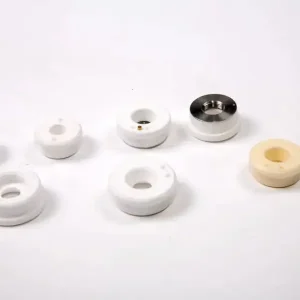
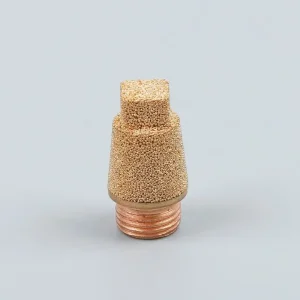


China OEM/ODM Manufacturer Powder Metallurgy Parts Power Tools Sintered Metal Planetary Spur Gear
View DetailsThe Evolution of Injection Molding in Medical Device Manufacturing
Modern medical device manufacturing demands ultra-high accuracy, zero-defect quality control, absolute biocompatibility, and frictionless scalable supply chains. As global healthcare technology shifts toward minimally invasive surgeries (MIS), wearable diagnostics, bio-absorbable implants, and smart robotic surgical assistance, the reliance on high-precision injection molding—spanning both Medical Plastic Injection Molding and Titanium/Stainless Steel Metal Injection Molding (MIM)—has reached unprecedented levels.
Class I, II, & III Regulatory Compliance
Medical injection molding requires stringent manufacturing controls under ISO 13485 standards. From surgical instrument housings to implantable micro-components, every production run must adhere strictly to FDA 21 CFR Part 820 quality system regulations, ensuring complete material batch traceability, cGMP validation, and non-cytotoxic material verification.
Micron-Level Geometrical Precision
Unlike standard industrial molding, medical device components often feature micro-fluidic channels, ultra-thin wall sections (< 0.3mm), internal threads, and complex ergonomic contours. Utilizing state-of-the-art electric injection machines and high-density powder sintering furnaces, tolerances of ±0.005mm (5 microns) are consistently achieved.
Bio-Compatible & Autoclavable Alloys
Material engineering lies at the core of medical device longevity. We specialize in processing ISO 10993 compliant medical-grade polymers (PEEK, Polycarbonate, TPU, Liquid Silicone Rubber) and high-performance metallic alloys including 17-4PH stainless steel, 316L surgical steel, and Ti-6Al-4V titanium through Advanced Metal Injection Molding (TiMIM).
Addressing Global Procurement Challenges for Medical Device OEMs
Procurement executives in tier-1 medical OEMs face compounding pressures: shortening product life cycles, eliminating cross-contamination risks, complying with EU MDR directives, and controlling unit costs without sacrificing quality.
Supply Chain Resilience & Risk Mitigation
Global medical brand owners are actively restructuring supply chains to mitigate single-source dependencies. As a premier wholesale injection molding manufacturer based in China with broad international export capabilities, we provide complete lifecycle support—from rapid prototyping and steel tooling fabrication to high-volume production, secondary CNC finishing, and cleanroom assembly. Our multi-cavity hot runner systems ensure reliable output scaling from tens of thousands to millions of units per annum.
Total Cost of Ownership (TCO) Optimization
Designing intricate surgical instruments via conventional CNC machining results in high scrap rates and excessive spindle hours. Metal Injection Molding (MIM) and high-precision plastic overmolding deliver near-net-shape components directly out of the mold or furnace. This eliminates up to 80% of secondary machining operations, drastically reducing raw material waste and driving down total unit costs by 30% to 50% on complex geometries.
Integrated Solutions for Complex Medical Applications
Our specialized manufacturing divisions utilize high-precision machinery, scientific injection molding protocols, and strict IQ/OQ/PQ validation matrices to produce high-value medical components.
Medical MIM (Metal Injection Molding)
Ideal for intricate, high-strength stainless steel and titanium components such as endoscopic grasper jaws, surgical stapler components, orthopedic tool housings, and dental bracket systems. MIM combines the design freedom of plastic injection molding with the structural integrity of forged alloy steels.
Cleanroom Plastic Injection Molding
Operating under ISO Class 7 and Class 8 controlled environments, our cleanroom molding facilities process implantable-grade PEEK, polycarbonate (PC), polypropylene (PP), and liquid silicone rubber (LSR). Perfect for IV diagnostic cartridges, syringe bodies, fluidic valves, and respiratory devices.
Insert Molding & Multi-K Overmolding
By combining hard plastic substrates with soft thermoplastic elastomers (TPE/TPU) or metallic contacts, we engineer ergonomic surgical scalpel handles, moisture-sealed diagnostic housings, and soft-touch catheter connectors, preventing fluid ingress and enhancing operational tactile feedback.
Micro-Injection Molding Technology
Capable of shot weights down to 0.01 grams, our micro-molding systems excel at producing micro-scale medical components including neurological implant housings, vascular clips, ophthalmic surgical tools, and micro-fluidic drug delivery chips with sub-micron surface finishes.
Medical Grade Material Selection & Performance Matrix
Engineered comparison of high-demand materials used in medical device injection molding
| Material Grade | Process | Tensile Strength (MPa) | Sterilization Resistance | Biocompatibility | Target Medical Applications |
|---|---|---|---|---|---|
| 316L Stainless Steel | MIM (Metal Mold) | 520 - 600 | Autoclave, Gamma, EtO | ISO 10993 / ASTM F138 | Surgical shears, forceps, laparoscopic tools |
| 17-4PH Stainless Steel | MIM (Metal Mold) | 1,050 - 1,250 | Autoclave, Gamma, EtO | Non-implantable contact | Orthopedic drivers, gearboxes, surgical staplers |
| Ti-6Al-4V (Grade 5 Titanium) | TiMIM | 890 - 1,000 | Autoclave, Gamma, E-beam | ASTM F136 Implantable | Bone plates, spinal cages, dental implants |
| PEEK (Optima / Natural) | Plastic Molding | 95 - 110 | Repeated Autoclave, Steam | USP Class VI / ISO 10993 | Spinal implants, wear components, surgical handles |
| Liquid Silicone Rubber (LSR) | LIM (Liquid Mold) | 8 - 12 | Autoclave, EtO | USP Class VI / Bio-Grade | Respiratory masks, peristaltic pumps, seals |
| Polycarbonate (Medical PC) | Plastic Molding | 60 - 70 | Gamma, EtO (Limited Steam) | USP Class VI | Fluid reservoirs, dialyzer housings, IV connectors |
Design for Manufacturability & Zero-Defect Quality Control
Ensuring medical-grade compliance requires rigorous upfront engineering simulation and continuous quality monitoring across every phase of mold design, resin/powder compounding, and final validation.
Predictive Moldflow Analysis
Before steel is cut, our senior tooling engineers perform complete Moldflow® simulations to analyze gate positioning, shear stress distribution, volumetric shrinkage, gas venting, and potential weld line locations. This mitigates part distortion, sink marks, and micro-voids in critical pressure-holding medical parts.
Validation Protocol (IQ / OQ / PQ)
We execute rigorous Installation Qualification (IQ), Operational Qualification (OQ), and Performance Qualification (PQ) protocols. Process windows for injection pressure, melt temperature, holding time, and cooling cycles are locked to deliver repeatable Cpk values ≥ 1.67 across long-term production lots.
Advanced Metrology & Inspection
Quality control laboratories are equipped with ZEISS 3D Coordinate Measuring Machines (CMM), optical vision profile projection systems, X-ray computed tomography (CT) for non-destructive internal void inspection, density testers, and laser-assisted surface roughness gauges.
Future Trends in Medical Device Injection Molding
As healthcare technology advances toward personalized medicine, wearable bio-sensors, and robotic surgery, medical molding processes are evolving dynamically.
Smart Molding & AI In-Mold Cavity Sensors
Integration of real-time piezoelectric cavity pressure sensors and AI-driven closed-loop machine controls allows immediate dynamic adjustment of injection parameters per shot. This guarantees zero defect escapes for critical micro-fluidic medical diagnostics and implantable components.
Bio-Resorbable Polymers & Micro-MIM Robotics
Processing next-generation bio-resorbable polymers (PLGA, PLLA) enables temporary surgical implants that dissolve safely within the human body after bone healing. Concurrently, ultra-fine micro-MIM titanium processing empowers sub-millimeter robotic surgical wrist joints with 7 degrees of freedom.
Custom OEM Hardware & Medical Components
Explore additional high-precision die casting, sintered metal, and custom OEM manufacturing solutions designed for demanding international medical and industrial standards.

Wholesale aluminium die casting auto parts manufacturer in China Manufacturer, Suppliers
View Details

China Fast delivery MIM Mbt Bondable Self-Ligating Dental Orthodontic Bracket Manufacturers
View Details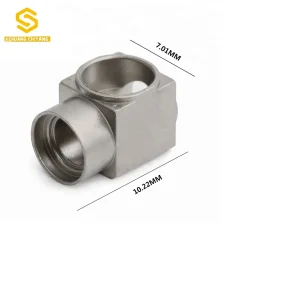

China Hot sale Customized/Designing Zinc/Aluminium Die Casting Parts for Auto/Hardware/Medical
View Details
Wholesale 2023 High quality Metal Injection Molding MIM Process for Titanium Alloy OEM Parts
View Details
China OEM Customized Custom Powder Metallurgy Products, Processing Metal Powder Metallurgy Parts
View Details
Frequently Asked Questions (Q&A)
Technical answers to key engineering, regulatory, and procurement questions regarding wholesale medical device injection molding.
1. What certifications and cleanroom standards are required for medical injection molding?
Medical device injection molding typically requires ISO 13485 certification for Quality Management Systems, alongside IATF 16949 and ISO 9001. Manufacturing of fluidic or invasive medical components must occur inside certified ISO Class 7 or Class 8 cleanrooms to control airborne particulate contamination under cGMP / FDA 21 CFR Part 820 guidelines.
2. How does Metal Injection Molding (MIM) compare to 5-axis CNC machining for complex surgical instruments?
While CNC machining is ideal for low-volume prototypes, MIM is far more cost-effective for medium to high-volume production (over 2,000 to 5,000 parts/year). MIM produces complex 3D net-shape metallic geometries—including internal knurling, micro-gears, and curved channels—in a single molding operation, reducing unit production costs by 30% to 60% while maintaining equivalent material density (>97-99%) and tensile strength.
3. What materials are safest for bio-compatible medical device components?
For metallic components, ASTM F136 Grade 5 Titanium (Ti-6Al-4V) and 316L Surgical Stainless Steel offer superior corrosion resistance and ISO 10993/USP Class VI biocompatibility. For polymers, implant-grade PEEK, Medical Grade Polycarbonate, Liquid Silicone Rubber (LSR), and bio-grade TPE provide exceptional chemical inertness and sterilization stability.
4. What is your typical lead time for custom medical injection tooling and sample validation?
Standard prototype tooling and initial sample production (T1 samples with FAI inspection reports) take approximately 25 to 35 days depending on part complexity and cavity count. Accelerated rapid tooling utilizing 3D metal printed inserts can deliver preliminary functional test samples within 10 to 14 business days.
5. Can you accommodate non-disclosure agreements (NDAs) and intellectual property protection?
Yes, absolutely. We routinely sign binding custom or standard non-disclosure agreements prior to receiving technical 2D/3D CAD drawings (STEP, IGES, PDF). All client project data is maintained on encrypted, restricted-access internal servers.
6. How are critical medical dimensions verified during mass production?
We employ Statistical Process Control (SPC) monitored by automated vision systems, inline laser micrometer gauging, and CMM sampling at pre-defined intervals during every shift. First Article Inspection (FAI), Material Certificates (CoA), and full lot traceability documentation accompany each production batch.
Partner with a World-Class Medical Injection Molding Specialist
Send us your 2D engineering drawings and 3D CAD files today. Our medical engineering team will deliver a comprehensive Design for Manufacturability (DFM) review and a transparent quotation within 48 hours.