
Precision OEM Medical & Technical Components Catalog
Explore our wholesale catalog of engineered components, precision metal injection molded parts, sintered hardware, and custom plastic assemblies for global medical and industrial applications.





1. Executive Summary & Global Commercial Landscape
Analyzing the macro economics, market sizing, technological convergence, and supply chain dynamics driving wholesale medical injection parts manufacturing worldwide.
Macroeconomic Growth Factors
The global demand for wholesale medical injection parts is undergoing a structural expansion. Driven by an aging global population, increased healthcare expenditure in emerging markets, and the rapid rise of minimally invasive surgical (MIS) procedures, medical device Original Equipment Manufacturers (OEMs) are increasingly outsourcing component fabrication to specialized manufacturing partners equipped with cleanroom capabilities and advanced tooling systems.
Convergence of MIM & Micro-Plastics
Modern medical devices demand sub-millimeter features, ultra-tight tolerances (±0.005 mm), and complex internal geometries that traditional CNC machining cannot economically replicate. Metal Injection Molding (MIM) using 316L and 17-4PH stainless steel combined with high-performance thermoplastic micro-injection (PEEK, PPSU, COC) has redefined the boundaries of surgical instrument and drug-delivery component design.
Supply Chain Resilience & Quality
Global medical technology leaders are shifting toward single-source Tier-1 suppliers capable of delivering validated DFM (Design for Manufacturability), rapid prototyping, tooling design, multi-cavity injection, automated cleanroom assembly, and rigorous regulatory documentation (FDA 21 CFR Part 820 & EU MDR compliance).
Senior Technical Insight: Information Gain in Medical Procurement
Selecting a wholesale medical injection parts supplier requires evaluating metallurgical purity, polymer rheology, moldflow shear degradation limits, and cleanroom particulate control protocols. Cost reduction in high-volume medical manufacturing is not achieved by sacrificing resin quality, but by optimizing gate placement, cycle time, and multi-cavity balancing.
2. Material Science & Advanced Engineering Matrix
A comprehensive technical comparison of medical-grade metals and high-performance thermoplastics utilized in medical injection molding applications.
Medical injection parts must satisfy rigorous biological and mechanical criteria, including ISO 10993 cytotoxicity standards, chemical resistance against aggressive hospital disinfectants, thermal stability during autoclave sterilization, and high fatigue resistance. Below is an engineering evaluation matrix detailing primary material candidates.
| Material Category | Specific Alloy / Polymer Grade | Tensile Strength (MPa) | Sterilization Resistance | Primary Medical Applications |
|---|---|---|---|---|
| Stainless Steel MIM | MIM 316L (UNS S31603) | 480 – 550 MPa | Autoclave, EtO, Gamma, Plasma | Endoscopic grippers, surgical scissors, biopsy forceps, housing caps |
| High-Strength MIM | MIM 17-4PH (UNS S17400) | 900 – 1150 MPa | Autoclave, EtO, Gamma | Laparoscopic shaft swivels, high-torque needle drivers, orthopedic gears |
| Titanium Alloys | Ti-6Al-4V Grade 5 (TiMIM) | 890 – 960 MPa | Autoclave, EtO, Gamma, Radiation | Implantable dental mounts, maxillo-facial plates, micro-bone screws |
| Polyetheretherketone | PEEK (Medical Grade, Unfilled/Glass-filled) | 95 – 170 MPa | Repeated Autoclave (>1,000 cycles), Steam | Spinal cages, surgical handles, structural drug delivery housings |
| Polyphenylsulfone | PPSU (Radel® Grade) | 70 – 85 MPa | Steam Autoclave, Chemical Disinfection | Surgical instrument trays, fluidic connectors, anesthesia valves |
| Cyclic Olefin Copolymer | COC / COP (Medical Grade) | 60 – 75 MPa | EtO, Gamma, E-Beam | Microfluidic lab-on-a-chip, diagnostic cuvettes, pre-filled syringes |
Metal Injection Molding (MIM) Rheology
MIM combines fine metal powders (typically 2–20 micrometers) with a thermoplastic binder system (paraffin wax, polyacetal) to create a homogenous feedstock. Injecting into precise multi-cavity molds followed by catalytic debinding and high-temperature vacuum sintering yields near-wrought physical properties with 96–99% theoretical density.
High-Performance Polymer Micro-Molding
Processing medical polymers like PEEK and PPSU requires specialized barrel units, high mold temperatures (up to 200°C), and ultra-fast injection rates to prevent premature freezing in thin-walled sections (<0.25 mm). Precise thermal control prevents polymer degradation and stress concentration.
Bio-resorbable Polymer Processing
Advanced drug-eluting implants and temporary fixation devices utilize bio-resorbable polymers such as PLGA and PLLA. Micro-injection of these resins requires tightly controlled moisture levels (<50 ppm) and low residence times to preserve molecular weight and programmed degradation profiles.
3. Localized & High-Precision Application Scenarios
Examining how wholesale medical injection parts serve critical roles across surgical, diagnostic, and wearable medical device sub-assemblies.
Surgical Instruments & Endoscopy
Components: Micro-articulating hinges, jaws, clevises, lock-levers, suture catchers.
MIM 17-4PH and 316L stainless steel provide high yield strength and corrosion resistance required for repeated autoclave cycles and extreme tactile mechanical feedback during laparoscopic and robotic surgery.
Wearable Auto-Injectors & Insulin Pumps
Components: Micro gear-trains, plunger drivers, dosage adjustment sleeves, needle safety locks.
Engineered using medical-grade POM, PEEK, and Polycarbonate. Micro-injection tooling ensures friction-free internal gears with pitch diameters under 3 mm and pitch tolerances within ISO Class 7 accuracy.
In-Vitro Diagnostics (IVD) & Microfluidics
Components: Diagnostic cartridges, micro-well plates, optical cuvettes, fluidic valve bodies.
Molded from ultra-clear Cyclic Olefin Copolymers (COC). Molds feature optical mirror polishing (Ra < 0.01 μm) and sub-micron micro-channel embossing to maintain fluid lamellar flow without auto-fluorescence interference.
Orthopedic & Dental Sub-assemblies
Components: Suture anchors, drill guides, implant mounts, spinal alignment mechanisms.
Fabricated via Titanium MIM (Ti-6Al-4V) and PEEK micro-molding. Biocompatible, light-weight, radiolucent (PEEK), and structural integrity engineered for heavy stress-bearing bone interface zones.
4. Manufacturing Technology Roadmap & Process Innovations
The progression of advanced toolmaking, automation, real-time cavity sensing, and hybrid additive tooling in medical component fabrication.
Utilizing micro-EDM (Electrical Discharge Machining), femtosecond laser ablation, and high-speed CNC milling (>60,000 RPM) to manufacture hardened tool steel cores with core tolerances within ±0.002 mm.
Integrating piezo-electric cavity pressure sensors and melt temperature transducers inside the mold. In-situ telemetry dynamically adjusts pack/hold parameters to eliminate sink marks, flash, and voids.
Fully automated robotic end-of-arm tooling (EOAT) picks parts directly from mold cavities, transfers them to vision inspection stations, and packages them inside Class 7/8 cleanrooms to prevent bioburden contamination.
Implementing 3D-printed tool inserts featuring conformal cooling channels. Conformal channels follow complex 3D mold geometries, reducing cycle times by 30-40% while minimizing part warpage and thermal stress.
5. Enterprise Solution Architecture & Regulatory Governance
How wholesale medical injection suppliers structure quality management, compliance documentation, and risk mitigation for global medical device OEMs.
ISO 13485 & FDA 21 CFR 820 Compliance
A rigorous Quality Management System (QMS) engineered specifically for medical device components. Every production run undergoes complete IQ (Installation Qualification), OQ (Operational Qualification), and PQ (Performance Qualification) protocols to guarantee repeatable manufacturing capability (Cpk > 1.67).
Traceability & Material Certification
Full raw material traceability from lot-specific resin/powder certificates of analysis (CoA) down to single-part laser marking (Direct Part Marking - DPM) conforming to FDA Unique Device Identification (UDI) regulations. Complete material safety data sheets (MSDS) and RoHS/REACH compliance files provided.
Cleanroom Bioburden Control
Controlled manufacturing environments featuring positive pressure air filtration (HEPA), continuous particle monitoring, microbial bioburden testing, and strict gowning protocols to satisfy sterile packaging requirements for invasive medical components.
Wholesale Industrial & Specialized Hardware Lineup
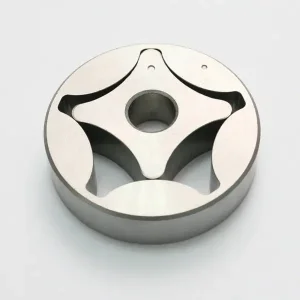
Browse additional custom die casting, metal injection molding, oil pump rotors, and precision hardware solutions manufactured in our ISO certified facilities.






6. Comprehensive Technical FAQ (Frequently Asked Questions)
In-depth engineering answers addressing tooling design, tolerances, sterilization compatibility, material selection, and regulatory validation for wholesale medical injection parts.