

China Short Lead Time for China Customized Kingtex Sintered Stainless Steel Sewing Machine Parts Manufacturer, Factories
View Details & Quote
Wholesale OEM China China OEM Sintered Bronze Bush Pm Copper Powdered Metallurgy Bearings Metal Sintering Gear Parts Manufacturer, Manufacturers
View Details & Quote
China Professional China China Metal Injection Molding (MIM) Parts for Complex Structural Components Machinery Parts Manufacturers, Factories
View Details & Quote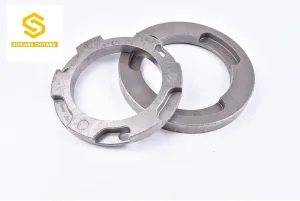
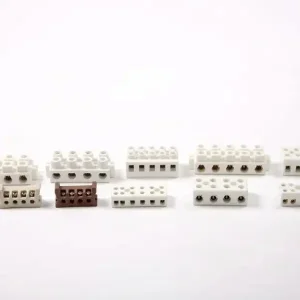
China High Temperature Ceramic Terminal Block Wire Connector Manufacturer, Factories
View Details & Quote
China Bottom price Powder Metallurgy Helical Spiral Pinion Bevel Gears Suppliers, Factories
View Details & Quote
China High Performance China Pm Motorcycle Sintered Gear Wheel Parts by Iron Alloy Powder Sintered Manufacturer, Manufacturers
View Details & Quote
Wholesale PriceList for Custom Sintering Metal Injection Molding MIM Hardware for CNC Machinery Auto Parts Manufacturer, Factories
View Details & QuoteGlobal Commercial & Industrial Landscape of Metal Sintering
The global metal sintering and powder metallurgy market is undergoing a structural transition driven by the electrification of mobility, miniaturization of medical robotics, and demand for near-net-shape alloy synthesis.
Market Trajectory & Sourcing Dynamics
Metal sintering processes—encompassing conventional press-and-sinter Powder Metallurgy (PM), Metal Injection Molding (MIM), and Additive Laser Sintering (SLM/DMLS)—have transformed from cost-reduction alternatives into essential structural manufacturing routes. Global OEM procurement managers across North America, Europe, and Asia-Pacific are increasingly shifting high-volume component procurement toward certified powder metallurgy foundries in China.
This shift is underpinned by continuous advancements in fine powder atomization, continuous atmospheric sintering furnaces, and automated post-sintering secondary sizing. Modern sintering factories can consistently achieve component densities from 92% to over 99% of theoretical limits, delivering mechanical properties that match or surpass traditional wrought metal forging.
Thermodynamic & Metallurgical Engineering
At its fundamental physical level, the metal sintering process relies on thermally activated solid-state atomic diffusion occurring below the major base metal's melting point ($T_m \approx 0.7 - 0.9 T_{melt}$). Powder compacts transition through distinct metallurgical zones inside continuous atmosphere-controlled furnaces:
- Initial Neck Formation: Atomic movement via surface diffusion forms bonding bridges between contiguous powder particles.
- Intermediate Pore Rounding: Volume diffusion and grain boundary migration collapse interstitial void space, resulting in isotropic component shrinkage (typically 14% to 22% in MIM).
- Final Stage Densification: Isolated closed-pore elimination yields homogenous microstructure with refined grain boundaries.
Sintering Process Selection & Manufacturing Route Comparison
Selecting the optimal powder metallurgy technology route directly impacts part density, dimensional tolerance, mechanical strength, and unit economics.
| Manufacturing Technology | Typical Material Systems | Achievable Density | Geometric Complexity | Dimensional Tolerance | Economic Lot Size |
|---|---|---|---|---|---|
| Press & Sinter (PM) | Fe-Cu, Fe-Ni, Sintered Bronze, Stainless Steels | 85% - 92% (Up to 95% with double-press) | Moderate (2.5D stepped profiles, gears) | ±0.03 mm to ±0.05 mm | 5,000 to 500,000+ pcs |
| Metal Injection Molding (MIM) | 17-4PH, 316L, Ti-6Al-4V, Low Alloy Steel (4605, 4140) | 96% - 99.5% | Ultra-High (Complex 3D features, undercuts, thin walls) | ±0.3% to ±0.5% (±0.02 mm CNC touch-up) | 2,000 to 1,000,000+ pcs |
| Selective Laser Melting (SLM/3D) | 316L, Inconel 718, Ti64, CoCr, Tool Steels | 99.0% - 99.8% | Unlimited (Internal cooling channels, lattice structures) | ±0.05 mm to ±0.1 mm | 1 to 1,000 pcs (Rapid prototyping) |
| Selective Powder Sintering (CIM) | Alumina ($Al_2O_3$), Zirconia ($ZrO_2$), Silicon Nitride | 98.5% - 99.9% | High (Electrical insulators, wear nozzles) | ±0.4% | 1,000 to 100,000 pcs |
| Conventional CNC Machining | Wrought Aluminum, Stainless Steels, Brass | 100% (Solid Stock) | Moderate to High (Tool accessibility limited) | ±0.005 mm to ±0.01 mm | 1 to 500 pcs (High cost at scale) |
End-to-End Metal Sintering Manufacturing Spectrum
From raw elemental powder characterization to high-vacuum atmospheric thermal sintering, explore how Ningbo Jiehuang Chiyang Electronic Tech Co., Ltd. ensures zero-defect quality.
1. Powder Engineering & Feedstock Preparation
The structural integrity of a sintered part begins at the sub-micron scale. We specify spherical gas-atomized metal powders ($d_{50} \approx 5-15\,\mu\text{m}$ for MIM) and water-atomized powders ($d_{50} \approx 45-150\,\mu\text{m}$ for PM). Raw materials undergo laser diffraction particle size distribution analysis, Hall flow rate measurements, and apparent density checks before automated blending with custom thermoplastic binder systems.
2. High-Tonnage Compaction & Injection Molding
For press-and-sinter powder metallurgy, JHMIM utilizes 10,000 kN (1,000-ton) automated multi-level CNC hydraulic compaction presses. These systems achieve uniform green compact density across complex multi-stepped geometries. For complex MIM components, fully electric Japanese injection molding machines deliver repeatable shot weights with micro-gram precision.
3. Multi-Stage Solvent & Catalytic Debinding
Prior to high-temperature thermal sintering, binder components are systematically removed without introducing micro-cracks or volumetric distortion. JHMIM operates advanced nitric acid catalytic debinding units for POM-based feedstocks and closed-loop solvent extraction plants, reducing organic binder concentrations below 0.5% prior to furnace entry.
4. Atmospheric & Vacuum Sintering
Thermal consolidation takes place in multi-zone continuous mesh-belt furnaces and high-vacuum batch sintering furnaces operating up to 1,650°C. Sintering atmosphere purity is continuously regulated via mass flow controllers utilizing high-purity hydrogen ($H_2$), dissociated ammonia ($NH_3$), cracked gas, or argon ($Ar$) to suppress oxidation and precisely regulate surface carbon content.
5. Post-Sintering Sizing, Coining & Heat Treatment
To achieve close tolerances (e.g., IT7–IT9 ratings), sintered components undergo secondary coining and re-pressing. To maximize surface fatigue limits and wear resistance, JHMIM applies specialized post-sintering thermal treatments including case hardening, nitriding, carbonitriding, vacuum quenching, and hot isostatic pressing (HIP) for porosity elimination.
6. Advanced Surface Finishing & Inspection
Final components undergo high-energy centrifugal tumbling, bead blasting, electroplating, anodizing, or PVD vacuum coating. Every production lot is validated using high-resolution Zeiss Coordinate Measuring Machines (CMM), optical image measurement systems, salt-spray corrosion chambers, and metallographic grain-structure cross-section analysis.
Industry-Specific Sintered Metal Solutions
Engineered metal sintering components powering mission-critical systems across major industrial sectors worldwide.
Automotive & Electric Vehicles
Mass-produced structural components compliant with IATF 16949 standards. Sintered timing gears, variable valve timing (VVT/VCT) phaser rotors, oil pump gear rotors, ABS sensor rings, transmission lock dogs, and electric drive motor pole pieces engineered from high-density iron-nickel and iron-copper alloys (MPIF 35 specifications).
Medical & Surgical Devices
Biocompatible 17-4PH and 316L stainless steel MIM components alongside Titanium TiMIM surgical jaws, laparoscopic grasper arms, endoscopic articulation joints, and dental orthodontic brackets. Sintering achieves fine surface finishes and tight dimensional repeatability required for bio-sterilization protocols.
Consumer Electronics & Wearables
Ultra-compact high-strength MIM components for foldable smartphone hinges, smartwatch chassis brackets, camera lens zoom slide tracks, earphone acoustic nozzles, and laptop display brackets produced with micro-wall thicknesses down to 0.35 mm.
Industrial Tools & Hardware
Heavy-duty sintered powder metallurgy planet gears, helical spiral bevel pinions, power tool impact clutches, pneumatic cylinder end-caps, hydraulic valve plates, and high-wear ceramic connector terminal blocks engineered to withstand extreme torsional loads.
Aerospace & Defense Hardware
High-temperature nickel-base superalloy components (Inconel 718/625) and sintered titanium components designed for lightweight fuel nozzle swirlers, drone flight control actuation gears, and extreme environment structural fasteners.
Fluid Power & Self-Lubricating Bushings
Porosity-controlled powder metallurgy sintered bronze and iron-copper oil-impregnated bushings. Interconnected micro-porosity acts as an internal lubricant reservoir, enabling maintenance-free self-lubricating bearing operations under high dynamic forces.
E-E-A-T Verified Manufacturing Infrastructure
Ningbo Jiehuang Chiyang Electronic Tech Co., Ltd. (JHMIM) operates under rigorous international quality management protocols, serving world-class OEMs with verified engineering authority.
Certified Quality Management Systems
JHMIM maintains dual international certifications in IATF 16949:2016 (Automotive Quality Management Standard) and ISO 9001:2015. Our factory floor operates continuous Statistical Process Control (SPC), tracking $C_{pk}$ and $P_{pk}$ key characteristics on critical dimensional features across every production run.
- Full Lot Traceability: Raw material heat certificates, debinding logs, and sintering thermal curves are archived for 10+ years.
- In-House Metallurgical Lab: Equipped with optical emission spectrometers (OES), carbon-sulfur analyzers, micro-Vickers hardness testers, and Archimedes density testing balances.
- 100% Automated Optical Sorting: High-speed machine vision systems verify key dimensional tolerances and surface aesthetics before final export packaging.
R&D Partnerships & Patent Portfolio
Our engineering division collaborates directly with leading academic metallurgical institutions, including the Chinese Academy of Sciences (CAS Ningbo) and Tianjin University. With over 8 material synthesis invention patents and 15+ senior R&D engineers on staff, JHMIM leads the field in resolving complex sintering challenges.
- Patented Low-Shrinkage Alloy Formulations: Minimizing thermal distortion on large 150 mm sintered components.
- Rapid DFM Review: Proprietary simulation software analyzes mold filling, green compact density gradients, and sintering shrinkage within 48 hours of drawing submission.
- Global Export Compliance: Fully compliant with RoHS, REACH, Conflict-Free Minerals guidelines, and ISO 14001 environmental standards.
Technology Roadmap: Next-Generation Sintering Outlook
Analyzing key technical advancements shaping metal powder consolidation over the next decade.
Binder Jetting Mass Production
The convergence of industrial additive manufacturing and powder sintering is exemplified by Binder Jetting (BJT). Printing liquid binding agents onto metal powder beds followed by batch furnace sintering allows tool-less mass production of complex geometries with properties equivalent to MIM, bypassing traditional tooling costs for medium volume runs.
AI Digital Twin Sintering Simulation
Integrating artificial intelligence and finite element analysis (FEA) into thermal simulation software allows real-time prediction of sintering shrinkage, gravity sag, and thermal stress distortion. Modern digital twin models optimize furnace temperature zones automatically, achieving zero-trial-and-error tooling iterations.
Green Powder Metallurgy & Net-Zero Sintering
Industrial decarbonization initiatives are driving the adoption of green hydrogen ($H_2$) atmosphere continuous sintering furnaces, recycled atomized metal powders, and energy-efficient induction vacuum sintering systems—reducing carbon intensity per kilogram of sintered component by up to 45%.
Design Rules & Sourcing Optimization for Sintered Parts
Follow these proven engineering design guidelines to minimize tooling complexity and reduce component unit cost when sourcing from wholesale sintering manufacturers.
Essential DFM Guidelines for MIM & PM
- Uniform Wall Thickness: Maintain consistent wall thickness ($1.0\,\text{mm} - 4.0\,\text{mm}$ ideal for MIM) to prevent differential thermal shrinkage, sink marks, or internal voids. Coring out heavy sections optimizes part mass and sintering duration.
- Draft Angles & Radii: Incorporate internal radii of at least $R \ge 0.5\,\text{mm}$ at wall intersections. Provide $0.5^\circ - 1.0^\circ$ draft angles on ejection features for compaction presses.
- Thread Feature Engineering: External threads can be molded directly via multi-slide MIM tooling. Internal threads are most economically added via post-sinter secondary high-speed tapping.
- Sintering Flat Supports: Design flat ceramic setter tray support surfaces on large parts to prevent sagging during high-temperature liquid-phase sintering.
Cost Driver Breakdown in Wholesale Procurement
Understanding how component specifications translate into piece-part cost structure ensures strategic sourcing efficiency:
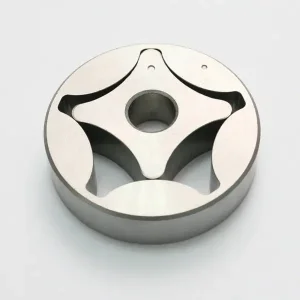

Wholesale Factory making Df-Slm260 Selective Laser Melting Powder Dental 3D Printer Metal Powder High Purity Slm Printing Manufacturers, Supplier
View Details & Quote
China Quality Inspection for China SUS 304 Small Size Metal Parts Made by Powder Metallurgy Manufacturers, Suppliers
View Details & Quote
China One of Hottest for Factory OEM Metal Die Casting Part Aluminum Die Casting CNC Machining Large Flywheel Housing Aluminum Replaces Manufacturers, Supplier
View Details & Quote
China Hot sale Factory Customized High Precision CNC Machining Die Casting Parts Metal Housing China Manufacturer Manufacturers, Supplier
View Details & Quote
Wholesale Factory Selling Stainless Steel Sintered Powder Metallurgy Parts Pm Metal Injection Molding MIM Gear Part for Electronic Components Suppliers, Factory
View Details & Quote
China ODM Factory China Powder Metallurgy Mold for High Shape Complexity Headset Factory, Factories
View Details & Quote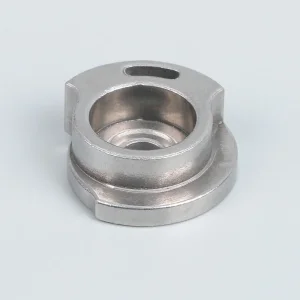
Metal Sintering Technical FAQ for Global Buyers
Expert insights addressing critical technical and commercial questions regarding metal sintering procurement.
Accelerate Your Metal Component Production
Send your engineering drawings today. Our senior metallurgy team will return a complete DFM analysis and transparent wholesale factory quotation within 48 hours.
Direct Contact: [email protected] | Phone / WhatsApp: +86 136 0574 5108