
Featured Precision OEM Products & MIM Scalpel Handle Components
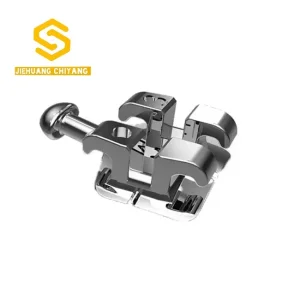
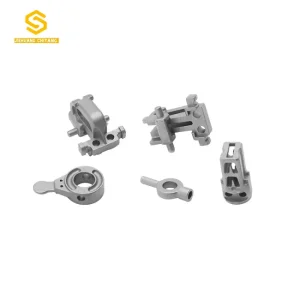
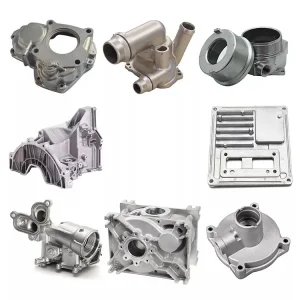
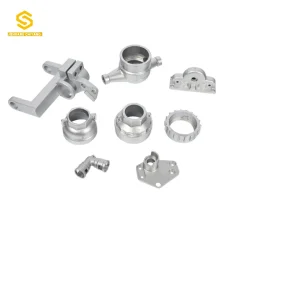
Explore our factory-direct wholesale catalog featuring high-density medical grade surgical instruments, orthodontic components, precision die castings, and custom metal injection molded (MIM) assemblies.
Executive Summary: The Manufacturing Revolution in Surgical Scalpel Handles
In modern surgical instrumentation, the scalpel handle is far more than a simple bladeholder—it is the tactile extension of a surgeon’s hand, demanding uncompromising mechanical integrity, ergonomic weight distribution, complex surface textures, and strict compliance with medical regulatory frameworks.
Historically, scalpel handles (such as standard #3, #4, and #7 fitting handles compliant with ISO 7153-1 and BS 2982) were manufactured via multi-stage CNC machining, micro-milling, or drop forging followed by manual polishing. While these legacy processes achieved adequate tolerances, they created massive cost bottlenecks when attempting to produce complex 3D ergonomic grips, integrated hollow weight-reduction chambers, internal blade-locking detents, or custom tactile knurling patterns at global wholesale scales.
Metal Injection Molding (MIM) has fundamentally disrupted this paradigm. By combining the geometric design freedom of plastic injection molding with the structural strength and thermal properties of wrought metal alloys, MIM enables top-tier medical device factories to produce complex, near-net-shape scalpel handles in high volumes with minimal secondary machining requirements.
Information Gain Insight: Unlike conventional subtractive manufacturing where complex anti-slip grooves, thumb rest contours, and internal blade fitment slots drastically increase unit machining times and tool wear, MIM mold tooling incurs a one-time amortized cost. Once the multi-cavity injection mold is built, producing a hyper-ergonomic scalpel handle costs virtually the same as producing a flat metal bar.
Metallurgical Science: Material Selection for MIM Scalpel Handles
Choosing the precise stainless steel or titanium alloy powder is crucial for achieving the necessary biocompatibility, yield strength, hardness, and corrosion resistance required for repeated hospital sterilization cycles.
17-4PH Stainless Steel (UNS S17400)
17-4PH is a precipitation-hardening martensitic stainless steel offering exceptional mechanical strength, wear resistance, and high hardness (up to 40-45 HRC after H900 heat treatment). It is ideal for reusable scalpel handles that feature thin micro-fitting blade lugs subjected to repeated blade attachment and detachment stress.
316L Surgical Grade Stainless Steel
316L contains 2-3% Molybdenum, providing outstanding resistance to pitting and crevice corrosion in chloride-containing medical solutions, blood, and harsh autoclaving environments. While lower in hardness than 17-4PH, 316L is non-magnetic, highly ductile, and perfectly suited for ergonomic general surgery handles.
Titanium Alloy Ti-6Al-4V (TiMIM)
Titanium MIM (TiMIM) offers a 45% weight reduction compared to stainless steel, significantly decreasing hand fatigue during lengthy microsurgical procedures. Ti-6Al-4V is completely MRI-compatible, highly biocompatible, and forms a stable passivating titanium oxide surface layer naturally.
Powder Morphology & Gas vs. Water Atomization
The quality of MIM scalpel handles begins at the micro-powder level. Our factory utilizes ultra-fine spherical metal powders (typically d50 = 8–15 μm) produced via gas atomization. Compared to irregular water-atomized powders, spherical gas-atomized particles provide higher solid loading in the feedstock polymer binder system, resulting in smoother as-sintered surface finishes (Ra < 1.6 μm prior to polishing) and uniform isotropic shrinkage during debinding and sintering.
DFM Framework: Engineering MIM Scalpel Handles for Mass Production
Design for Manufacturability (DFM) is the bridge between conceptual industrial design and high-yield mass production. When designing a custom scalpel handle for Metal Injection Molding, medical device design engineers should adhere to several core rules:
- Uniform Wall Thickness: Maintain wall thicknesses between 1.0 mm and 3.5 mm across the handle body to prevent sink marks, void formation, or differential thermal shrinkage during debinding.
- Core-Out Internal Cavities: Utilize cored-out sections in thick handle grips. This saves expensive metal alloy feedstock, reduces part weight, balances ergonomics, and accelerates thermal debinding cycle times.
- Blade Lock Keyway Integration: The blade attachment lug (compatible with #10, #11, #15, #22 blades) can be molded directly with draft angles as small as 0.5°, eliminating complex 5-axis micro-milling operations.
- Tactile Surface Features: Incorporate raised brand logos, graduation scale markings (cm/mm rules), and anti-slip diamond knurling directly into the mold cavity tooling.
Comprehensive Manufacturing Process Comparison
Evaluating manufacturing technologies for volume wholesale procurement of medical surgical components:
| Evaluation Factor | Metal Injection Molding (MIM) | 5-Axis CNC Machining | Investment Casting | Sheet Metal Stamping |
|---|---|---|---|---|
| Design Complexity | Extreme (3D curves, undercuts, knurling) | Moderate (High cost for 3D shapes) | Moderate to High | Low (Flat 2.5D geometries) |
| Material Utilization Rate | > 95% (Near-Net Shape) | 15% – 30% (70%+ material scrap) | 60% – 70% (Runners/risers waste) | 50% – 70% (Sheet strip scrap) |
| Surface Finish (As-Process) | Ra 1.0 – 1.6 μm | Ra 0.8 – 3.2 μm (Tool marks) | Ra 3.2 – 6.3 μm (Rough cast) | Ra 1.6 – 3.2 μm (Burrs present) |
| Dimensional Tolerance | ±0.3% to ±0.5% (Tightened with CNC) | ±0.005 mm – ±0.02 mm | ±0.8% to ±1.5% | ±0.05 mm – ±0.1 mm |
| Economical Batch Size | 5,000 to 1,000,000+ units/year | 1 to 1,000 units/year | 500 to 5,000 units/year | 50,000+ units/year |
| Unit Cost @ Wholesale Volume | Very Low (Optimal scalability) | Very High (Cost scales linearly) | Moderate | Low (Limited functionality) |
China Factory Ecosystem & Integrated Manufacturing Workflow
Leveraging the world's most robust precision metallurgy industrial cluster in Ningbo/Zhejiang, our manufacturing facility offers a fully integrated, vertically controlled end-to-end production workflow.
Feedstock Preparation & Compounding
Gas-atomized 17-4PH or 316L ultra-fine stainless steel powders are homogeneously mixed with a proprietary multi-component thermoplastic wax binder system at elevated temperatures in a sigma blade kneader, creating high-density granulated MIM feedstock.
Precision Micro-Injection Molding
The feedstock is injected under controlled thermal conditions into multi-cavity hardened tool steel molds using closed-loop electric injection molding machines, forming pristine "Green Parts" with integrated scalpel handle geometries.
Two-Stage Solvent & Thermal Debinding
Green parts undergo catalytic or solvent debinding to extract the primary binder matrix, leaving a porous "Brown Part" skeleton bound together by a backbone binder, ready for high-temperature metallurgical sintering.
High-Vacuum Sintering & Densification
Brown parts are subjected to controlled atmosphere vacuum sintering at temperatures up to 1380°C (2516°F). The remaining binder decomposes, and metal particles diffuse together, causing the part to shrink uniformly to 97-99% solid metal density.
Regulatory Compliance, Quality Assurance & Localized Support
Global medical device procurement managers, OEM brand owners, and hospital distributors face strict regulatory scrutiny from authorities such as the US FDA, EU MDR (2017/745), and NMPA. Sourcing MIM scalpel handles from our factory ensures absolute peace of mind through a robust quality infrastructure.
ISO 13485:2016 Certified Facilities
Our entire manufacturing plant operates under the strict controls of ISO 13485 (Medical Devices Quality Management Systems) and ISO 9001. Every batch of MIM scalpel handles undergoes full lot-traceability from raw powder heat numbers to final packaging inspection.
Biocompatibility Testing Standards
Material formulations pass stringent ISO 10993 biocompatibility testing standards, including cytotoxicity, skin sensitization, and systemic toxicity tests. Surface treatments feature citric acid or nitric acid passivation compliant with ASTM A967 to eliminate free iron and prevent surface oxidation.
Localized Global Engineering Support
We bridge the gap between Asian manufacturing power and western compliance needs. Our dedicated global technical teams provide localized project management, DFM consulting, NDA protection, and direct engineering communication in North America, Europe, and Asia-Pacific time zones.
Industry Trends & Localized Application Scenarios
The surgical instrument market is undergoing a rapid transition driven by modern operative techniques, safety regulations, and smart hospital workflows. Key trends transforming MIM scalpel handle procurement include:
1. Ergonomic Microsurgical & Ophthalmic Handles
Surgical procedures in neurosurgery, ophthalmology, and plastic surgery require specialized, pencil-grip scalpel handles with ultra-fine counterbalancing. MIM allows factories to mold custom round, hexagonal, or contoured handles with integrated millimeter rulers directly on the shaft.
2. Safety Scalpel & Blade Ejection Mechanisms
To protect operating room staff from sharps injuries (compliant with OSHA bloodborne pathogens standards), modern scalpel handles feature integrated spring-loaded sliding sheaths and one-touch blade release triggers. MIM is the primary process capable of economically manufacturing these complex micro-levers and latching slides.
3. RFID-Enabled & Color-Coded Smart Handles
Hospitals are adopting UDI (Unique Device Identification) and automated surgical tray tracking. MIM scalpel handles can be molded with dedicated internal recesses for sealed RFID microchips, as well as PVD coating options (Titanium Nitride Gold, Matte Black DLC) for instant OR size identification.
Related Precision MIM & Metal Powder Component Supply Line
Explore additional precision manufactured OEM metal products, custom MIM watch and consumer electronics hardware, automotive components, and powder metallurgy solutions.

Frequently Asked Questions: Technical & Procurement Guide
Addressing essential technical, engineering, and supply chain questions for B2B procurement managers and surgical device engineers.