
Precision OEM Powder Metallurgy & MIM Catalog
Explore our high-density MPIF Standard 35 compliant sintered parts, MIM precision hardware, and custom-engineered mechanical components.

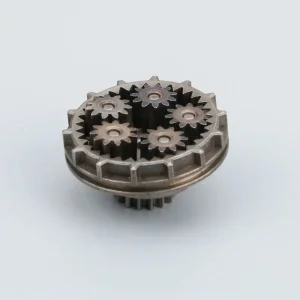




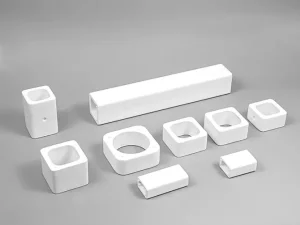

MPIF Standard 35 Fundamentals & Metallurgical Standards
A rigorous engineering analysis of material specifications, physical property benchmarks, and structural alloy dynamics in modern powder metallurgy.
What is MPIF Standard 35?
The Metal Powder Industries Federation (MPIF) Standard 35 provides design engineers and procurement directors globally with standardized, peer-reviewed technical specifications for structural powder metallurgy (PM) parts, Metal Injection Molding (MIM) components, and Powder Forged (PF) applications. Selecting standard-compliant materials guarantees repeatable yield strength, modulus of elasticity, and fatigue limits across multi-factory production cycles.
Material Nomenclature Decoding System
MPIF material designations follow an alphanumeric structure (e.g., FC-0208-50 or FN-0205-80). The prefix letters represent the primary alloying element system (F=Iron, C=Copper, N=Nickel, L=Molybdenum). The first four numerical digits denote major chemical element percentages, and the suffix designation indicates the minimum required yield strength in 1,000 psi (ksi) units, establishing unambiguous functional parameters.
Global Industry Trends in MPIF 35 Alloys & Powder Technology
How advanced densification, sinter-hardening, and AI-assisted powder compounding are shaping the next decade of structural component manufacturing.
Sinter-Hardening Technology Shift
Traditional secondary heat treatment introduces thermal distortion and dimensional variation. Modern MPIF Standard 35 manufacturing leverages sinter-hardening alloys (such as FLN2-4405 and FLC-4608) within rapid-cooling sintering furnaces. This achieves high martensitic matrix phase transformations directly during sintering, delivering hardness up to 45-50 HRC without oil quenching distortion.
High-Density Compaction & Surface Rolling
Mechanical performance scales non-linearly with density. Enterprise buyers are pivoting from standard 6.8 g/cm³ press-and-sinter parts toward high-density regimes (>7.3 g/cm³) achieved via warm compaction, double-press double-sinter (DPDS), and local surface rolling. Surface densification yields gear teeth with contact fatigue limits matching wrought steel at a fraction of machining cost.
Green Manufacturing & Carbon Neutrality
Compared to forging or multi-axis subtractive milling—where material scrap rates can exceed 50%—PM and MIM processes achieve material utilization rates greater than 95%. Standard 35 powder metallurgy lowers embedded carbon footprints by eliminating secondary grinding operations and minimizing energy consumption per finished unit.
MPIF Standard 35 Material Selection & Property Matrix
Comprehensive comparative analysis of mechanical, physical, and microstructural characteristics across primary powder metallurgy grade families.
| MPIF Grade | Material Family | Density (g/cm³) | Tensile Strength (MPa) | Yield Strength (MPa) | Apparent Hardness | Primary Industrial Application |
|---|---|---|---|---|---|---|
| FC-0208-50 | Iron-Copper Steel | 6.8 - 7.2 | 450 - 520 | 350 - 410 | 65 - 80 HRB | Structural cams, timing pulleys, automotive oil pump rotors |
| FN-0205-80 | Nickel-Iron Steel | 7.0 - 7.4 | 620 - 750 | 550 - 640 | 85 - 95 HRB | High-impact gears, power tool pinions, transmission links |
| FLN2-4405-120HT | Sinter-Hardened Alloy | 7.1 - 7.5 | 850 - 1100 | 780 - 950 | 35 - 42 HRC | Heavy-duty planetary planetary gears, hydraulic flanges |
| SS-316L-20 | Austenitic Stainless (MIM) | 7.5 - 7.8 | 520 - 580 | 210 - 250 | 60 - 70 HRB | Medical surgical handles, marine brackets, chemical valves |
| FX-1008-110 | Infiltrated Iron-Steel | 7.2 - 7.5 | 750 - 880 | 650 - 740 | 80 - 90 HRB | Pressure-tight hydraulic blocks, high-torque sprockets |
| CZ-3000-25 | Sintered Brass | 7.2 - 7.8 | 210 - 260 | 100 - 130 | 40 - 50 HRB | Lock cylinders, electrical contacts, corrosion bushings |
Enterprise Buyer Priorities & Supply Chain Risk Mitigation
Key considerations for Fortune 500 OEMs and Tier-1 automotive suppliers sourcing custom powder metallurgy and MIM components.
Total Cost of Ownership (TCO) Optimization
While initial tooling capital expenditures (CAPEX) for powder compaction dies or MIM injection molds require upfront investment, unit price economics (OPEX) dramatically outpace CNC machining at scale. At annual volumes exceeding 10,000 units, MPIF Standard 35 net-shape parts reduce piece costs by 35% to 60% by eliminating multi-axis machining passes and chip waste management fees.
Quality Assurance & Traceability Protocol
Global procurement teams must enforce zero-defect supplier policies. Reliable manufacturers maintain IATF 16949 and ISO 9001 certifications, backed by complete lot traceability from elemental powder chemistry certificates (ICP-OES) to final Coordinate Measuring Machine (CMM) dimensional reports, microstructural grain size analysis, and density measurements according to MPIF Standard 42.
Cross-Industry Engineering Solutions
Custom-engineered MPIF Standard 35 structural alloys tailormade for demanding operating environments worldwide.
Automotive Powertrain & Chassis
Engine variable valve timing (VVT) rotors, transmission synchronizer hubs, ABS sensor rings, and turbocharger actuator brackets require high fatigue resistance and tight thermal expansion tracking. Utilizing FN-0208 and FLN2-4405 alloys ensures precise dynamic balancing and extended component operational lifetimes under intense vibration regimes.
Medical Devices & Orthodontics
Miniature stainless steel components, surgical grasper jaws, endoscopic hinges, and orthodontic brackets demand bio-compatibility, zero porosity traps, and ultra-fine detail resolution. Micro-MIM processing using SS-316L-25 and 17-4PH stainless steel provides exceptional surface finish (<Ra 1.6µm) directly from sintering.
Industrial Tools & Power Hardware
Planetary gearboxes for cordless power tools, lock hardware tumblers, and high-load hydraulic motor plates require superior shear strength and wear hardness. Heat-treated copper-steels (FC-0208-80HT) and nickel-steels deliver severe impact durability under continuous duty cycles.
Worldwide Engineering Support & Quality Compliance
Providing seamless technical integration, local DFM consulting, and full regulatory compliance across international markets.
Rapid Engineering Turnaround & 48-Hour DFM Review
Our senior metallurgists and tool designers review every customer drawing within 48 hours. Using advanced Finite Element Analysis (FEA) and mold-flow simulation software, we assess compaction density gradients, ejection draft angles, and sintering shrinkage factors to optimize your design before cutting steel tooling.
Full Regulatory & Environmental Compliance
All manufactured MPIF Standard 35 component batches strictly conform to global environmental directives, including EU RoHS, REACH, and Conflict Minerals regulations. We supply comprehensive material test certificates (EN 10204 3.1), salt-spray corrosion resistance logs, and PPAP Level 3 documentation upon request.
Technology Roadmap: Next-Generation Powder Metallurgy
Anticipating future industry demands through breakthrough research in ultra-high density alloys, smart sintering, and hybrid additive manufacturing.
AI-Assisted Powder Compaction Simulation
Integrating artificial intelligence into compaction press control allows real-time punch force adjustments and multi-segment density gradient balancing. This minimizes internal stress concentrations during green part ejection, virtually eliminating micro-cracking risks in high-aspect-ratio components.
Titanium & High-Entropy Alloy MIM
Expanding standard 35 parameters into titanium alloys (Ti-6Al-4V) and soft magnetic composites (SMC) opens unprecedented thermal, electrical, and weight-saving performance vectors. Titanium MIM achieves high specific strength while eliminating expensive titanium bar stock machining waste.
Closed-Loop Atmosphere Sintering Control
Next-generation continuous mesh belt and vacuum sintering furnaces utilize optical dew-point control and mass-flow gas analyzers (H2/N2/Endothermic). Precise carbon potential regulation prevents both surface decarburization and excessive soot formation, maximizing microstructural purity.
Frequently Asked Questions on MPIF Standard 35 Grades
Technical guidance from our senior powder metallurgy engineering staff addressing common purchasing, technical, and manufacturing queries.
Explore Additional Custom Metal & Hardware Products
Complete product catalog containing custom die castings, MIM components, and specialized OEM sintered parts.



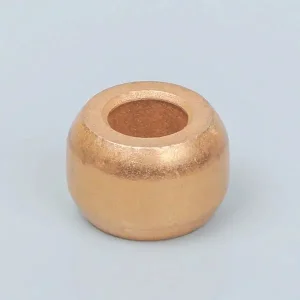
Start Your MPIF Standard 35 Custom Engineering Project
Submit your 2D engineering drawings (PDF) and 3D CAD files (STEP/IGES) today. Our engineering metallurgists will provide a comprehensive DFM feasibility report and transparent quotation within 48 hours.
Request Free Engineering DFM & Quote