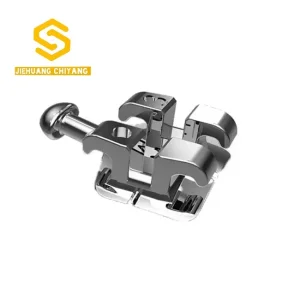
Precision Engineered Auto & Industrial Assemblies

Custom Zinc/Aluminium Die Casting Parts for Auto & Hardware

Precision CNC Mold Powder Metallurgy Spare Hardware Parts

Custom Sintering Metal Injection Molding (MIM) Auto Hardware
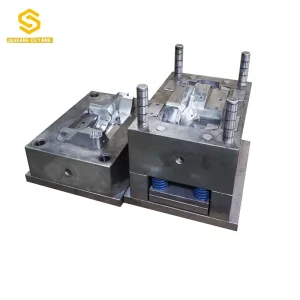
CNC Machining Aluminium Die Casting Tooling Mold Parts

OEM Customized Zinc Alloy & Aluminum Precision Die Castings

Stainless Steel Industrial Circular Powder Sieving Machine

OEM Metal Injection Molding Process for Stainless Steel Parts
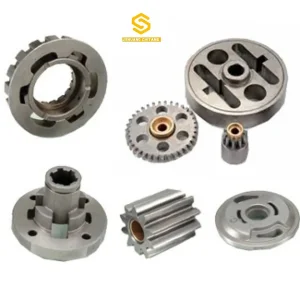
MIM Metal Injection Molding 316L Stainless Steel Components
Precision Oxygen Sensor Sleeves & Weld Boss Manufacturing
An In-Depth Technical Whitepaper on Material Metallurgy, Thread Integrity, and Scalable OEM Supply Chains for Exhaust Emissions Telemetry.
Critical Role in Emission Control Systems
Oxygen Sensor Sleeves (also designated as Lambda sensor bungs, mounting bosses, sensor adapters, or exhaust weld sockets) serve as the indispensable structural bridge connecting real-time exhaust gas sensors (HEGO/UEGO) to automotive downpipes, catalytic converters, and Selective Catalytic Reduction (SCR) systems.
Operated under severe thermal shock ranging from sub-zero ambient conditions to continuous exhaust temperatures exceeding 950°C (1,742°F), these components demand zero-defect metallurgical homogeneity. A microscopic fatigue fracture or thread deformation leads directly to unmetered air intrusion, leaning out fuel mixture calculations, triggering false Diagnostic Trouble Codes (DTCs), and violating stringent global OBD-II standards.
Engineering Mechanical Challenges
Modern exhaust architectures require oxygen sensor sleeves to exhibit exceptional creep resistance, anti-galling thread profiles, and flawless weldability onto thin-walled stainless tubing. Key engineering constraints include:
- M18x1.5 & M12x1.25 Thread Tolerances: Maintaining Class 6H internal thread pitch precision post-sintering or post-welding without secondary thread chasing.
- Thermal Expansion Alignment: Matching coefficient of thermal expansion (CTE) to 304L, 316L, and 409 stainless steel exhaust headers to prevent thermal fatigue cracking.
- Gas Dynamics & Sensor Recess Depth: Precision depth profiling to position the sensor sampling tip directly in the optimal laminar flow zone without inducing flow restriction.
Precision Engineering at Global Scale
MIM vs. Powder Metallurgy vs. CNC Machining
Evaluating Process Economics, Microstructural Density, and Material Utilization for High-Volume Oxygen Sensor Sleeve Manufacturing.
| Manufacturing Process | Material Utilization | Relative Density | Internal Thread Execution | Optimal Order Volume | Unit Cost Advantage |
|---|---|---|---|---|---|
| Metal Injection Molding (MIM) | 95% - 98% | 96% - 99% (Near Wrought) | Direct Molded (No Secondary Tapping) | 5,000 to 1,000,000+ pcs | Highest at high volume for complex geometries |
| Powder Metallurgy (PM / Sintered) | 90% - 95% | 88% - 94% | Requires Secondary Machining / Tapping | 10,000 to 500,000+ pcs | Optimal for standard cylindrical boss shapes |
| Bar Stock CNC Machining | 30% - 45% (High Scrap) | 100% (Wrought Bar Stock) | Single-point cut or Tapped | 100 to 2,000 pcs | Ideal for rapid prototyping & low volume |
| Aluminum / Zinc Die-Casting | 92% - 96% | N/A (Non-Exhaust Temp Limit) | Cast Core + CNC Threading | 2,000 to 100,000+ pcs | Applicable only for heat-shield brackets & cold end sensor housings |
Metal Injection Molding (MIM) Advantage
MIM technology combines the design freedom of plastic injection molding with the structural performance of wrought stainless steel. Gas-atomized 316L stainless steel powder is blended with a thermoplastic binder system, injected into multi-cavity tooling, debound via thermal catalytic processing, and sintered at 1380°C under hydrogen/argon atmosphere. The result is a fully dense, corrosion-resistant sensor sleeve requiring zero post-machining.
Powder Metallurgy (PM) High Speed Compaction
For standardized, high-volume sensor bungs featuring straight cylindrical outer diameters and weld steps, PM cold compaction delivers unmatched cost-per-piece efficiency. Utilizing 1,000-ton automated press technology, elemental metal powders are consolidated into green parts at rates up to 30 strokes per minute, followed by continuous mesh-belt furnace sintering to meet MPIF Standard 35 structural parameters.
Precision CNC Finishing & Thread Verification
Where micro-step radiused seats or custom angle cuts (e.g., 45° notched exhaust bungs) are specified, integrated multi-axis CNC swiss turning centers perform high-speed secondary operations. Every internal M18x1.5-6H thread is subjected to automatic plug gauging and optical profile verification to ensure complete anti-galling performance when mating with zirconia sensors.
Industrial Supply & Emission Regulation Drivers
Navigating Regulatory Tightening (Euro 7, EPA Tier 4, China VI) and Aftermarket Global Demand Expansion.
1. Stringent Global Emission Standards
The global transition toward ultra-low emission vehicles (ULEV) and heavy-duty Euro 7 / EPA Tier 4 Final compliance has doubled the average number of oxygen sensors per exhaust system. Modern internal combustion and hybrid powertrains utilize multi-stage catalytic convertors, requiring:
- Pre-Cat Wideband Lambda Sensors: Placed directly after the turbocharger turbine housing, subjecting sensor sleeves to extreme heat (950°C+).
- Post-Cat Switching Sensors: Positioned downstream to monitor catalytic converter oxygen storage capacity.
- NOx & Particulate Sensors: Requiring specialized mounting bungs in commercial diesel Selective Catalytic Reduction (SCR) systems.
Consequently, wholesale buyers require standardized, multi-spec sensor sleeves capable of maintaining structural integrity across millions of thermal cycles.
2. Performance Aftermarket & Tier-1 Supply Chain Requirements
In the high-performance automotive aftermarket, custom exhaust fabrication shops and exhaust manifold manufacturers demand specialized oxygen sensor bungs:
- Notched Radius Bungs: Pre-shaped outer contours designed to sit flush on 1.5", 1.75", 2.0", and 3.0" OD exhaust piping for seamless TIG welding.
- Extended O2 Deflector Sleeves: Built-in micro-catalytic converters or restricted orifice chambers used to rectify sensor readings on high-flow race setups.
- Recessed & Low-Profile Bungs: Minimizing sensor projection into the exhaust gas path to reduce turbulent flow resistance.
Localized Application Scenarios & System Integration
Tailoring Oxygen Sensor Sleeves for Specific Operational Environments and Thermal Profiles.
Downsized Turbo Gasoline Engines
Environment: Compact engine bays with intense thermal radiation and high-frequency vibrational stress.
Component Requirement: Low-carbon 316L MIM sensor bungs featuring integrated heat dissipation fins. High oxidation resistance prevents thread galling during sensor replacement under service cycles.
Commercial Heavy-Duty Diesel SCR
Environment: Heavy-duty freight transport, off-highway construction equipment exposed to corrosive urea (AdBlue) spray.
Component Requirement: Austenitic stainless steel PM bungs with enhanced molybdenum content. High resistance to ammonium nitrate dew-point corrosion and sulfur dioxide scaling.
Marine & Stationary Power Generators
Environment: Marine diesel engines operating in humid, salt-rich environments with continuous load cycles.
Component Requirement: Heavy-duty 316L CNC-machined or MIM sleeves certified for 1,000+ hours salt spray test compliance, maintaining zero gas leakage under high exhaust backpressure.
The China Factory Supply Advantage
Unlocking Speed, Cost Efficiency, and Quality Assurance via Ningbo's Integrated Metallurgical Cluster.
15-Day Tooling Lead Time
In-house mold design and ultra-precision EDM tooling production cuts initial prototype lead times from western industry averages of 6-8 weeks down to just 15 days.
Raw Material Verticalization
Direct partnerships with premium gas-atomized metal powder producers guarantee strict chemical purity, stable batch-to-batch shrinkage ratios, and immunity to raw material price volatility.
Continuous Sintering Capacity
Equipped with high-capacity continuous atmosphere sintering furnaces running 24/7, enabling daily production throughput exceeding 100,000 oxygen sensor bungs.
Total Landed Cost Efficiency
Near-net shape MIM execution eliminates up to 70% of machining waste, delivering landed cost savings of 30% to 50% compared to Western European or North American machine shops.
Quality Assurance, Compliance & Global Logistics Support
Rigorous International Standards Verification for Zero-Defect Tier-1 Integration.
IATF 16949 & ISO 9001 Certified Metrology
Every wholesale oxygen sensor sleeve batch undergoes multi-stage Quality Assurance (QA) protocol before release:
- 3D Coordinate Measuring Machine (CMM): Verifying flange squareness, concentricity, and outer profile radius against CAD drawings.
- Thread Pitch Go/No-Go Gauging: 100% automated checking of M18x1.5 / M12x1.25 internal pitch diameter tolerances.
- Spectrometric Material Verification: Inductively Coupled Plasma (ICP) spectroscopy verifying exact 316L / 304L elemental chemistry.
- Salt Spray & Pressure Leak Testing: ISO 9227 neutral salt spray test exceeding 1,000 hours with zero red rust.
Global OEM Logistics & DFM Engineering Support
We provide complete end-to-end support tailored for overseas purchasing directors, engineering leads, and inventory managers:
- Free DFM Review within 24 Hours: Engineering evaluation of wall thickness, draft angles, and thread reliefs before tooling commitment.
- VMI & Safety Stock Stocking Programs: Warehousing arrangements in regional hubs to guarantee just-in-time (JIT) line-side delivery.
- Full Regulatory Documentation: PPAP Level 3 documentation, IMDS entry, RoHS, REACH, and Conflict Minerals compliance reports included.
Frequently Asked Questions (FAQ)
Expert Answers on Oxygen Sensor Sleeve Design, Metallurgy, and Wholesale Ordering.
What is the standard thread specification for wholesale oxygen sensor sleeves?
The global industry standard thread specification for automotive oxygen sensors is M18 x 1.5mm, designed in accordance with SAE J1962 and ISO 2719 standards. Smaller sensors (such as NOx sensors or specialized motorcycles/ATVs) may utilize M12 x 1.25mm threads. As an OEM manufacturer, we produce custom thread sizes, including NPT pipe threads or imperial threads upon customer request.
Why choose Stainless Steel 316L over 304 for O2 sensor weld bungs?
While Stainless Steel 304 offers adequate strength, 316L contains 2%-3% Molybdenum, which dramatically improves resistance to pitting corrosion caused by acidic exhaust condensates (sulfuric and nitric acids). Furthermore, the lower carbon content ("L" grade) in 316L prevents sensitization—the precipitation of chromium carbides at grain boundaries during welding—thereby maintaining high corrosion resistance around the weld seam.
How does Metal Injection Molding (MIM) prevent oxygen sensor thread galling?
Thread galling occurs when high thermal friction causes micro-welding between sensor threads and the mounting boss. MIM-manufactured sensor sleeves achieve a near-wrought theoretical density exceeding 97-98% with an exceptionally uniform micro-grain structure. This homogeneous grain surface, combined with precise molded thread radiuses, significantly reduces surface friction compared to rough cut threads, effectively eliminating thread galling during high-temperature engine operation.
What is the Minimum Order Quantity (MOQ) for custom OEM oxygen sensor sleeve manufacturing?
Our standard MOQ is 2,000 pieces for Metal Injection Molding (MIM) parts and CNC machined components, and 5,000 pieces for standard Powder Metallurgy (PM) compacted parts. For prototype development and pilot engineering validation, smaller initial test production runs can be arranged alongside our free Design for Manufacturability (DFM) review.
Can you manufacture stepped or notched sensor bungs for specific tube diameters?
Yes. We regularly mass-produce contoured, saddle-cut, and self-locating stepped oxygen sensor bungs engineered to fit specific exhaust pipe outer diameters (e.g., 1.5", 1.75", 2.0", 2.5", and 3.0"). These designs feature precision-engineered weld steps that hold the bung securely in place during automated robotic welding operations.
What quality certifications accompany each shipment?
Every shipment includes full production documentation: Material Test Reports (MTR) showing raw chemical composition, Certificate of Conformance (CoC), Dimensional Inspection Reports (CMM data), and Thread Pitch Verification certificates. We operate strictly under IATF 16949 and ISO 9001 certified quality systems.
Comprehensive Hardware & Automotive Component Catalog

High Quality Customize Zamak 3 Aluminum Zinc Alloy Die Castings

Powder Metallurgy Auto Parts Good Quality Wiper Motor Parts

Wholesale Machinery Industrial Spare Parts OEM Supplier

OEM MIM Powder Injection Molding Stainless Steel Custom Parts
Powder Metallurgy Motor Shaft Sleeve Sintered Metal Parts

Wholesale Dealers of OEM Alloy Powder Metallurgy Gear Assemblies
China Precision Custom Metal PM Powder Metallurgy Gears