
Engineered Precision Powder Metallurgy & Casting Catalog

China OEM/ODM Supplier Zinc Alloy Die Casting for Bathroom Faucet Connect Part Manufacturer, Factories
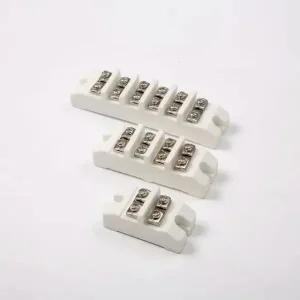
Wholesale Ceramic Terminal Connector Supplier, Factories

China Hot Sale for China Customized Powder Metallurgy Metal Injection Molding Parts Supplier Factory

China Manufacturer Custom Metal Brass Zinc Die Casting Mould Parts Anodizing Aluminum Die Casting Suppliers, Factory
Wholesale OEM China China OEM Sintered Bronze Bush Pm Copper Powdered Metallurgy Bearings Metal Sintering Gear Parts Manufacturer, Manufacturers

China One of Hottest for Factory OEM Metal Die Casting Part Aluminum Die Casting CNC Machining Large Flywheel Housing Aluminum Replaces Manufacturers, Supplier
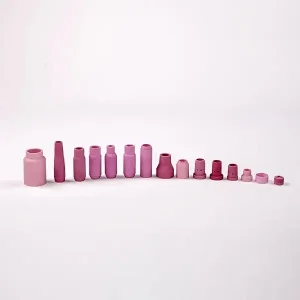
China Ceramic Terminal Strip Manufacturer, Supplier

China China Precision Gear Manufacturer Custom Metal PM Powder Metallurgy Gear Manufacturer, Suppliers
Powder Metallurgy (PM) in Modern Powersports Manufacturing
In the global powersports and motorcycle manufacturing sectors, the relentless push for elevated power-to-weight ratios, operational durability, and cost efficiency has made Powder Metallurgy (PM) and Metal Injection Molding (MIM) indispensable engineering technologies. Modern motorcycle components—ranging from high-torque engine timing gears and clutch pressure plates to intricate braking system valves—demand structural integrity capable of withstanding extreme dynamic loads, thermal stresses, and high cyclic fatigue.
By substituting traditional subtractive CNC machining or forging with advanced press-and-sinter powder metallurgy, Tier-1 manufacturers achieve near-net-shape geometry with up to 95% material utilization. This technical whitepaper presents an authoritative analysis of wholesale PM motorcycle parts production, metallurgical alloy selections, supply chain optimization via China’s manufacturing hubs, and the emerging technological shifts shaping the automotive and motorcycle industries through 2030.
Strategic Advantages of Sourcing PM Motorcycle Parts from China
China has evolved into the central hub for advanced powder metallurgy and metal injection molding. By leveraging fully integrated industrial clusters, proprietary alloy synthesis, and high-tonnage automated press infrastructure, Chinese PM manufacturers offer global OEMs unprecedented value without compromising on critical mechanical properties.
Integrated Material Synthesis & Atomization
Chinese factories possess direct access to localized elemental powder supply chains (iron, copper, nickel, molybdenum, and titanium). Advanced water and gas atomization facilities enable precise control over particle sizing (d50 distributions down to 5–15 µm for MIM and 45–150 µm for conventional PM), resulting in consistent sinterability and uniform microstructural density.
High-Tonnage Automated Compaction Infrastructure
Leading OEM suppliers in regions like Ningbo and Zhejiang utilize fully automated CNC multi-stage compaction presses ranging from 15 tons up to 1,000 tons (10,000 kN). This capital capability allows for the multi-level pressing of complex multi-stepped gears, oil pump rotors, and engine sprockets with localized density control.
IATF 16949 & APQP Quality Compliance
Export-oriented Chinese suppliers operate strictly within automotive quality management frameworks. Certified under IATF 16949, factories implement rigorous Advanced Product Quality Planning (APQP), Production Part Approval Process (PPAP Level III), full coordinate measuring machine (CMM) dimensional reports, and 100% key-dimension optical sorting.
Localized Application Scenes of PM Components in Modern Motorcycles
Powder metallurgy parts are embedded in critical subsystems across gas-powered, racing, and electric motorcycles (E-mopeds and high-performance e-motorcycles). The unique tribological and self-lubricating qualities of sintered metals make them ideal for friction and high-wear application scenes.
| Motorcycle Subsystem | Specific PM Component | Material / Metallurgy Standard | Key Functional Requirement |
|---|---|---|---|
| Engine & Valve Train | Timing Chain Sprockets, Valve Guides, Camshaft Lobes | MPIF FC-0208-50, Fe-Cu-C Sintered Alloys | High fatigue strength, wear resistance at 10,000+ RPM. |
| Powertrain & Transmission | Clutch Hub Inner/Outer Drives, Gearbox Selector Forks, Dog Gears | MPIF FLN2-4405-HT, Sinter-Hardened Steel | Exceptional impact toughness, torque fatigue, surface hardness (55+ HRC). |
| Oil Lubrication System | Gerotor Oil Pump Rotors (Inner/Outer Pairs) | MPIF F-0008, High-Density Iron-Carbon Alloys | Tight radial clearance (<0.02mm), smooth fluid delivery, low friction coefficient. |
| Braking & Safety (ABS) | ABS Sensor Rings, Brake Caliper Pistons, Master Cylinder Brackets | MIM 316L, 17-4PH Stainless Steel | Corrosion resistance, non-magnetic/magnetic signal accuracy, zero porosity leakage. |
| Electric Motorcycle Drives | Planetary Gear Train Components, E-Motor Rotor Hubs | Soft Magnetic Composites (SMC), High-Nickel Fe-Ni Alloys | High magnetic permeability, reduced eddy current losses at high frequencies. |
Macro Industry Solutions: Overcoming Fatigue & Wear in Powersports
Motorcycle engines operate at significantly higher specific power outputs and rotational speeds compared to standard passenger vehicles. As a result, PM parts must be engineered with tailored density profiles, specialized thermal treatments, and secondary surface modifications to eliminate micro-fractures and dynamic failure modes.
Sinter Hardening Technology
By integrating rapid cooling zones directly inside continuous mesh-belt sintering furnaces, Chinese manufacturers convert austenite directly into martensite. Sinter hardening eliminates the need for separate liquid quenching, reducing dimensional distortion on transmission gears while delivering uniform surface hardness up to 60 HRC.
Surface Rolling & Densification
To match the fatigue strength of forged steel in high-load motorcycle transmission gears, localized surface rolling is applied to sintered gear teeth. This process compacts the outer shell (0.5mm to 1.0mm depth) to near 100% theoretical density (>7.8 g/cm³), providing superior contact fatigue resistance while retaining a ductile core for impact absorption.
Oil Impregnation & Self-Lubrication
Interconnected porosity (15% to 25% by volume) in bronze and iron bushings is vacuum-impregnated with synthetic high-temperature lubricants. Under thermal stress and rotational friction, oil bleeds to the contact surface, providing maintenance-free self-lubrication for starter motor bearings and swingarm pivot bushings.
Fulfilling Global Enterprise Sourcing Requirements
When global procurement directors, supply chain VPs, and automotive engineering teams evaluate custom PM parts suppliers in China, the decision matrix extends beyond simple unit price. Key enterprise evaluation vectors include Total Cost of Ownership (TCO), tooling amortizations, design-for-manufacturability (DFM) support, and long-term risk mitigation.
1. Rapid DFM & Simulation Review
Leading PM suppliers supply rapid finite element analysis (FEA) and mold-filling simulation within 48 hours of drawing submission. Engineers optimize draft angles, radii, wall thickness transitions, and compaction tool splitting lines to avoid stress concentrations prior to steel cutting.
2. Tooling Longevity & Ownership
High-volume wholesale contracts include carbide-inserted tooling options engineered to withstand over 1,000,000 compaction cycles without dimensional drift. Tool maintenance, refurbishing, and replacement guarantees are formalized into long-term master service agreements (MSAs).
3. ESG & Carbon Footprint Compliance
As Tier-1 motorcycle OEMs face strict Scope 3 decarbonization mandates, powder metallurgy provides an inherently greener footprint. Net-shape manufacturing minimizes scrap metal waste, while modern sintering plants in China increasingly utilize solar integration and closed-loop heat recovery.
Industry Development Trends Shaping PM & MIM Motorcycle Components
The powersports industry is undergoing rapid disruption driven by electrification, light-weighting, and advanced digital quality control. Forward-thinking PM manufacturers in China are investing heavily in technologies that bridge the gap between sintered metals and additive manufacturing.
Titanium MIM (Ti-MIM) for Racing Applications
To satisfy high-end racing and premium motorcycle demand for weight reduction, Titanium Metal Injection Molding (Ti-6Al-4V) is emerging as a mainstream alternative to titanium CNC milling. Ti-MIM offers 45% weight savings compared to steel with equivalent yield strength for footpegs, gear levers, and engine fasteners.
Soft Magnetic Composites (SMC) in Electric Powertrains
The electrification of 2-wheelers requires high-density SMC materials capable of 3D magnetic flux paths. Insulated iron powder particles allow the pressing of complex axial flux motor cores with reduced copper usage, higher efficiency, and automated volume production.
AI-Driven Automated Optical Inspection (AOI)
Zero-defect mandates from global automotive clients have led to the deployment of machine-vision AI inspection systems. Optical sorting machines evaluate 100% of sintered components for micro-cracks, surface pits, and thread integrity at rates exceeding 150 parts per minute.
Technical & Procurement FAQ for Wholesale Buyers
Expert responses to critical engineering, quality assurance, and commercial inquiries regarding custom powder metallurgy motorcycle parts manufacturing.
How does Powder Metallurgy compare to CNC Machining for motorcycle gears?
Powder metallurgy eliminates raw material waste by compacting metal powders directly into near-net shapes, reducing unit cost by 35% to 50% for high-volume orders (>5,000 pcs). While CNC offers flexibility for small prototype lots, PM delivers superior part-to-part consistency, lower cycle times, and unique material options such as oil-impregnated porous bronze or custom Fe-Ni alloys that cannot be machined efficiently.
What densities are achieved for high-stress motorcycle components?
Standard single-press single-sinter PM achieves densities between 6.8 and 7.1 g/cm³. For high-torque transmission gears and engine sprockets, double-press double-sintering (DPDS) or warm compaction elevates density to 7.3 - 7.5 g/cm³. For ultra-complex or high-density parts, Metal Injection Molding (MIM) and surface rolling achieve densities up to 7.6 - 7.8 g/cm³, providing mechanical properties comparable to wrought steels.
What is the typical lead time for custom PM tooling and sample approval?
Custom compaction tooling design and fabrication typically take 25 to 35 days depending on component geometry and multi-cavity complexity. First-article samples accompanied by full PPAP Level III documentation, material certification, and CMM dimension inspection reports are delivered within 7 to 10 days following initial trial runs.
How are secondary operations handled for features that cannot be pressed?
Features perpendicular to the press direction (such as transverse cross-holes, undercuts, and external threads) are machined via integrated in-house CNC secondary centers. Factories utilize high-speed automated CNC turning, gear hobbing, grinding, and steam-treating lines to finish complex geometries without breaking supply chain continuity.
OEM Precision Hardware & Custom Sintered Components

Wholesale Medical Scalpel By Metal Injection Molding Process MIM Manufacturers, Factories

Wholesale Short Lead Time for China Mobile Phone Accessories Metal Injection Molding Manufacturers, Supplier
China Hot Selling for China Custom Automotive Component PA6t Plastic Injection Molding Metal Hardware OEM Car Spare Parts New Design Manufacturer, Factory
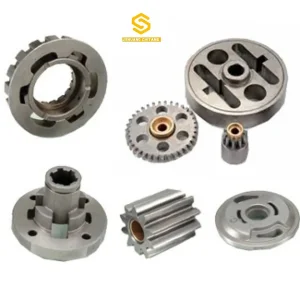
China MIM Metal Injection Molding 316L Stainless Steel textile machinery part mould Suppliers, Factories
China 2019 wholesale price China OEM Metallurgy Spare Parts High Strength Metal Sintered Parts Supplier, Suppliers
Wholesale 316l Stainless steel Small Metal Gears Motor Factory, Factories

China China OEM MIM Auto Spare Parts Car Parts Accessories Motor Motorcycle Parts by Metal Injection Molding CNC Machining Suppliers, Factories
