
Featured Industrial Engineering Components (Batch A)
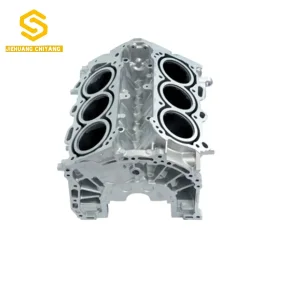
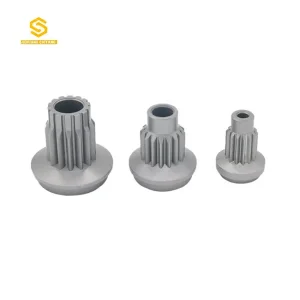
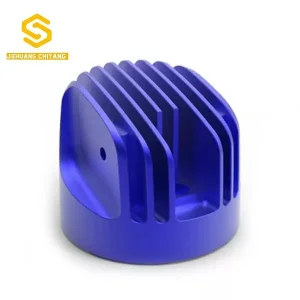
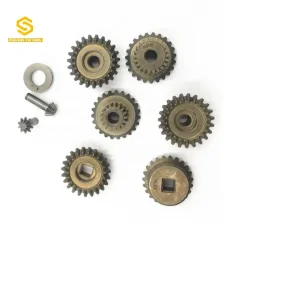
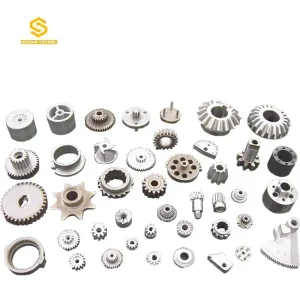
Explore our precision-manufactured OEM components, sintered metal filters, and high-density powder metallurgy assemblies engineered for extreme industrial environments.
Executive Whitepaper: Industrial Porous Stainless Steel Filtration Dynamics
An authoritative technical review of micro-porous powder metallurgy, fluid mechanical performance, and global procurement strategies for B2B system integrators.
1. Evolution of Sintered Porous Metal Media
Modern industrial process engineering increasingly demands solid-gas and solid-liquid separation media capable of operating reliably under physical and thermal stresses that quickly destroy conventional polymer, ceramic, or paper filters. Porous stainless steel filters, produced via solid-state diffusion bonding (sintering) of high-purity metal powders, represent the pinnacle of mechanical durability, precise pore geometry control, and long-term cleanability.
Through advanced powder metallurgy (PM) techniques, spherical or irregular AISI 316L, 310S, or 304 stainless steel powders are compacted into rigid matrices without melting. This process preserves interconnecting open pore channels (tortuosity) while securing atom-level metallic bonds between adjacent powder particles, delivering structural integrity under high pressure gradients ($\Delta P$).
2. Global Commercial & Industrial Demand Vectors
The global demand for wholesale porous sintered stainless steel filter elements is expanding rapidly across critical industrial sectors:
- Semiconductor & Ultra-High Purity (UHP) Gas Systems: Removing sub-micron particulate down to 0.003 µm in corrosive gas lines (e.g., Silane, Ammonia, HCl).
- Hydrogen Energy & Water Electrolysis: Serving as Porous Transport Layers (PTL) in Proton Exchange Membrane (PEM) electrolyzers.
- Bio-Pharmaceutical & Medical Processing: Enabling sterile gas sparging, fermentation aeration, and Catalyst Recovery Units (CRU).
- Petrochemical & Refinery Operations: Fluidized Bed Catalytic Cracking (FCC) blowback filtration under aggressive high-temperature environments.
Powder Metallurgy Engineering & Physics of Filtration
Understanding Darcy's Law, Permeability Coefficients, and Metallurgical Manufacturing Variables for Custom Porous Media.
Isostatic vs. Axial Pressing
Cold Isostatic Pressing (CIP) applies uniform fluid pressure around flexible elastomer molds, producing homogenous pore density in tubular and complex shapes. Cold Axial Pressing utilizes precision hard tooling for high-volume flat discs and simple geometries with tight dimensional tolerances.
Vacuum Sintering Thermodynamics
Sintering takes place in vacuum or hydrogen-reducing atmosphere furnaces at temperatures between 1100°C and 1280°C (below the melting point). Thermal necking forms strong atomic bonds between powder grains while retaining targeted porosity fractions from 30% to 55%.
Darcy's Law & Flow Resistance
Fluid flow velocity ($v$) through porous metal is calculated via Darcy's Law: $v = (K \cdot \Delta P) / (\mu \cdot L)$, where $K$ is the intrinsic permeability coefficient, $\Delta P$ is pressure drop, $\mu$ is dynamic viscosity, and $L$ is media thickness. Precision powder sizing minimizes $\Delta P$ while ensuring maximum retention efficiency.
Technical Benchmark Matrix: Porous Metal Media Selection
| Material Grade | Nominal Micron Rating (µm) | Porosity Range (%) | Max Temp (°C) Continuous | Corrosion Resistance Level | Primary Industrial Applications |
|---|---|---|---|---|---|
| AISI 316L Stainless Steel | 0.2 - 80 µm | 35% - 50% | 450°C (Oxidizing) / 600°C (Reducing) | High (General Acids/Solvents) | Pharmaceutical Sparging, Gas Filtration, Food & Beverage |
| AISI 310S Stainless Steel | 1.0 - 100 µm | 30% - 45% | 900°C (High Thermal Stability) | High (Sulfur/High-Heat Gas) | Furnace Flue Gas, Power Plant Fly Ash Separation |
| Nickel Alloy (Hastelloy C-276) | 0.5 - 50 µm | 35% - 48% | 550°C (Aggressive Chemicals) | Extreme (Wet Chlorine, Strong Acids) | Chemical Process Engineering, Offshore Oil & Gas |
| Pure Titanium (Grade 1/2) | 0.5 - 40 µm | 40% - 55% | 300°C (Biocompatible) | Superior in Chloride Environments | PEM Electrolyzer PTL, Seawater Desalination, Bio-implants |
China Factory Supply Chain Resilience & Wholesale Advantages
How integrated manufacturing hubs deliver cost optimization, rapid prototyping, and scalable OEM capacity for global buyers.
Full Vertical Integration
Chinese manufacturing centers like Ningbo integrate atomized powder synthesis, automated cold pressing, high-vacuum sintering, automated CNC machining, and orbital laser welding under one roof. This minimizes supply chain friction and lead times.
Tooling Cost Efficiency
Custom tooling development for complex sintered filter shapes (frustums, asymmetric discs, multi-layer sintered tubes) is available at 40% to 60% lower capital outlay compared to Western counterparts, enabling economical small-to-medium pilot runs.
Scalable Mass Production
Equipped with continuous belt sintering furnaces and multi-cavity automated compaction presses, Chinese OEM factories can seamlessly scale production from batch pilot units to millions of porous filter elements per year.
Localized Industrial Application Scenarios
Deploying Porous Stainless Steel Solutions Across Diverse Regional Regulatory and Engineering Environments.
North American Petrochemical Refineries
Scenario: Fluidized Catalytic Cracking (FCC) units in Texas and Louisiana require high-temperature gas filtration to capture catalyst fines (< 2 µm) before turbine expansion.
Solution: Sintered 316L stainless steel blowback filter candles with 0.5 µm pore ratings. High thermal fatigue resistance allows periodic pulsed gas backwashing, operating continuously for > 24 months without physical media degradation.
European Bio-Pharmaceutical Fermentation
Scenario: Pharmaceutical plants in Germany and Switzerland demand sterile air sparging systems for bioreactor fermentation vessels under strict cGMP guidelines.
Solution: Electropolished porous 316L micro-spargers with pore sizes engineered between 1 µm and 5 µm. The precise pore size distribution produces micro-bubbles that maximize oxygen transfer rates ($k_L a$) while preventing bacterial contamination.
East Asian Semiconductor Microelectronics
Scenario: Cleanroom gas distribution systems in Taiwan and South Korea require ultra-clean inline filters for aggressive etch gas lines.
Solution: Nickel alloy and 316L porous filter assemblies, baked out and vacuum-sealed in ISO Class 5 cleanrooms. They achieve 99.9999999% (9-Nines) filtration efficiency at 0.003 µm particle sizes under zero outgassing conditions.
Global Hydrogen Economy (PEM Electrolyzers)
Scenario: Green hydrogen production projects worldwide require highly conductive, corrosion-resistant Porous Transport Layers (PTL).
Solution: Ultra-thin sintered titanium and 316L porous sheets coated with platinum or gold layers. Optimized porosity (50-60%) ensures effective transport of liquid reactants and gas evacuation while retaining high electrical conductivity.
Technology Roadmap & Future Outlook (2025–2035)
Next-generation metallurgical innovations transforming the filtration and porous media landscape.
Phase 1: Additive Manufacturing & 3D Sintered Hybrid Structures (2025–2027)
Integration of Selective Laser Melting (SLM) 3D printing with traditional powder metallurgy sintering allows the creation of internal flow channels combined with gradient porous media in single monolithic parts, revolutionizing aerospace heat exchangers and fluidic mixers.
Phase 2: Nano-Coated & Surface-Modified Anti-Fouling Membranes (2027–2030)
Atomic Layer Deposition (ALD) of hydrophobic, oleophobic, or catalytic ceramic nano-films onto interior porous stainless steel walls will reduce bio-fouling and chemical scaling by up to 80%, substantially extending backwashing cycles in heavy industrial applications.
Phase 3: High-Entropy Alloy (HEA) Porous Media for Extreme Energy (2030–2035)
Development of porous filters using Multi-Principal Element Alloys (MPEAs) to sustain temperatures above 1100°C in corrosive environments, catering directly to next-generation nuclear reactors, hypersonic aerospace propulsion, and direct air carbon capture (DAC) modules.
Global Quality Compliance & OEM Risk Mitigation
Rigorous international testing protocols ensuring 100% batch-to-batch repeatability and defect-free international shipments.
ASTM E128 Bubble Point Testing
Every lot of wholesale porous metal filters undergoes Bubble Point Testing in accordance with ASTM E128 standards to determine the Maximum Pore Diameter ($P_{bp}$) and verify uniform pore sizing prior to shipping.
Material Traceability & MTC
Full raw material traceability back to the powder batch. Every order includes complete EN 10204 3.1 Mill Test Certificates (MTC), chemical spectrum analysis, and mechanical tensile test reports.
Global Logistics & Compliance
Equipped for DDP, FOB, and CIF international terms. Packaging complies with ISPM-15 export standards, utilizing clean-sealed vacuum packaging to protect media against atmospheric oxidation in transit.
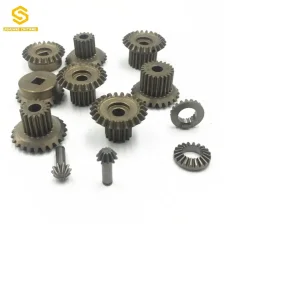
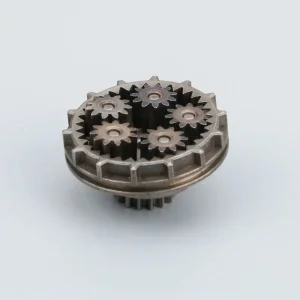
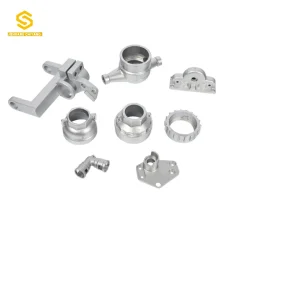
Featured Industrial Engineering Components (Batch B)
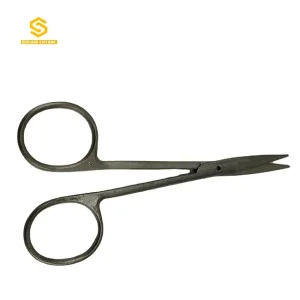
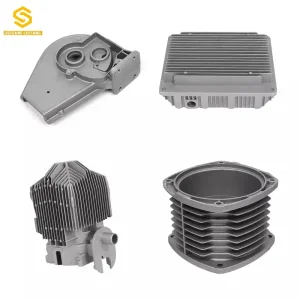
Browse our comprehensive lineup of sintered metal parts, MIM window gears, die-cast housings, and custom mechanical sub-assemblies.
Technical & Procurement FAQ (Frequently Asked Questions)
In-depth answers to engineering, quality, and commercial queries for porous stainless steel filter manufacturing.