
Sintered Metal & MIM Core Catalog
Direct-from-factory engineered solutions utilizing advanced copper-based, titanium, alloy steel, and ceramic powder synthesis.






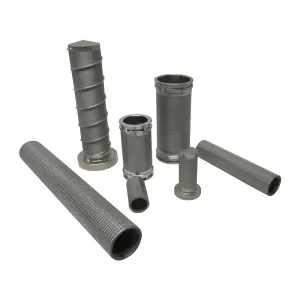

1. Global Industrial Landscape of Powdered Metal Manufacturing
The global advanced manufacturing sector is currently experiencing a structural paradigm shift. As corporate buyers, Tier-1 automotive integrators, aerospace OEMs, and medical device innovators push for extreme miniaturization, high strength-to-weight ratios, and near-zero material waste, traditional subtractive CNC machining is rapidly reaching its economic and physical boundaries. In this environment, strategic reliance on qualified wholesale powdered metal suppliers and specialized factory ecosystems has transitioned from a simple cost-reduction tactic into a core competitive imperative.
Powder Metallurgy (PM) and Metal Injection Molding (MIM) represent the pinnacle of net-shape alloy consolidation. By atomizing elemental or pre-alloyed metals into ultra-fine micron particles and subsequently consolidating them under controlled thermal-atmospheric conditions (sintering), manufacturers can produce ultra-complex 3D geometries with mechanical properties that approach or rival wrought metal standards. Global market evaluations indicate that the powdered metal components sector will expand beyond USD 14.8 Billion by 2030, driven predominantly by electrification in transportation, medical robotic systems, micro-hardware, and high-density industrial gearing.
2. Technical Trends Shaping Powder Metallurgy & MIM Factories
Micro-MIM & High-Density Sintering
The relentless push toward miniaturization in surgical instrumentation, wearable devices, and micro-actuators has birthed Micro-MIM. Advanced factories can now mold features smaller than 0.1mm with wall thicknesses down to 0.2mm, using sub-micron powders to achieve solid state density rates exceeding 98% of theoretical maximums.
Titanium & Specialized Superalloys (TiMIM)
While stainless steels (17-4PH, 316L) remain industry workhorses, leading Chinese powder metal suppliers are expanding production lines for Titanium Grade 5 (Ti-6Al-4V) and Nickel-based Superalloys (Inconel 718). This enables lightweight, highly corrosion-resistant components for marine and aerospace applications.
AI-Controlled Debinding & Sintering
Thermal shrinkage during sintering (typically 15% to 22%) historically posed tolerance challenges. Factory 4.0 integrates real-time laser profiling with AI-driven thermal feedback loops inside continuous vacuum sintering furnaces, guaranteeing precision tolerances of ±0.3% without requiring secondary machining.
3. Sourcing Criteria for Enterprise Buyers & Supply Chain Directors
When global OEMs evaluate wholesale powdered metal factories, procurement decision-making has evolved beyond basic per-unit pricing. Supply chain leaders must manage multi-tiered risks encompassing technical DFM capability, metallurgical consistency, tooling lifespan, and long-term delivery resilience.
Total Cost of Ownership (TCO) Optimization
While initial tooling costs for multi-cavity MIM molds or high-tonnage powder press dies range higher than 5-axis CNC setups, the unit-cost tipping point favors powdered metallurgy at volumes above 2,000–5,000 pieces. Powder metallurgy eliminates secondary hobbing, milling, and deburring cycles, yielding net savings of 30% to 50%.
Comprehensive DFM & Prototyping Speed
Enterprise procurement requires suppliers that provide immediate Design for Manufacturability (DFM) feedback. Premier factories validate draft angles, gate locations, wall uniformity, and shrinkage stress points within 48 hours, utilizing Metal 3D Printing (SLM/DMLS) for rapid prototyping prior to hard tooling sign-off.
4. China Industry 4.0: Supply Chain Resilience & Manufacturing Power
The concentration of powder metallurgy manufacturing centers in Eastern China—specifically within Ningbo and Zhejiang industrial zones—provides global buyers with an unparalleled supply chain moat. Modern Chinese powder metal factories combine fully integrated feedstock formulation, mold fabrication, high-tonnage pressing, solvent/thermal debinding, secondary CNC finishing, and electroplating within tight geographic clusters.
Atomization
Gas/water powder production with refined grain sizing.
Compaction
1,000-Ton automated presses for extreme core density.
Debinding
Catalytic & solvent binder removal stages.
Vacuum Sintering
Controlled thermal profile atmospheric furnaces.
100% CMM QC
Automated optical & coordinate inspection checks.
Collaborations with prestigious research institutes, such as the Chinese Academy of Sciences (CAS Ningbo) and top-tier metallurgical universities, have yielded breakthrough patented binder chemistry formulations. This grants modern facilities the ability to produce sintered parts featuring superior tensile strength, enhanced fatigue limits, and flawless surface cosmetic finishes.
5. Powder Metallurgy & MIM Material Performance Matrix
| Material Standard | Common Designation | Sintered Density (g/cm³) | Tensile Strength (MPa) | Yield Strength (MPa) | Primary Industrial Applications |
|---|---|---|---|---|---|
| MPIF 35 / MIM-17-4PH | Precipitation Hardening Stainless Steel | 7.50 – 7.65 | 1,150 – 1,250 | 950 – 1,050 | Medical instruments, firearm components, structural aerospace hardware |
| MPIF 35 / MIM-316L | Austenitic Stainless Steel | 7.60 – 7.75 | 520 – 600 | 200 – 250 | Corrosion-resistant valves, medical implants, consumer watch cases |
| MIM-4605 / Fe-Ni Alloy | Low-Alloy High-Strength Steel | 7.50 – 7.65 | 1,450 – 1,600 (Heat Treated) | 1,200 – 1,350 | High-torque automotive gears, power tool transmission mechanisms |
| Sintered Copper (FC-0208) | Copper-Infiltrated Steel / Pure Cu | 7.20 – 7.40 | 400 – 550 | 300 – 400 | Self-lubricating bushings, electrical contacts, heat sink elements |
| TiMIM / Ti-6Al-4V | Titanium Grade 5 | 4.35 – 4.42 | 900 – 1,000 | 820 – 890 | Weight-critical aerospace components, bio-compatible prostheses |
6. Multi-Industry Application Scenarios for Powdered Metals
Automotive Systems
Used heavily in Variable Valve Timing (VVT) sprockets, turbocharger VNT nozzle rings, oil pump rotors, steering lock sleeves, and transmission synchronizer hubs where wear resistance and fatigue strength under cyclic loading are mandatory.
Medical & Surgical Tech
Laparoscopic surgical grasper jaws, endoscopic stapler components, orthopedic surgical tool handles, and orthodontic brackets crafted via MIM 17-4PH and 316L achieve complex 3D shapes unmachinable via standard cutters.
Consumer Electronics
Foldable smartphone liquid-metal hinges, smartwatch cases, camera lens ring mounts, and high-end audio housing units demanding pristine surface cosmetics, mirror polishing, or PVD vacuum coating finishes.
Industrial Power Tools
Multi-stage planetary gearboxes, impact wrench anvils, pneumatic tool bodies, and heavy-duty ratcheting components pressed on 1,000-Ton presses to achieve high core hardness and impact toughness.
7. Technical Comparison: MIM vs. PM vs. Die Casting vs. 5-Axis CNC
| Evaluation Parameter | Metal Injection Molding (MIM) | Powder Metallurgy (PM) | Pressure Die Casting | 5-Axis CNC Machining |
|---|---|---|---|---|
| Optimal Geometry Complexity | Extreme (Internal threads, undercuts) | Moderate (2.5D stepped profiles) | High (Thin-walled shell housings) | High (Limited by cutter access) |
| Part Weight Range | 0.1g to 250g (Ideal <100g) | 10g to 5,000g+ | 50g to 10,000g+ | Unlimited |
| Material Density Ratio | 96% – 99% Wrought Equivalent | 85% – 92% (Porosity for oil-bearing) | 90% – 95% (Risk of micro-porosity) | 100% Solid Wrought Stock |
| Material Efficiency (Scrap) | 95%+ (Recyclable Feedstock runner) | 98%+ Net-Shape processing | 90%+ (Trimming required) | Low (Up to 70% material lost as chips) |
| Production Volume Break-Even | > 2,000 Pieces | > 5,000 Pieces | > 2,000 Pieces | 1 to 500 Pieces (Low volume) |
8. Comprehensive Engineering FAQ for Buyers & Designers
Custom OEM Powder Metallurgy & MIM Products
Explore our specialized automotive, diesel engine, structural gear, ceramic, and titanium powder components.






Request a 48-Hour DFM Review & Quote
Upload your 2D and 3D CAD drawings (STEP, IGES, PDF). Our senior metallurgical engineering team will provide a full DFM manufacturability assessment, tooling quotation, and material density recommendation under NDA.