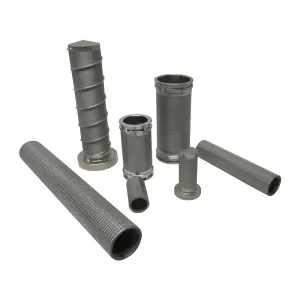
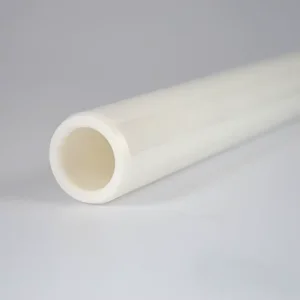
Featured Precision Tooling & Sintered Components
Explore our factory-direct wholesale portfolio engineered for high-stress automotive, electromechanical, and industrial hardware applications.






Global Industrial Landscape of Powdered Metal Tooling
In modern high-precision manufacturing, powdered metal tooling (PM tooling) stands as the bedrock of near-net-shape metallurgy. As tier-1 automotive original equipment manufacturers (OEMs), aerospace contractors, medical device innovators, and electromechanical equipment builders demand tighter dimensional tolerances and higher physical strength, the role of specialized wholesale powdered metal tooling suppliers has shifted from transactional tooling vendors to strategic engineering partners.
Powder metallurgy—encompassing conventional press-and-sinter powder metallurgy (PM), Metal Injection Molding (MIM), Titanium Metal Injection Molding (TiMIM), and Ceramic Injection Molding (CIM)—relies inherently on the extreme structural integrity, thermal stability, and micro-geometrical precision of its die sets, punches, core rods, and mold cavities. A deviation of just 2 micrometers (µm) in die cavity dimensions or an inappropriate selection of substrate cobalt-grain binder can lead to catastrophic tool fatigue, erratic compaction density gradients, micro-cracking during ejection, and uneven sintering shrinkage across multi-level components.
The global powdered metal components market, projected to grow at a CAGR exceeding 7.2% through 2032, is fueled primarily by the electrification of automotive powertrains, high-torque planetary gearbox demand, surgical robotics, and lightweight structural electronics. To maintain competitive advantage, wholesale buyers require direct factory access to tooling manufacturers capable of combining advanced materials engineering (such as sub-micron Tungsten Carbide and Powder Metallurgy High-Speed Steels like CPM 10V or Vanadis 4 Extra) with state-of-the-art 5-axis CNC sub-micron EDM erosion, optical profile grinding, and FEA-driven sintering shrinkage simulation.
Metallurgical Architecture & Die Engineering Standards
Developing robust powdered metal tooling requires a profound understanding of mechanics, powder mechanics, and tribology under severe axial and radial pressures. During cold axial compaction, tool surfaces undergo extreme friction, cyclic compressive stresses up to 800 MPa, and intensive abrasive wear from metallic particles such as pre-alloyed iron, copper-steel, and stainless steel powders.
Tungsten Carbide Cavity Dies
Engineered with 6% to 12% Cobalt binder matrixes, micro-grained Tungsten Carbide (WC) die inserts provide unparalleled compressive strength and wear resistance. Ideal for high-volume automotive spur gears, timing rings, and self-lubricating bronze bearings operating under 500k+ production runs.
PM HSS Upper & Lower Punches
Utilizing high-performance powder metallurgy steel grades (e.g., M2, D2, CPM 10V, Vanadis 4 Extra), punches undergo vacuum heat treatment and triple tempering to achieve hardness levels of 62–65 HRC while eliminating thermal residual stress and maximizing notch toughness.
Multi-Split Floating Core Rods
For complex helical gears, multi-stepped pulleys, and splined hubs, tooling design integrates floating core rods driven by hydraulic or servo-electric press motion to guarantee uniform powder fill density across all geometry levels.
Comprehensive Tooling Material Selection Matrix
Selecting the optimal material for powder metal compacting dies, upper/lower punches, and core pins is a balancing act between wear resistance, toughness, and thermal conductivity. Below is our factory's standardized metallurgical matrix:
| Tool Component | Standard Material Grade | Hardness (HRC / HRA) | Key Tribological Property | Target Application |
|---|---|---|---|---|
| Cavity Die Inserts | Tungsten Carbide (WC-10%Co) | 89.5 - 91.5 HRA | Extreme abrasive wear protection & zero diametral expansion | Automotive timing gears, high-density PM bushings |
| Upper Punches | AISI M2 / PM CPM 10V | 62 - 64 HRC | High compressive yield strength & cyclic fatigue limit | Helical gear teeth, structural brackets, tensioners |
| Lower Punches | Vanadis 4 Extra / AISI D2 | 60 - 63 HRC | Superior edge toughness & micro-chipping resistance | Multi-stepped complex structural PM components |
| Core Rods & Pins | Tungsten Carbide (WC-6%Co) | 91.0 - 92.5 HRA | High stiffness (E-Modulus > 600 GPa) preventing deflection | Small internal diameter holes, spline shafts, keyways |
| MIM Injection Molds | NAK80 / ASSAB S136 Stainless | 48 - 54 HRC | High polishability (Mirror Ra 0.02 µm) & corrosion barrier | Medical surgical handles, lock parts, electronic hinges |
Engineering Excellence & Quality Governance (E-E-A-T Framework)
As an IATF 16949 and ISO 9001 certified OEM manufacturing enterprise, Ningbo Jiehuang Chiyang Electronic Tech Co., Ltd. (JHMIM) enforces an unyielding quality management standard across all powdered metal tooling fabrication workflows. Built upon 20+ years of domain expertise, our engineering teams bridge theoretical metallurgy with hands-on shop-floor optimization.
Direct Experience & In-House Toolroom Capabilities
Unlike asset-light trading intermediaries, our 28,000 m² Ningbo production facility houses dedicated ultra-precision mold-making toolrooms equipped with Japanese SODICK Wire EDM, CNC High-Speed Jig Grinding machines, and Zeiss 3D Coordinate Measuring Machines (CMM). Every drawing uploaded to JHMIM undergoes a thorough Design for Manufacturability (DFM) engineering audit before tooling steel is cut.
Shrinkage Compensation Modeling
MIM and PM parts experience linear shrinkage during sintering ranging from 3% to 22% depending on powder loading, binder system, and alloy density. Our FEA computer simulations calculate non-isotropic shrinkage to pre-deform die cavities, ensuring nominal part geometry post-sintering.
PVD & CVD Surface Coatings
To eliminate galling and material pickup during high-speed compaction, punch tips and carbide die walls are treated with Physical Vapor Deposition (PVD) coatings such as TiAlN, AlCrN, or Diamond-Like Carbon (DLC), dropping friction coefficients below 0.15.
Full Traceability & Verification
Every tool set shipped or utilized in our mass-production lines is tracked via MES lot management. First Article Inspection (FAI) reports, metallurgical material certs, optical profile scans, and CMM dimension maps are archived for 10+ years.
Technical Process Selection: PM Press Tooling vs. MIM Molds vs. Die Casting
Determining whether your custom metal part requires conventional Press-and-Sinter Powder Metallurgy (PM) Tooling, Metal Injection Molding (MIM) Multi-Cavity Molds, or High-Pressure Aluminum/Zinc Die Casting Molds depends on geometry complexity, wall thickness, strength requirements, and targeted annual production volume.
| Evaluation Parameter | Press-and-Sinter PM Tooling | Metal Injection Molding (MIM) Molds | Aluminum / Zinc Die Casting Molds |
|---|---|---|---|
| Primary Geometry Suitability | 2.5D stepped profiles, spur gears, bushings, symmetrical shapes | Highly complex 3D shapes, undercuts, internal threads, micro walls | Thin-wall housings, large structural frames, heat sinks |
| Target Component Weight | 5 g up to 5,000 g (Press force limited) | Ideally 0.2 g to 100 g (Max produced: 286 g) | 10 g up to 10,000 g |
| Tooling Cost Profile | Moderate to High (Tungsten Carbide punches/dies) | High (Multi-cavity hardened hot runner molds) | Moderate to High (Large steel block dies) |
| Material Density & Strength | 85% - 92% density (Sinter-hardened, heat treated) | 96% - 99% near-wrought performance density | Non-ferrous alloys (ADC12, A380, Zamak 3/5) |
| Production Volume Sweet Spot | > 5,000 pcs / order | > 2,000 pcs / order | > 2,000 pcs / order |
Localized Industrial Application Scenarios
Our custom powdered metal tooling and OEM sintered components are integrated across demanding high-tech global industries. Here is how our specialized tooling solves real-world engineering bottlenecks:
Automotive Engine & Transmission
Tooling engineered for engine variable valve timing (VVT) rotors, timing sprocket gear rings, oil pump rotors, and transmission synchronizer hubs. Tooling dies deliver zero-backlash tooth profiles with surface endurance exceeding 10^7 stress cycles.
Medical Surgical & Bio-Tools
Precision micro-MIM molds for surgical stapler jaws, endoscopic articulation joints, and Titanium (TiMIM) bone fixators. Cavity tooling polished to mirror optical standards prevents cell adhesion and ensures 100% biocompatibility.
Industrial Tools & Smart Locks
Heavy-duty compaction tooling for power tool planetary gearboxes, impact wrench anvils, and high-security smart lock latch mechanisms. Micro-grain carbide dies prevent edge wear under abrasive metal powders.
Technology Roadmap & Next-Gen Sourcing Solutions (2025–2030)
The powder metallurgy industry is experiencing rapid digital and structural evolution. Wholesale buyers sourcing powdered metal tooling must align with suppliers adopting industry 4.0 innovations to secure supply chain resilience and cost performance.
Conformal Cooling in MIM Molds
Integrating metal 3D printing (SLM/DMLS) to grow conformal cooling channels inside mold cores. This reduces injection cycle times by up to 35% while eliminating internal thermal stress deformation in thick-section green parts.
Real-Time In-Die Sensing
Implementation of piezoelectric cavity pressure sensors and temperature transducers embedded directly within punch assemblies, offering instantaneous feedback on powder compaction uniformity and automated tool health monitoring.
Green Lubricant Compatibility
Optimizing die wall surface micro-textures to support synthetic, zero-emission green lubricants, lowering ejection force requirements by 25% while extending tool life beyond 1.5 million strokes.
Frequently Asked Questions (FAQ) - Sourcing & Tooling Engineering
Below are technical solutions to common queries raised by procurement managers, tooling engineers, and manufacturing directors when sourcing wholesale powdered metal tooling and custom sintered parts.
Additional Wholesale Tooling & OEM Sintered Parts
Review our full range of custom powder metallurgy machining parts, sintered filters, and die-cast solutions.