
Executive Summary: The Industrial Evolution of Powder Metal Forming
As global manufacturing paradigms shift toward high-efficiency near-net-shape processing, Powder Metal Forming (PMF) has emerged as the definitive benchmark for structural integrity, material efficiency, and unit-cost optimization. Valued at over $12 Billion globally, the powder metallurgy landscape is rapidly displacing traditional subtractive CNC machining and sand/investment casting for complex structural parts.
95%+ Material Utilization Rate
Unlike conventional machining where up to 60% of raw alloy turns into scrap metal swarf, powder metal compaction and sintering consume virtually all input feedstock, delivering unparalleled sustainability and direct cost reduction.
Sub-Micron Tolerances & Repeatability
Through advanced multi-axis CNC hydraulic presses and continuous atmosphere-controlled sintering furnaces, key dimensional tolerances of ±0.01mm to ±0.05mm are systematically maintained across millions of production units.
30%–50% Landed Cost Advantage
By eliminating multi-stage CNC tool setup times, secondary deburring, and complex manual fixtures, high-volume powder metal forming drops the total per-piece expenditure dramatically for tier-1 OEMs worldwide.
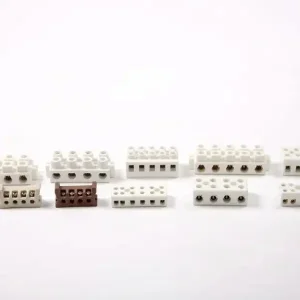
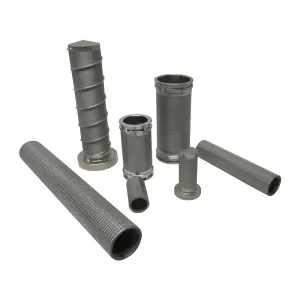
Featured Wholesale Powder Metallurgy & Precision Die Casting Components
Explore our primary OEM product offerings engineered for automotive, medical, hardware, and industrial power transmission systems.






Comparative Manufacturing Pathways in Powder Metal Forming
Choosing the right powder metal processing route directly impacts mechanical properties, fatigue endurance, and long-term production economics. Below is an engineering evaluation of the primary pathways executed at Ningbo Jiehuang Chiyang Electronic Tech Co., Ltd. (JHMIM).
Press & Sinter (Conventional PM)
Uniaxial compaction of elemental or pre-alloyed powders inside rigid die cavities using 100-ton to 1,000-ton hydraulic presses. Followed by high-temperature atmosphere sintering (typically 1120°C to 1280°C).
- Achieves 6.8 – 7.2 g/cm³ density
- Ideal for 2.5D shapes, gears, pulleys, oil bearings
- Extremely low unit cost at volume >10,000 pcs
Metal Injection Molding (MIM)
Blending fine spherical metal powders (<20µm) with thermoplastic polymer binders to create feedstock, injected into complex molds, solvent/catalytically debound, and sintered to near-full density.
- Achieves 95% – 99% theoretical density
- Enables true 3D complex undercuts, internal threads
- Wrought-like tensile strength & ductility
Hot Isostatic Pressing (HIP) & SPS
Simultaneous application of elevated temperature and isostatic gas pressure (argon) to eliminate internal micro-porosity entirely. Reserved for critical aerospace and medical load-bearing components.
- 100% theoretical density achievement
- Maximum fatigue resistance under cyclic loads
- Superior micro-structural homogeneity
| Performance Parameter | Press & Sinter (PM) | Metal Injection Molding (MIM) | CNC Machining (Wrought) | Die Casting (Al/Zn) |
|---|---|---|---|---|
| Achievable Density | 85% - 92% | 95% - 99% | 100% | 90% - 95% |
| Geometric Complexity | Moderate (2.5D Profiles) | Extreme (Complex 3D) | High (Tool Limited) | High (Thin Wall Housings) |
| Dimensional Tolerance | ±0.02mm - ±0.05mm | ±0.1mm - ±0.3% mm | ±0.005mm | ±0.05mm - ±0.1mm |
| Raw Material Utilization | > 95% | > 98% | 30% - 50% | 90% |
| Economic Order Quantity (MOQ) | 5,000+ units | 2,000+ units | 1 - 500 units | 2,000+ units |
Metallurgical Engineering & Custom Alloy Formulations
JHMIM operates an advanced metallurgical research lab in collaboration with CAS Ningbo and Tianjin University, developing proprietary powder blends tailored for extreme wear resistance, magnetic performance, and corrosion proofing.
Stainless Steels (17-4PH, 316L, 304L)
Pre-alloyed gas-atomized powders treated under vacuum debinding and high-vacuum sintering. Yield strength up to 1100 MPa post H900 heat treatment, perfect for medical scalpels and harsh outdoor hardware.
Low-Alloy Fe-Ni & Fe-Cu Steels
Compliant with MPIF Standard 35 (FN-0205, FC-0208). Heat-treatable up to 45-55 HRC. Widely adopted for automotive timing sprockets, oil pump gears, and high-load transmission gearboxes.
Titanium & Titanium MIM (TiMIM)
Ti-6Al-4V Grade 5 and Unalloyed Titanium. Delivers a 45% weight reduction over steel with exceptional biocompatibility and strength-to-weight ratio for aerospace hinges and consumer smartwatches.
Soft Magnetic Alloys (Fe-Si, Fe-Ni)
Formulated specifically for high magnetic permeability, low coercivity, and minimal eddy current loss. Ideal for EV electromagnetic solenoids, sensors, and actuator cores.
China Supply Chain Resilience & Ecosystem Integration
Headquartered in Ningbo, Zhejiang—the epicenter of global hardware tooling and metallurgical innovation—JHMIM provides unparalleled supply chain security, rapid tooling cycles, and robust risk mitigation against global logistics disruptions.
In-House Tooling & Rapid Prototyping
We operate a dedicated mold fabrication center equipped with Swiss AGIE wire EDM and high-speed CNC centers. Tooling lead times are compressed from industry standard 60 days down to 25–30 days.
Vertical Industrial Clustering
Within a 30-mile radius of our Ningbo plant, we maintain direct partnerships with metal powder atomization suppliers, secondary heat treatment specialists, surface plating vendors, and Ningbo Port logistics hubs.
Agile Buffer Stocking & Just-in-Time
To safeguard international clients from demand volatility, JHMIM offers safety stock warehousing agreements, allowing flexible JIT shipments to North American, European, and Japanese destinations.
Targeted Application Engineering Across Key Sectors
Powder Metal Forming solves complex engineering bottlenecks across diverse sectors by delivering high-density parts optimized for extreme operating conditions.
Automotive Powertrain & EV Actuators
Variable Valve Timing (VVT) rotor plates, camshaft sprockets, ABS sensor rings, and electric drive oil pump gears. Materials engineered to withstand heavy cyclic vibration and oil submersion.
Medical & Minimally Invasive Tools
Stainless steel 17-4PH endoscopic surgical graspers, laparoscopic shears, stapler jaws, and orthodontic brackets. Biocompatible, autoclavable, and precise to micron levels.
Consumer Electronics & Smart Wearables
Complex foldable phone hinges, titanium smartwatch outer cases, camera bezel rings, and audio driver housings requiring cosmetic surface PVD plating and micro-structural density.
Industrial Hardware & Power Tools
High-torque planetary gearboxes, impact wrench anvil blocks, lock cylinders, and hydraulic valve components capable of handling intense torsional stresses without fatigue fracture.
Technology Roadmap & 10-Year Future Outlook
As additive manufacturing and digital engineering converge with powder metallurgy, JHMIM is aggressively investing in next-generation research to keep our OEM partners ahead of technological disruption.
Phase 1: AI-Driven Sintering Simulation (2024–2026)
Integration of finite element analysis (FEA) and machine learning models (Moldflow / Magmasoft) to predict debinding distortion and sintering thermal shrinkage down to 0.005mm accuracy before tool steel is cut.
Phase 2: Hybrid Binder Jetting + Sinter (2026–2028)
Scaling toolless metal 3D printing (Binder Jetting) for medium-volume runs (100 to 2,000 units), bridging the gap between prototype metal 3D printing and hard tooling production.
Phase 3: High-Entropy & Nano Powders (2028–2034)
Pioneering multi-element high-entropy alloy (HEA) powder forming for unprecedented high-temperature corrosion resistance, ultra-lightweight structural frames, and zero-carbon hydrogen furnace sintering.
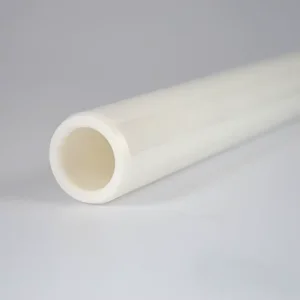
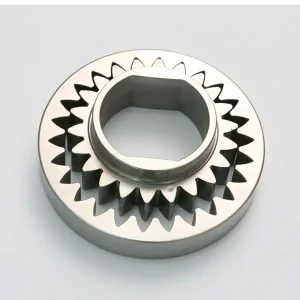
Precision Sintered & Machined Components Collection
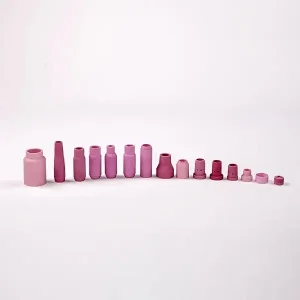
Review our secondary product portfolio spanning zirconia ceramic tubes, sintered pump gears, MIM watch/phone buttons, and custom hardware accessories.



Zero-Defects Quality Control & Global Compliance
JHMIM guarantees complete batch traceability, rigorous metallographic verification, and full compliance with international standards for global procurement teams.
100% Key Dimensional Inspection
Utilizing ZEISS 3D Coordinate Measuring Machines (CMM), optical vision sorters, and micro-hardness testers. Every lot is delivered with a complete FAI (First Article Inspection) and CMM report.
PPAP Level 3 & Certification Compliance
Fully compliant with IATF 16949, ISO 9001:2015, RoHS, REACH, and Conflict-Free Mineral declarations. Complete PPAP Level 3 documentation provided for automotive tier-1 qualification.
Localized Technical & Sales Support
Multilingual engineering managers available 24/7 across North American (EST/PST), European (CET), and Asian time zones to conduct DFM reviews, live video factory audits, and project tracking.
Engineering & Purchasing FAQ
Detailed answers to critical technical questions regarding wholesale powder metal forming, tooling lead times, density, and design rules.
What is the typical minimum order quantity (MOQ) for wholesale powder metal parts?
Our standard Minimum Order Quantity (MOQ) for production runs is 2,000 pieces for MIM (Metal Injection Molding) components, 5,000 pieces for conventional Powder Metallurgy (Press & Sinter) gears, and 2,000 pieces for aluminum/zinc die-casting parts. Prototype lots via metal 3D printing can be accommodated during the pre-tooling validation phase.
How does Powder Metal Forming compare to 5-axis CNC machining in terms of cost?
For high-volume production (above 3,000 units), powder metal forming reduces unit cost by 30% to 50%. While CNC machining incurs high machine-hour charges and wastes up to 60% of raw material in swarf, PMF near-net-shape processing achieves >95% material utilization with rapid automated cycle times, amortizing tooling costs quickly.
What dimensional tolerances can JHMIM reliably maintain?
As-sintered tolerances for MIM components are typically within ±0.3% of nominal dimensions (or ±0.05mm). For conventional Press & Sinter parts, ±0.02mm to ±0.04mm can be held on key diametral features. When sub-micron tolerances (e.g., ±0.005mm) are required, in-house secondary CNC sizing, grinding, or honing is integrated.
Can you sign a Non-Disclosure Agreement (NDA) prior to CAD drawing submission?
Yes. We strictly respect intellectual property rights. We routinely execute bilateral NDAs using your company's standard legal template or ours before receiving 2D PDF or 3D STEP/IGES CAD files for quotation and Design for Manufacturability (DFM) review.
What is the typical lead time from design submission to sample approval?
Upon receipt of your CAD files and project specifications, a complete engineer-reviewed DFM report and price quotation are delivered within 48 hours. Tooling construction and first-article T1 sample production require approximately 25 to 35 calendar days depending on geometric complexity.