
High-Precision Sintered & MIM Product Lineup
Explore our custom OEM manufacturing catalog, featuring precision sintered metal filters, structural powder metallurgy gears, titanium MIM components, and high-integrity aluminum/zinc die castings.



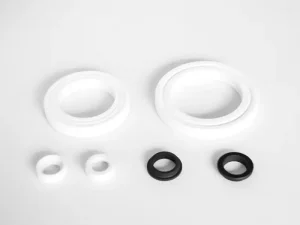


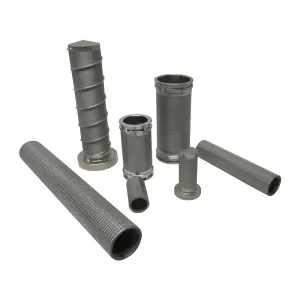

Powder metallurgy sintering represents a core pillar of modern precision manufacturing. By converting elemental or pre-alloyed metallic powders into dense, high-strength structural components through thermal processing below the primary melting point, powder metallurgy (PM) eliminates material waste, dramatically reduces secondary CNC machining overhead, and creates complex near-net-shape geometries unattainable via traditional casting or forging techniques.
Sintering is driven by the reduction of total surface free energy. During the thermal cycle, atomic diffusion occurs across particle contact boundaries (necking). Surface diffusion, volume diffusion, and grain boundary migration act in synergy to shrink internal pores, resulting in cohesive metallurgical bonding, elevated tensile strength, and optimized fatigue resistance.
For refractory metals and high-performance alloys (such as Fe-Cu-C, tungsten alloys, and cementite carbides), liquid phase sintering introduces a minor secondary phase that melts at lower temperatures. This liquid wets the solid grains, generating intense capillary forces that accelerate rearrangement and achieve near 100% theoretical density rapidly.
Preventing oxidation during elevated thermal cycles requires precise atmospheric control. Our continuous mesh-belt and batch vacuum furnaces utilize pure hydrogen, dissociated ammonia (75% H₂ / 25% N₂), argon, or high-vacuum environments (<10⁻⁴ mbar) to ensure carbon equilibrium, oxide reduction, and ultra-clean surface microstructures.
The global powder metallurgy market size reached over USD 10.5 Billion in recent evaluations and is projected to expand at a compound annual growth rate (CAGR) exceeding 6.2% through 2032. Drive toward lightweighting in the automotive industry, electrification (EVs), miniaturization of medical devices, and demand for complex armaments components are pushing global OEMs to partner with certified wholesale powder metallurgy sintering manufacturers.
| Industrial Sector | Primary Sintered Components | Material Systems Used | Key Performance Metrics |
|---|---|---|---|
| Automotive Powertrain & EV | Variable Valve Timing (VVT) sprockets, oil pump rotors, planet carriers, EV reducer gears | Fe-Ni-Cu alloys, FC-0208, Sint-D11, Stainless Steel 410/316 | High fatigue endurance limit (>350 MPa), precise tooth profile (ISO 7) |
| Aerospace & Defense | Weapon trigger assemblies, tactical latches, missile guidance brackets, turbine vanes | Titanium Ti-6Al-4V, 17-4PH SS, Tungsten heavy alloys (W-Ni-Fe) | Extreme yield strength (>1100 MPa), density >99%, defense spec compliance |
| Medical Technology | Endoscopic grasper jaws, surgical stapler components, dental implant fixtures | 316L Stainless Steel, Titanium Grade 5, Cobalt-Chromium (CoCr) | Biocompatibility (ISO 10993), mirror surface polish, complex micro-undercuts |
| Industrial Power Tools | Planetary gearboxes, bevel gears, impact driver anvils, ratcheting pawls | Distaloy AE, FN-0205, Heat-treated steel alloyed with Mo & Cr | Impact resistance (>45 J/cm²), surface hardness 58-62 HRC post heat-treatment |
As smart manufacturing evolves, conventional press-and-sinter methodologies are merging with advanced additive thermal processing and digital control architecture. Ningbo Jiehuang Chiyang Electronic Tech Co., Ltd. (JHMIM) stands at the forefront of this transformation.
Utilizing pulsed direct electrical current combined with axial pressure, SPS achieves full densification in minutes rather than hours. This rapid consolidation suppresses grain growth, preserving nanostructured microstructures and yielding unprecedented mechanical hardness and thermal stability.
Transitioning from single-base metal formulations to multi-principal element alloys (e.g., Fe-Co-Ni-Cr-Mn). Sintered HEAs deliver superior corrosion resistance, extreme temperature strength, and self-lubricating surface properties ideal for next-gen aerospace propulsion systems.
By heating engineered powder mixtures and dies to 130–150°C during compaction, single-press single-sinter (1P1S) density reaches up to 7.45 g/cm³. This matches traditional double-press double-sinter (2P2S) performance at a fraction of the manufacturing cost.
Deploying real-time infrared sensor arrays and machine learning algorithms inside continuous sintering furnaces to adjust localized heating zone parameters dynamically. This guarantees zero thermal distortion across large-batch production runs.
Different global manufacturing hubs require tailored powder metallurgy solutions. Whether satisfying North American automotive Tier-1 requirements, European medical device standards, or Japanese precision machinery tolerances, our engineering team tailors process routes specifically for your end application.
Challenge: Traditional hobbing and broaching produced high material waste (over 40%) and struggled with batch-to-batch concentricity on thin-walled gear rings.
JHMIM Solution: Transitioned to high-density sintered alloy steel (Distaloy HP + 0.5% C) via warm compaction. Sinter-hardening achieved a tensile strength of 950 MPa without secondary oil quenching.
Result: 42% unit cost reduction, 100% net-shape tooth profile, eliminated finish machining.
Challenge: Machining 5-axis titanium components for defense application incurred excessive tool wear and long production cycles.
JHMIM Solution: Designed a Metal Injection Molding (TiMIM) process utilizing gas-atomized Ti-6Al-4V powder with a custom binder system. Sintered in ultra-clean vacuum furnaces.
Result: Achieved >98% density, yield strength >830 MPa, 5-fold increase in monthly supply volume.
Challenge: Complex internal geometry with wall thickness down to 0.35 mm for laparoscopic surgical scissors.
JHMIM Solution: Ceramic Injection Molding (CIM) and 316L MIM hybrid tooling with micro-solvents debinding and sintering.
Result: Flawless cosmetic finish, biocompatible performance, zero burr formation compared to micro-milling.
Located in Ningbo, Zhejiang Province—one of China's most advanced manufacturing and deep-water port clusters—Ningbo Jiehuang Chiyang Electronic Tech Co., Ltd. (JHMIM) leverages an integrated ecosystem to offer world-class turnaround times, cost efficiency, and operational stability.
Our facility houses high-precision CNC machining centers, EDM wire cutting, and mirror-finish spark erosion machines. We design and fabricate complex multi-cavity sintering and MIM molds in-house within 25–30 days, cutting tooling lead times by half compared to Western counterparts.
Direct strategic partnerships with premier domestic atomized metal powder suppliers guarantee consistent chemical purity, precise particle size distribution (PSD), and immunity to global raw material inflation spikes.
Before launching expensive hard tooling, we offer metal 3D printing (Direct Metal Laser Sintering - DMLS / SLM) to produce functional samples for engineering verification within 5 business days, drastically shortening your product development lifecycle.
Situated less than 40 kilometers from Ningbo-Zhoushan Port—the world's largest port by cargo tonnage—we ensure seamless, low-cost ocean and air freight shipments to North America, Europe, Southeast Asia, and Japan.
To ensure total peace of mind for international buyers, JHMIM maintains a zero-defect quality management philosophy backed by internationally recognized standards and rigorous engineering verification protocols.
We strictly adhere to IATF 16949 (Automotive Quality System) and ISO 9001:2015. Every production batch follows MPIF Standard 35 (Materials Standards for PM Structural Parts) and ASTM B883 standard specifications for MIM components.
Our quality control lab is equipped with 3D Coordinate Measuring Machines (CMM), Optical Profilometers, Carbon/Sulfur Analyzers, Metallographic Microscope Analyzers, Universal Tensile Testers, and Salt Spray Corrosion Testing Chambers.
All sintered metal materials, plating treatments, and binder formulations comply 100% with EU RoHS 3.0, REACH regulations, and Conflict-Free Minerals declarations, ensuring smooth customs clearance globally.
Explore Additional Sintered & Die-Cast Solutions
Review our secondary range of high-performance parts, including complex insert molding connectors, ceramic components, remanufactured engine parts, and precision zinc die-castings.






Get answers to critical technical questions asked by global procurement officers, manufacturing engineers, and sourcing directors.
Ready to Optimize Your Metal Component Supply Chain?
Send us your 2D drawings and 3D STEP models today. Our senior metallurgical engineers will provide a comprehensive DFM manufacturability analysis and an itemized factory-direct quotation within 48 hours.
Request Engineering DFM & Quote