
Featured High-Precision Metal Components
Explore our certified OEM powder metallurgy, MIM, and die-casting structural solutions for critical industrial applications.







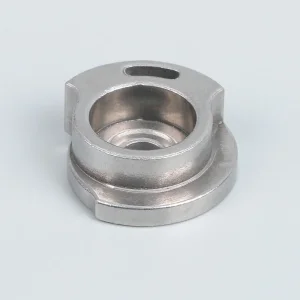
Global Enterprise Sourcing Trends for Wholesale Powder Metal Suppliers
In modern industrial manufacturing, global Original Equipment Manufacturers (OEMs) face compounding pressure to minimize unit costs, shorten product development cycles, and reduce carbon footprints—all while demanding uncompromising physical performance and dimensional repeatability. Sourcing structural components from qualified wholesale powder metal suppliers has emerged as a premier strategic decision for tier-1 automotive vendors, medical device manufacturers, aerospace contractors, and consumer electronics brands.
Powder Metallurgy (PM) and Metal Injection Molding (MIM) represent transformative manufacturing technologies that allow the net-shape or near-net-shape production of complex, three-dimensional micro-components and heavy-duty structural parts. By converting raw metal powders—such as stainless steel, copper-infiltrated iron, low-alloy steels, titanium alloys, and soft magnetic materials—into fully sintered end-use components, modern powder metallurgy eliminates up to 90% of material waste compared to subtractive CNC milling or turning.
Total Cost of Ownership (TCO) & Information Gain Analysis
Procurement directors assessing suppliers must evaluate the holistic Total Cost of Ownership (TCO) rather than raw unit pricing alone. The economic advantage of powder metallurgy lies in its unique balance of throughput, material yield, and functional integration:
| Manufacturing Route | Material Yield Ratio | Geometry Complexity | Tooling Investment | Unit Cost at High Volume (>50k) |
|---|---|---|---|---|
| Powder Metallurgy (Press & Sinter) | 95% – 98% | Medium (2.5D, gears, splines) | Moderate | Lowest |
| Metal Injection Molding (MIM) | 92% – 96% | Ultra-High (Complex 3D, threads, undercuts) | Moderate to High | Very Low |
| 5-Axis CNC Machining | 15% – 40% | High | Low (No Molds) | High (Machine time scales linearly) |
| Investment Casting | 60% – 75% | High | Moderate | Medium to High |
When selecting a wholesale PM partner, enterprise engineering teams must examine the vendor's powder chemistry verification protocols, sintering furnace control dynamics, post-sintering secondary capabilities, and automated non-destructive testing (NDT) infrastructure.
Macro-Industry Technical Solutions
How specialized powder metallurgy and MIM processes solve mission-critical engineering bottlenecks across diverse sectors.
Automotive & EV Powertrains
Production of Variable Valve Timing (VVT) components, planetary gear carriers, oil pump rotors, electric drive motor actuators, and high-strength sintered transmission gears adhering to IATF 16949 standards.
Medical & Surgical Hardware
Biocompatible 316L and 17-4PH surgical handle brackets, endoscopic articulation joints, orthodontic MIM brackets, and titanium implant components delivering high density (>98%) and corrosion resistance.
Industrial Automation & Hydraulics
Self-lubricating sintered bronze bearings, wear-resistant valve plates, high-torque lock cores, pneumatic air cylinder fittings, and customized planetary gear assemblies engineered for severe duty cycles.
Consumer Electronics & Wearables
Micro-hinges for foldable smartphones, watch band connectors, camera ring frames, and tactile switch components leveraging titanium MIM (TiMIM) for ultra-lightweight structural strength.
Power Tools & Hardware Fittings
Heavy-duty impact wrench gears, bevel gears, internal ring gears, and multi-piece keyless chuck jaws crafted from heat-treated nickel-steel alloys (MPIF FN-0205 / FN-0208).
Aerospace & Defense Precision
Complex bracketry, fuel nozzle rings, and high-temperature nickel-base superalloy components manufactured via advanced hot isostatic pressing (HIP) and vacuum sintering techniques.
Engineering Deep Dive: Technology Roadmap & Metallurgical Process Control
Achieving superior mechanical properties in powder metal components requires absolute control over powder particle morphology, binder rheology, compaction dynamics, thermal debinding, and sintering kinematics. Leading wholesale powder metal manufacturers employ two primary technology routes depending on component geometry and density criteria:
1. Conventional Press-and-Sinter Powder Metallurgy (PM)
In conventional PM, elemental or pre-alloyed metal powders (grain sizes typically 45–150 μm) are blended with solid lubricants (such as zinc stearate or ethylene bis-stearamide). The powder is fed into high-precision tungsten carbide dies and compacted under rigid axial pressure ranging from 400 to 800 MPa using 1,000-ton fully automated hydraulic or mechanical presses.
- Green Compact Density: Typically reaches 6.8 to 7.2 g/cm³, representing 85% to 92% of theoretical density.
- Sintering Kinematics: Continuous mesh-belt furnaces operating under endothermic or synthetic (nitrogen-hydrogen) controlled atmospheres heated to 1120°C–1280°C. Atomic diffusion across grain boundaries creates solid metallurgical bonds.
- Sinter-Hardening: Rapid cooling sections (>2°C/s) integrated within sintering furnaces transform austenitic structures directly into high-strength martensite, eliminating distinct post-heat treatment quenching steps.
2. Metal Injection Molding (MIM)
MIM combines plastic injection molding design freedom with powder metallurgy material performance. Fine metal powders (spherical gas/water atomized particles, 0.5–20 μm) are compound-mixed with a thermoplastic binder system (typically 60% powder, 40% binder by volume) to yield homogeneous feedstock.
- Debinding Phase: Multi-stage extraction utilizing solvent washing, catalytic nitric acid vapor processing, or thermal degradation to remove the primary binder network without disturbing green component integrity.
- High-Temperature Vacuum Sintering: Sintering performed under high vacuum or pure hydrogen at 1300°C–1380°C. Sintered density consistently reaches 96% to 99%+ of theoretical density, imparting wrought-like tensile strength, fatigue endurance, and ductility.
Material Alloy Engineering Matrix
Selecting the optimal material system is essential for balancing mechanical fatigue, wear resistance, and unit economics:
| Standard Designation | Equivalent Material Grade | Sintered Density (g/cm³) | Tensile Strength (MPa) | Primary Application Area |
|---|---|---|---|---|
| MPIF FN-0205-105HT | Ni-Steel Alloy (Heat Treated) | 7.0 – 7.3 | 850 – 1100 | High-Stress Automotive Gears, Camshaft Sprockets |
| MIM 17-4PH (H900) | Precipitation Hardening Stainless Steel | 7.6 – 7.75 | 1150 – 1300 | Medical Instruments, Aerospace Brackets, Hardware |
| MIM 316L | Austenitic Stainless Steel | 7.8 – 7.9 | 500 – 600 | Corrosion-Resistant Valves, Dental Brackets |
| MPIF FC-0208-50 | Copper-Steel Alloy | 6.8 – 7.1 | 450 – 600 | Structural Lock Fittings, Power Tool Components |
| MIM Ti-6Al-4V | Grade 5 Titanium Alloy | 4.4 – 4.45 | 880 – 980 | Aerospace Hardware, Wearables, Biocompatible Implants |
Quality Assurance, Metrology & Compliance Framework
rigorous quality control systems ensure 100% dimensional fidelity and material integrity for high-volume enterprise orders.
International Standards Alignment
Full manufacturing traceability and compliance across global engineering standards:
- MPIF Standard 35: Materials standards for PM structural parts and MIM injection molded parts.
- IATF 16949:2016: Stringent automotive quality management system including APQP, PPAP (Level 1–5), FMEA, and SPC documentation.
- ISO 9001:2015 & ISO 13485: Certified quality management for industrial and medical device manufacturing.
- DIN 30910 / ISO 22068: European standards for sintered metal materials and physical testing.
Advanced Inspection Infrastructure
Our Metrology Laboratories utilize state-of-the-art testing systems:
- Hexagon CMM & Optical Profilometers: Automated 3D coordinate measuring machines verifying geometric tolerances to ±0.003mm.
- X-Ray CT Scanning & Micro-Nondestructive Testing: Full internal porosity mapping and crack detection in high-stress components.
- Inductively Coupled Plasma (ICP) Spectrometry: Raw powder chemistry analysis verifying alloy composition prior to compaction.
- Universal Mechanical Testers: Tensile strength, yield, elongation, and micro-hardness testing (Vickers / Rockwell C).
Additional Sintered & Die-Cast Solutions
High-volume custom hardware, motor gears, MIM auto parts, and precision aluminum/zinc die castings.






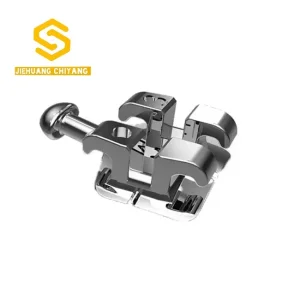
Design for Manufacturability (DFM) Guidelines for Powder Metal Sourcing
To maximize cost-efficiencies when collaborating with a wholesale powder metallurgy supplier, enterprise design engineers should incorporate powder-specific DFM principles into their CAD designs prior to final tooling release:
Key Powder Metallurgy & MIM DFM Parameters:
- Ejection Draft Angles: For press-and-sinter parts, vertical die walls should be parallel where possible, but a micro-draft angle (0.5° to 1°) on punches facilitates smooth component ejection without surface scoring.
- Uniform Wall Thickness: In Metal Injection Molding, maintaining consistent wall thickness (ideally between 1.0mm and 4.0mm) prevents thermal sink marks, warpage, and internal voids during debinding and high-temperature sintering.
- Corner Radii & Fillets: Eliminate sharp internal corners by applying a minimum radius of 0.5mm. Internal fillets redistribute compacting pressures and reduce stress concentration factors in final heat-treated components.
- Under-Cuts & Side Holes: While conventional pressing cannot form transverse side holes or severe undercuts without secondary CNC machining, MIM tooling utilizes hydraulic side-action sliders to form complex internal threads, cross-holes, and external grooves directly in the mold.
- Sintering Support Land: Design flat datum reference surfaces or support planes to allow stable orientation on ceramic sintering trays, preventing sag at peak furnace temperatures.
Frequently Asked Questions (Engineering & Procurement FAQ)
Expert answers to critical technical, manufacturing, and supply chain queries regarding powder metallurgy and MIM sourcing.