
Featured Sintered Components & Precision MIM Hardware
Direct Factory Sourcing: OEM Engineering Solutions and High-Precision Metal Powder Powder Metallurgy Components


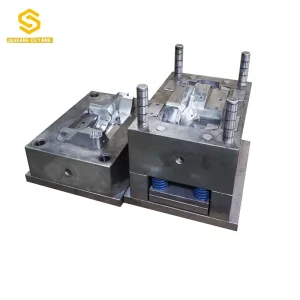

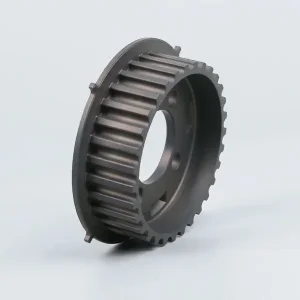



Executive Whitepaper: Modern Sintering Technology & Wholesale Sourcing Engineering
In high-precision manufacturing, selecting optimal component fabrication methodologies directly determines mechanical reliability, thermal endurance, and overall Total Cost of Ownership (TCO). Powder Metallurgy (PM) and Metal Injection Molding (MIM) represent the pinnacle of near-net-shape manufacturing for wholesale sintered products. By transitioning complex geometry production from traditional subtraction manufacturing (CNC milling and turning) to advanced thermal sintering dynamics, global OEMs unlock unprecedented economic and performance advantages.
Information Gain Insight: Solid-state and liquid-phase sintering allow elemental powders—such as 316L stainless steel, 17-4PH, titanium alloys, and low-alloy steels—to bond atomic structures at temperatures below their absolute melting points. This eliminates macro-segregation while creating highly uniform isotropic microstructures unreachable via conventional casting techniques.
The Thermodynamic Fundamentals of Modern Powder Sintering
Sintering is driven by the reduction of total surface free energy. Powder compacts, generated under multi-axial pressure (up to 800 MPa), consist of discrete metallic particles with substantial surface area. When subjected to tightly controlled vacuum or reducing atmospheres (Hydrogen/Dissociated Ammonia) within continuous mesh-belt or batch vacuum furnaces, three primary metallurgical stages occur:
- Initial Stage (Neck Formation): Atomic diffusion begins at contact points between adjacent metal powder particles, initiating micro-neck development driven by surface curvature gradients.
- Intermediate Stage (Pore Channel Closure): Grain boundary and volume diffusion become dominant, shrinking pore channels into isolated, spherical voids while densification scales rapidly.
- Final Stage (Micro-Porosity Spherical Isolation): Voids close entirely or stabilize into isolated micro-pores. Advanced atmosphere control ensures minimum residual gas entrapped within grain structures, elevating fatigue strength to wrought-equivalent levels.
Macro-Industry Engineering Solutions
Cross-Sector Deployment of High-Density Sintered Components and Precision Alloys
Automotive Powertrain & EV Systems
High-torque gearboxes, Variable Valve Timing (VVT) rotors, oil pump gears, and EV drive motor components require extreme wear resistance and tensile strength.
- High density up to 7.6 g/cm³ via warm compaction.
- Custom Fe-Cu-C and Ni-alloy powder blends.
- Induction hardening for superior surface fatigue endurance.
Surgical Instruments & Medical Devices
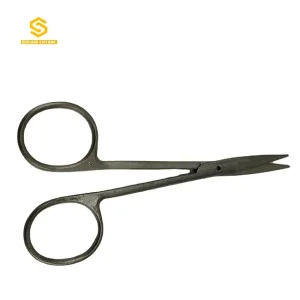
Biocompatible, corrosion-resistant surgical forceps, articulation joints, and endoscopic stapler housings manufactured via Metal Injection Molding (MIM).
- 17-4PH and 316L stainless steel formulations.
- Passivated surfaces compliant with ISO 10993 cytotoxicity standards.
- Complex 3D geometries with zero secondary machining required.
Consumer Electronics & Wearables
Miniature structural brackets, camera ring housings, folding smartphone hinges, and smartwatch cases demands ultra-thin wall capability.
- Wall thickness capabilities down to 0.3mm.
- High cosmetic finishes: PVD coating, mirror polishing, anodizing.
- Custom Sintered Titanium (Ti-64) for lightweight strength.
Sintering 4.0: Technology Roadmap & Future Outlook
Next-Generation Powder Metallurgy Dynamics and Additive Hybrid Innovations
1. Nanocrystalline Powder Feedstocks & SPS
The transition toward nano-scale metallic powders coupled with Spark Plasma Sintering (SPS) enables complete densification at lower thermal budgets. SPS utilizes pulsed DC currents to generate localized plasma discharge between particles, achieving 99.8% density within minutes while halting grain growth.
2. Additive-Sintering Hybrid Manufacturing
Combining Binder Jetting (BJT) additive printing with industrial vacuum sintering furnaces eliminates hard tooling costs for low-to-medium volume production. This hybrid route accelerates prototyping lead times from 30 days to 72 hours while maintaining metallurgical parity with press-and-sinter parts.
3. Digital Twin Closed-Loop Thermal Control
Industry 4.0 continuous belt furnaces now integrate multi-channel pyrometry sensors paired with AI digital twins. Real-time thermal profiling dynamically adjusts zone temperatures and atmosphere flow, reducing batch-to-batch dimensional variation to within ±0.02%.
4. Advanced Titanium & Refractory Alloy MIM
Overcoming oxygen contamination in titanium sintering represents a key frontier. Vacuum debinding with specialized argon purge cycles allows wholesale custom Titanium MIM parts (Ti-6Al-4V) to reach aerospace-grade ductility and fatigue resistance.
China Factory 4.0: Supply Chain Resilience & Structural Efficiency
Procuring wholesale sintered products directly from top-tier Chinese manufacturing clusters provides global buyers with strategic structural advantages. China’s advanced powder metallurgy hubs (located in Zhejiang, Guangdong, and Hebei) combine upstream elemental powder synthesis with fully automated downstream pressing and sintering infrastructure.
Vertical Ecosystem Integration
Direct supply partnerships with atomized steel powder mills ensure rapid powder blending, consistent chemical purity, and stable raw material pricing shielded from market shocks.
Automated High-Speed Production
Deployment of 100-ton to 1000-ton CNC multi-action hydraulic presses guarantees extreme green-compact dimensional consistency at cycle speeds exceeding 30 strokes per minute.
Rapid DFM & Engineering Agility
In-house toolmakers utilize 5-axis CNC machining, wire EDM, and simulation software (e.g., Moldflow for MIM, Simufact for compaction) to deliver completed DFM reports within 24–48 hours.
By leveraging Chinese manufacturing scale, international buyers achieve 30% to 50% lower piece costs compared to North American or European domestic production, without sacrificing dimensional precision or metallurgical integrity.
Localization Support & International Quality Compliance
Rigorous Auditing, Material Traceability, and Global Supply Chain Risk Mitigation
Quality System Certifications & Testing
Leading wholesale sintered product factories operate certified ISO 9001:2015 and IATF 16949 quality management systems. Quality control protocols incorporate rigorous non-destructive and destructive testing:
- Coordinate Measuring Machine (CMM): High-precision 3D dimensional verification of critical tolerances.
- Optical Gaging Products (OGP): Automated vision systems for micro-feature inspection.
- Metallurgical Density Testing: Archimedes method verification compliant with MPIF Standard 42.
- Tensile & Hardness Testing: Rockwell and Vickers hardness testing alongside universal load frame stress-strain analysis.
Regulatory Frameworks & Logistics Logistics
Global sourcing requires strict alignment with international environmental and trade compliance standards:
- REACH & RoHS Compliance: Heavy metal free, zero hazardous substances verified by SGS audit reports.
- Conflict Mineral Free: Ethical raw powder sourcing (3TG certified supply chains).
- Tariff & Customs Optimization: Complete documentation including Certificate of Origin (Form A/E), custom HS code classification, and DDP/DAP freight forwarding support.
- Buffer Inventory Programs: VMI (Vendor Managed Inventory) and safety stock holding to mitigate ocean freight volatility.
Industrial OEM Precision Sintered Metal Catalog
Explore High-Density Powder Metallurgy, MIM Components, and Custom Cast Hardware






Technical & Sourcing FAQ
Expert Engineering Answers to Common Procurement Questions
Q1: What is the difference between conventional Powder Metallurgy (PM) and Metal Injection Molding (MIM)?
Conventional PM utilizes uniaxial mechanical compaction of metal powder in hard dies, best suited for 2.5D shapes (gears, pulleys, bushings) with uniform wall thickness. MIM blends metal powder with a polymeric binder to injection mold complex 3D geometries (undercuts, internal threads, micro-wall features) similar to plastic molding, achieving higher density (95-99%).
Q2: What densities can be achieved with wholesale sintered metal products?
Standard press-and-sinter parts typically achieve 6.8 to 7.2 g/cm³ (86-92% relative density). Warm compaction and copper infiltration elevate density to 7.4 g/cm³. MIM components reach 7.5 to 7.8 g/cm³ (up to 98-99% theoretical density), offering physical properties nearly indistinguishable from wrought metals.
Q3: How do you manage part shrinkage during sintering?
MIM parts shrink predictably by 12% to 20% during binder removal and sintering. This linear dimensional change is compensated during initial CAD mold tooling design. Precision furnace atmospheric control ensures repeatable dimensional stability within ±0.3% to ±0.5% standard tolerances.
Q4: Can sintered metal parts undergo secondary machining or heat treatment?
Yes. Sintered components can be case-hardened, carburized, induction-hardened, electroplated, or passivated. For ultra-tight features (IT6 tolerances), secondary CNC machining, grinding, or honing is routinely performed on high-precision surfaces.
Q5: What are the typical MOQ requirements and sample lead times?
Standard Minimum Order Quantities (MOQ) start at 2,000 to 5,000 pieces for MIM parts due to mold setup efficiencies. Tooling and First Article Inspection (FAI) samples are delivered within 25 to 35 days, with full production ramping immediately upon approval.
Q6: Why choose a China-based factory for wholesale sintered product supply?
China factories offer an unmatched combination of comprehensive supply chain integration, state-of-the-art continuous vacuum sintering technology, aggressive DFM iteration speeds, and up to 50% cost savings on complex tooling and unit volume pricing.
Accelerate Your Project with Engineering Precision
Send your 2D (PDF) and 3D (STEP/IGES) CAD models today for a comprehensive DFM manufacturability analysis and transparent direct-factory quote within 48 hours.
Request A Technical RFQ