
Featured Wholesale Sintered & Molded Engineering Catalog
Explore our primary portfolio of custom sintered structural components, die-cast alloys, and MIM mechanical parts tailored for automotive, industrial, and consumer applications.

Wholesale OEM/ODM China China Plastic Injection Mould/Molding Manufacturers, Supplier
View Product Details
China 2019 China New Design China OEM High Quality Plastic Injection Molding Industrial Parts Manufacturers, Suppliers
View Product Details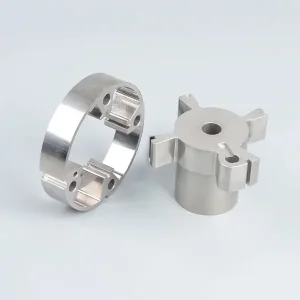
China Engine Variable Timing Systems: PM Parts Outperform Traditional Components Manufacturer, Manufacturers
View Product Details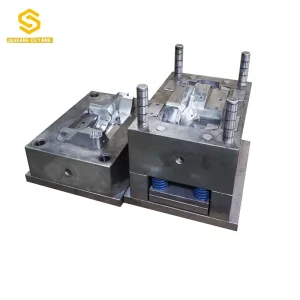
Wholesale Wholesale ODM China OEM Customized High Pressure Metal Die Casting Molds Manufacturer, Factories
View Product Details
China CE Certificate Sintered Parts Powder Metallurgy Metal Powder Manufacturer Manufacturer, Factories
View Product Details
Wholesale Manufacturer for Mechanical Joint Element for Metal Injection Molding Manufacturers, Suppliers
View Product Details
China 2019 High quality ADC12 A380 Aluminum Die Casting Manufacturer Factory, Factories
View Product Details
China Supply ODM Aluminum Alloy Precision Squeeze Die Casting Sand Casting for Vehicle/Railway/Train/Valve/Automotive/Scooter/Auto Spare Part Supplier, Factories
View Product DetailsMacro Industry Solutions: Advanced Powder Metallurgy & Sintering Science
Modern thermal sintering represents a paradigm shift in structural metal fabrication. By fusing atomized metal powders below their melting point under vacuum or strictly controlled atmospheric conditions, engineers achieve near-net-shape geometries unattainable through subtractive CNC machining or traditional investment casting.
Metallurgical Benchmark: Solid-state diffusion during high-temperature sintering eliminates intergranular voids, yielding isotropic mechanical properties that match or exceed wrought metals in fatigue resistance, tensile yield, and magnetic permeability according to MPIF Standard 35.
Automotive Powertrain & VVT Systems
Powder metallurgy components engineered for Variable Valve Timing (VVT) phasers, oil pump rotors, engine sprockets, and transmission synchronizer rings. Sintered iron-nickel and steel alloys provide high torque density, self-lubricating porosity options, and extreme fatigue endurance under cyclic stress.
- High surface hardness via case carburizing
- Dynamic load testing compliance
- Cost-effective high-volume output
Medical Surgical & Implant Devices
Micro Metal Injection Molding (Micro-MIM) utilizing 316L, 17-4PH, and Titanium alloys (Ti-6Al-4V). Enables complex ergonomic scalpels, laparoscopic articulation jaws, and orthopedic instruments with intricate internal fluid channels and mirror-smooth bio-compatible surfaces.
- ISO 13485 manufacturing controls
- Near 100% material yield rate
- Autoclave-safe corrosion resistance
Fluid Filtration & Permeable Media
Porosity-controlled sintered stainless steel and bronze filter elements. Designed for extreme pressure drops, chemical processing, high-temperature gas sparging, and hydraulic fluid purification where exact pore size distribution (0.2 to 100 microns) is strictly mandated.
- Uniform pore size structure
- High thermal shock resilience
- Backwashable reusable design
Industrial Robotics & Aerospace Locks
Heavy-duty planetary gear sets, harmonic drive elements, and flight actuator latches. Sintered from high-alloy steels and copper-infiltrated iron, achieving tensile strengths exceeding 1,200 MPa following secondary heat treatment and quench tempering.
- Extreme wear & shock absorption
- Eliminates complex 5-axis milling
- Sub-fractional backlash tolerance
Global Business & Industrial Landscape: TCO & Near-Net Sourcing
In an era defined by volatile raw material costs and global supply disruption, wholesale powder metallurgy and sintering manufacturing provide unmatched cost-efficiency. By reducing material waste from 60% (in subtractive milling) to less than 3%, net-shape sintering lowers the Total Cost of Ownership (TCO) across mass production runs.
| Manufacturing Technology | Material Utilization | Geometrical Complexity | Tooling Amortization | Unit Cost (High Vol) | Lead Time to Scale |
|---|---|---|---|---|---|
| Metal Injection Molding (MIM) | 95% – 98% | Ultra-High (3D Undercuts) | Medium (10k+ units) | Very Low | 30 – 45 Days |
| Press & Sinter Powder Metallurgy | 92% – 97% | Moderate (2.5D Axial Profile) | Low to Medium | Lowest | 20 – 30 Days |
| Subtractive CNC Machining | 15% – 40% | High (Tool Access Limited) | None (Setup Driven) | High to Extreme | Immediate to 7 Days |
| Investment Casting (Lost Wax) | 60% – 75% | High (Manual Labor Heavy) | Medium | Moderate to High | 45 – 60 Days |
| Aluminum / Zinc Die Casting | 85% – 90% | High (Thin-walled Housings) | High Initial Mold | Low | 35 – 50 Days |
Resilient Near-Net Sourcing Strategy
Global tier-1 procurement managers are actively consolidating supply lines by shifting multi-part assemblies into single-piece sintered components. Sintering eliminates secondary welding, brazing, and fastener assembly, reducing assembly line errors and drastically shortening bill-of-materials (BOM) complexity.
Decarbonization & Green Manufacturing
Solid-state thermal sintering consumes up to 40% less total kilowatt-hours per kilogram compared to full remelting in foundry casting. Combined with recycled atomized metal powders, sintering aligns directly with scope-1 and scope-2 corporate carbon-neutrality mandates required by European and North American regulators.
End-to-End Manufacturing Architecture: From Powder to Finished Part
Producing high-integrity sintered components demands precise multi-stage metallurgical control. Below is our engineering workflow designed for mass-production consistency.
Powder Atomization & Feedstock
Gas or water atomization yields ultra-fine spherical metal powders (1–25 microns for MIM, 45–150 microns for conventional PM). Powders are homogenized with proprietary thermoplastic binder systems to create dense, stable feedstock.
Precision Shaping & Compaction
Feedstock is injected via high-speed plastic injection molding machines into multi-cavity hardened molds, or compacted under 100 to 1,000 tons of automatic mechanical/hydraulic press pressure into "green parts."
Catalytic & Solvent Debinding
Primary binder components are extracted using solvent bath dissolution or nitric acid vapor catalytic debinding. The resulting "brown part" maintains skeletal geometry connected by secondary backbone binders.
High-Temp Vacuum Sintering
Components enter computer-controlled continuous mesh-belt furnaces or 1700°C ultra-high vacuum atmosphere furnaces. Thermal energy induces solid-state atom diffusion, shrinking parts by 12–20% to reach full core density.
Secondary Heat Treatment & HIP
Optional Hot Isostatic Pressing (HIP) removes micro-porosity for aerospace stress requirements. CNC sizing, coining, steam oxidation, induction hardening, and electroplating provide exact final engineering specs.
Localization Support & Compliance Assurance Framework
Navigating international trade standards requires localized engineering support and rigid compliance documentation. We safeguard your supply integrity through certified quality inspection labs and clear regulatory adherence.
IATF 16949 & ISO 9001 Systems
Every production batch undergoes Statistical Process Control (SPC), PPAP (Production Part Approval Process) Level III documentation, FMEA analysis, and 100% automated optical dimensional sorting for critical zero-defect shipments.
Material Certification & Traceability
Full chemical heat analysis and mechanical certificate of conformity (EN 10204 3.1) provided with all lots. Compliance verified against EU RoHS 3, REACH SVHC, and Conflict Mineral regulations (CMRT reporting).
Localized DFM & Technical Support
Our dedicated application engineering team delivers rapid Design for Manufacturability (DFM) feedback within 24 to 48 hours, bridging time zone differences across North America, Europe, and Asia-Pacific.
Localized Application Scenarios: Real-World Performance
Tailored engineering implementations solving specific regional manufacturing challenges in high-demand markets.
North America: Heavy Equipment Transmission Spindles
Challenge: A Midwest US agricultural machinery manufacturer required high-strength planet carrier gears prone to high tooth-root stress. Machining solid steel bars generated 65% scrap and created bottleneck lead times.
Sintered Solution: Re-engineered part to press-and-sinter Fe-Cu-C powder alloy (MPIF FC-0208-60HC) with copper infiltration. Delivered 780 MPa tensile strength, zero secondary machining, and cut part cost by 42%.
European Union: Automotive EV Braking Actuators
Challenge: A German Tier-1 supplier needed lightweight, corrosion-resistant parking brake worm gears capable of enduring 100,000+ emergency lock cycles at -40°C.
Sintered Solution: Developed 17-4PH stainless steel MIM solution with vacuum sintering and H900 heat treatment. Achieved 42 HRC surface hardness and strict dimensional repeatability across 500,000 units/year.
Asia-Pacific: Consumer Electronics Hinge Mechanisms
Challenge: A leading smartphone OEM required ultra-thin folding screen hinges with micro-gears having wall thicknesses below 0.35mm.
Sintered Solution: Employed high-density Micro-MIM using ultra-fine tungsten-nickel-iron and 316L powder mix. Achieved mirror-polished cosmetic finish and sub-0.01mm gear tooth profile accuracy.
Technology Roadmap & Future Industry Outlook
The convergence of additive manufacturing, artificial intelligence, and advanced material science is expanding the horizons of traditional sintering.
Binder Jetting & Sinter Hybridization
Combining tool-less 3D Binder Jetting (BJT) with high-temperature furnace sintering allows rapid prototyping of complex geometries before committing to high-volume injection tooling, cutting initial development cycles from months to days.
Spark Plasma Sintering (SPS)
Pioneering Field Assisted Sintering Technology (FAST/SPS) utilizes pulsed direct electrical currents to densify powders within minutes rather than hours. Enables ultrafine grain structure retention for next-gen magnetic and thermoelectric alloys.
AI-Driven Thermal Profiling
Integration of closed-loop optical sensors and digital twin simulations predicts furnace thermal shrinkage patterns down to micrometer scales, eliminating manual trial-and-error mold modifications and optimizing thermal energy usage.
High-Entropy Alloys (HEA)
Synthesizing multi-principal element alloys via vacuum sintering opens new frontiers in extreme temperature resistance, anti-corrosion marine hardware, and lightweight structural aerospace brackets.
Expanded Wholesale Sintered Parts & Tooling Solutions
Discover additional precision-manufactured metal gears, vacuum furnace hardware, die-cast assemblies, and custom powder metallurgy components.
Wholesale 316l Stainless steel Small Metal Gears Motor Factory, Factories
View Product Details
Wholesale Quality Inspection for Precision CNC Pressure Aluminum Zinc Auto Household Die Casting Manufacturer, Factories
View Product Details
Wholesale Low price for High Precision Customized Sintered Parts for Garden Tool Accessories Manufacturer, Supplier
View Product Details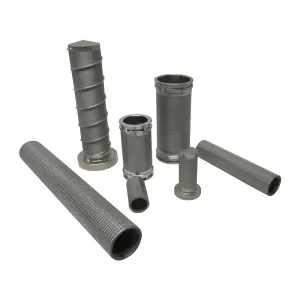
Wholesale Stainless Steel Sintered Metal Filters Manufacturers, Supplier
View Product Details
China Bottom price Metal Injection Molding for Irregular Customized Stainless Steel Parts Suppliers, Factories
View Product Details
China Custom Powder Metallurgy Sintered Metals Parts with Metal Sintering Process Manufacturer, Factory
View Product Details
China Professional China 1700c High Temperature Vacuum Sintering Furnace Electric Atmosphere Vacuum Sintering Furnace for Powder Metallurgy Cim MIM Sintering Manufacturer, Suppliers
View Product Details
Wholesale OEM China China OEM Sintered Bronze Bush Pm Copper Powdered Metallurgy Bearings Metal Sintering Gear Parts Manufacturer, Manufacturers
View Product DetailsTechnical & Commercial Sourcing Q&A Guide
Get authoritative answers directly from our senior powder metallurgy engineers and procurement experts.
What dimensional tolerances can be reliably achieved with sintered metal parts?
For standard press-and-sinter powder metallurgy, as-sintered linear tolerances typically range from ±0.05mm to ±0.1mm per 25mm of dimension. By applying secondary coining or sizing operations, tolerances can be tightened to ±0.015mm. Metal Injection Molding (MIM) typically achieves ±0.3% to ±0.5% as-sintered nominal dimensions, which can be further refined with secondary CNC finishing.
How does sintered part density correlate with tensile strength and hardness?
Density directly dictates the physical properties of sintered components. As density increases toward theoretical maximum (7.8 g/cm³ for steel), mechanical strength increases non-linearly. Conventional press-and-sinter parts yield 85%–92% theoretical density, suitable for structural gears and bushings. MIM components reach 96%–99% density, exhibiting yield strength, elongation, and impact energy matching wrought bar stock.
What are the standard minimum order quantities (MOQ) and tooling lead times?
Our standard production MOQ is 2,000 pieces for MIM and die casting components, and 5,000 pieces for press-and-sinter structural parts due to setup economics. Tooling design and sample production take approximately 30 to 35 calendar days. Metal 3D printing and quick-turn prototype samples can be provided within 5 to 7 business days prior to committing to full tooling mold production.
Can sintered bronze and iron bearings be pre-lubricated with oils?
Yes. Interconnected porosity (typically 18% to 25% by volume) in sintered bronze (SAE 841) and iron bearings acts as an internal lubricant reservoir. Through vacuum impregnation, bearings are saturated with synthetic oils. Under rotational heat and motion, oil is drawn to the surface, creating a self-lubricating hydrodynamic film requiring zero external grease service over part operational lifetime.