
Precision Sintered Parts & Custom Metallurgy Solutions
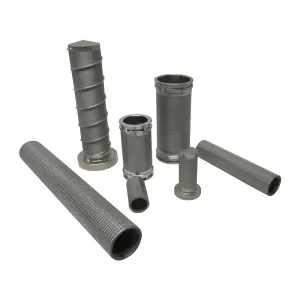
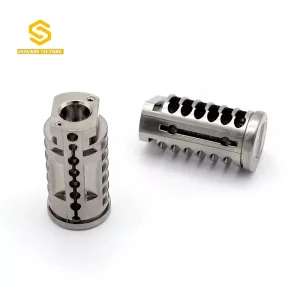
Explore our primary manufacturing catalog covering titanium injection molding, sintered filters, structural powder metal components, and precision die castings.






The Physics & Chemistry of Titanium Sintering
Understanding interstitial kinetics, thermodynamic phase transformations, and thermal vacuum dynamics for solid-state and liquid-phase titanium powder compaction.
Vacuum Thermal Kinetics & Oxygen Pickup Control
Titanium exhibits an extraordinary affinity for atmospheric interstitial elements—specifically oxygen, nitrogen, carbon, and hydrogen. During high-temperature sintering (typically ranging between 1,200°C and 1,380°C), uncontrolled exposure to residual oxygen transforms ductile alpha/beta phase titanium alloys into extremely brittle intermetallic structures.
As a leading Wholesale Titanium Sintering Manufacturer, our vacuum sintering systems operate at ultimate pressure thresholds lower than 10-4 mbar (0.01 Pa) backed by ultra-high-purity argon gas (99.999%) partial pressure flushing. This rigorous environment keeps oxygen pickup below 1,500 ppm (0.15 wt%), satisfying strict ASTM B348 Grade 5 (Ti-6Al-4V) and ASTM F2885 Titanium Metal Injection Molding (TiMIM) requirements.
Densification vs. Porosity Tailoring
Depending on the final OEM application, titanium sintering requires either full densification (>96% theoretical density) or precisely engineered open/closed porosity (30% to 80% pore volume):
- Fully Dense Structural TiMIM: Achieved through fine spherical gas-atomized Ti-6Al-4V powders (D50 < 15 µm) combined with post-sintering Hot Isostatic Pressing (HIP) at 900°C and 100 MPa, reaching 99.2% relative density for aerospace brackets and surgical instruments.
- Porous Sintered Titanium Matrix: Produced using hydride-dehydride (HDH) or coarse angular titanium powders sintered under controlled solid-state diffusion, creating interconnected pore networks (mean pore sizes from 2 µm to 100 µm) essential for PEM hydrogen electrolyzer Porous Transport Layers (PTL) and orthopedic bone-ingrowth implants.
| Parameter / Standard | Ti-6Al-4V (Grade 5 TiMIM) | CP-Ti (Grade 2 Sintered) | Porous Titanium PTL (Electrolyzer) | CNC Machined Wrought Stock |
|---|---|---|---|---|
| Density Range (% relative) | 96.5% - 99.5% (with HIP) | 95.0% - 98.0% | 35.0% - 65.0% (Controlled) | 100% |
| Tensile Strength (UTS) | 880 - 980 MPa | 480 - 550 MPa | 120 - 250 MPa | 950 - 1050 MPa |
| Elongation at Break (%) | 10% - 15% | 18% - 24% | 1.5% - 4.0% | 14% - 18% |
| Oxygen Content (Max) | < 2,000 ppm (0.20%) | < 1,800 ppm (0.18%) | < 3,000 ppm (0.30%) | < 1,200 ppm (0.12%) |
| Material Utilization Rate | 95% - 98% (Near Net) | 92% - 96% (Near Net) | 90% - 95% (Near Net) | 15% - 35% (High Waste) |
Technology Roadmap & Future Outlook in Sintering
How next-generation powder synthesis, field-assisted sintering, and hybrid manufacturing are shifting the cost-performance curve for global engineering buyers.
Spark Plasma Sintering (SPS) & FAST
Field Assisted Sintering Technology (FAST/SPS) applies pulsed DC electrical currents directly through graphite dies and consolidated titanium powders. By utilizing Joule heating, heating rates exceed 500°C/min, completing full densification within minutes rather than hours. This suppresses grain growth, preserving ultra-fine nanoscale microstructures with superior yield strength.
Spherical Low-Cost Ti Powder Synthesis
Historically, the high cost of gas-atomized titanium powder limited widespread TiMIM adoption. Emerging plasma atomization, electrode induction melting gas atomization (EIGA), and direct electrochemical reduction processes are dropping raw material costs by 35–45%, unlocking high-volume automotive and consumer hardware markets.
Binder Jetting & Sintering Hybridization
Combining additive manufacturing flexibility with traditional high-vacuum batch sintering furnaces allow tooling-free production of complex titanium prototypes that transition directly into mass production using identical metallurgical sintering profiles.
Macro Industry Solutions Powered by Titanium Sintering
From deep space and biomedical longevity to clean hydrogen production, porous and dense sintered titanium delivers non-negotiable performance advantages.
Hydrogen Economy & PEM Water Electrolysis
Proton Exchange Membrane (PEM) electrolyzers require Porous Transport Layers (PTL) that operate in highly oxidative, corrosive environments at 80°C under 30+ bar pressures. Standard stainless steel rapidly degrades, poisoning the catalyst membrane. Our porous sintered titanium sheets and porous titanium felt exhibit unmatched electrochemical corrosion resistance, optimal gas-liquid diffusion, and minimal contact resistance, extending stack operational lifespan beyond 80,000 hours.
Biomedical Implants & Surgical Hardware
Commercially Pure Titanium (CP-Ti) and Ti-6Al-4V ELI (Extra Low Interstitial) feature biological inertness and elasticity metrics closely matching natural human cortical bone (modulus of elasticity ~110 GPa vs ~10-30 GPa for porous Ti). Sintered porous surface coatings on hip stems and interbody spinal fusion cages facilitate direct osseointegration, eliminating bone shielding and implant loosening.
Aerospace & Defense Lightweight Structural Components
Weight reduction directly translates to fuel economy and payload efficiency. Custom TiMIM brackets, fuel system connectors, and fastener sleeves eliminate high material waste associated with milling titanium billets. Sintered parts achieve near-net shape within ±0.3% dimensional tolerance out of the furnace, drastically reducing machining costs for flight-certified hardware.
Next-Gen Consumer Electronics & Wearables
Modern smartwatches, foldable smartphone hinges, and AR/VR glasses require high structural rigidity combined with low mass. Titanium sintering enables ultra-thin wall sections (down to 0.4 mm) with premium metallic hand-feel, hypo-allergenic skin contact properties, and high scratch resistance post-PVD coating.
Supply Chain Resilience & Advanced Manufacturing Infrastructure
Combining localized titanium sponge raw material access, fully automated thermal debinding-sintering lines, and digital quality monitoring.
Upstream Powder Supply Ecosystem
China accounts for over 45% of global titanium sponge output. Operating within the Ningbo-Yanzhou advanced manufacturing cluster provides direct supply chain integration with atomization facilities, ensuring consistent lot-to-lot chemical purity, stable pricing, and complete mill test report traceability.
Automated MIM Tooling & Thermal Processing
Our facility houses high-precision CNC tool-making suites, multi-cavity injection presses, solvent debinding systems, and continuous mesh belt + batch vacuum sintering furnaces with integrated mass spectrometers that detect off-gas contaminants in real time during heating phases.
MES Digital Lot Traceability
From incoming powder sieve distribution checks to post-sintering CMM laser scans, every manufacturing step is recorded in our Manufacturing Execution System (MES). Customers receive full batch certification, including XRF material spectra, interstitial ONH analysis, and density verification.
Global OEM Procurement: TCO Breakdown & Cost Drivers
Comparing financial and operational metrics between traditional Titanium CNC milling vs. Wholesale Titanium Sintering / TiMIM technology.
The Economics of Buy-to-Fly Ratio
In conventional aerospace titanium machining, the "Buy-to-Fly" ratio often exceeds 10:1—meaning 10 kg of expensive raw titanium bar stock is converted into chips to yield a 1 kg final part. Machining titanium also incurs high tool-wear costs due to its low thermal conductivity (chips retain heat at the cutting edge).
Qualifying a Wholesale Titanium Supplier
When evaluating high-volume sintering partners, engineering and procurement teams should audit the following key capabilities:
- In-house Chemical Lab: Capability to measure Interstitial Oxygen, Nitrogen, Carbon, and Hydrogen (LECO analyzer).
- Vacuum Furnace Capacity: Dedicated titanium vacuum furnaces (preventing cross-contamination with carbon steel or copper powders).
- IATF 16949 / ISO 13485 Systems: Established PPAP Level 3 documentation, FMEA defect analysis, and Statistical Process Control (SPC).
- Tooling & DFM Engineering: Early DFM feedback on mold shrinkage compensation (titanium MIM shrinkage ranges between 14% and 18%).
Localization Support & Regulatory Guarantee
Seamless international delivery, local engineering support, and strict adherence to environmental and export directives.
RoHS, REACH & Conflict Mineral Compliance
All titanium raw materials, binders, and surface treatments undergo strict chemical screening. Complete REACH SVHC disclosures, RoHS certifications, and non-conflict mineral declarations are supplied with every production run.
Fast Technical Communication & DFM Feedback
Our bi-lingual engineering staff provides DFM reviews within 24–48 hours. STEP files and 2D drawings are analyzed under NDA to confirm wall thickness uniformity, draft angles, and parting line placement.
Global Door-to-Door Logistics
Flexible commercial terms (FOB Ningbo/Shanghai, CIF, DDP) supported by express air freight for sample delivery and air/ocean freight logistics hubs servicing North America, Europe, Japan, and Southeast Asia.
Frequently Asked Questions (FAQ)
Addressing common engineering inquiries regarding titanium sintering kinetics, tolerances, mechanical properties, and OEM ordering.
Solid-state titanium sintering typically refers to press-and-sinter powder metallurgy or loose powder sintering (used for porous filters and PTL sheets), creating 2.5D geometries or porous matrices. Titanium Metal Injection Molding (TiMIM) mixes fine titanium powder with a thermoplastic binder system, injecting it into complex 3D molds before debinding and vacuum sintering, producing high-density (96%+) complex parts matching die-casting design freedom.
We utilize dedicated high-vacuum graphite or metal-lined furnaces operating at 10-4 mbar, argon gas purges, and specialized titanium getter materials inside the hot zone. Additionally, we control raw powder handling under inert gas atmospheres to keep total interstitial oxygen below 1,500–2,000 ppm.
As-sintered TiMIM tolerances are typically ±0.3% to ±0.5% of nominal dimensions (e.g., ±0.03 mm on a 10 mm dimension). For critical tolerances tighter than ±0.01 mm, secondary CNC machining, sizing, or grinding operations are integrated into the workflow.
As-sintered titanium parts with 96% density exhibit approximately 75–80% of the fatigue strength of wrought bar stock due to micro-porosity acting as stress concentration sites. However, subjecting sintered parts to Hot Isostatic Pressing (HIP) closes internal micro-voids, increasing density to >99.2% and raising fatigue strength to within 95%+ of wrought Ti-6Al-4V properties.
Our standard production MOQ for custom TiMIM or sintered titanium structural components is 2,000 pieces. For prototype validation or low-volume aerospace/biomedical orders, sample runs can be produced using metal 3D printing or single-cavity prototype tooling.
Yes. Fully dense (>96%) sintered titanium parts accept standard Type II/III titanium anodizing (producing vibrant interference colors without dyes), electropolishing, physical vapor deposition (PVD TiN/DLC coatings), and laser engraving.
More Custom Precision Components & Die Casting OEM Lines
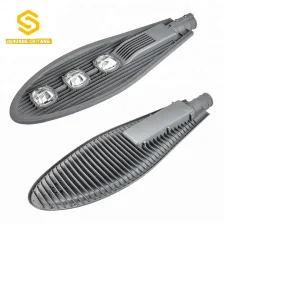
Explore additional precision manufacturing solutions including zinc/aluminum die casting, specialized powder metal gears, and custom hardware assemblies.





Request a DFM Review & Engineering Quotation
Submit your 2D (PDF) and 3D (STEP/IGES) CAD models under complete NDA protection. Our technical engineering team returns a transparent cost breakdown and DFM report within 48 hours.
Upload Drawings & Get Quote