
Featured OEM Precision Components & Gear Assemblies
High-precision powder metallurgy components, metal injection molding (MIM) structural elements, and die-cast sub-assemblies engineered for critical drive systems.
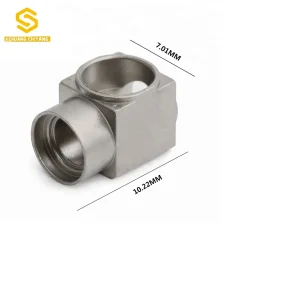
China High Precision Custom Small Metal Parts Manufacturing With MIM Process Supplier
View Specifications
China OEM Custom Stainless Steel MIM Hardware & CNC Machinery Components
View Specifications
Powder Metallurgy MIM Watch Accessories & Stainless Steel Components
View Specifications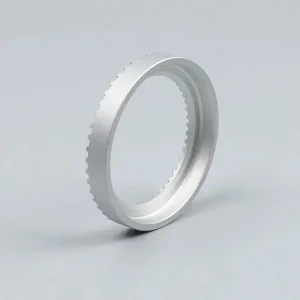
Wholesale High-Precision ABS Rings Manufacturer & Factory Direct Supply
View Specifications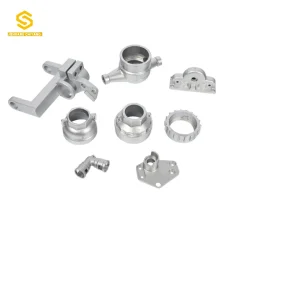
Customized High Precision Aluminium & Zinc Alloy Die Casting Mould Parts
View Specifications
China Precision Gear Manufacturer Custom Metal PM Powder Metallurgy Gears
View Specifications
Wholesale High Precision Mechanical Parts & Custom CAM Design Factory
View Specifications
Custom Sintering MIM Hardware for CNC Machinery & Auto Gear Components
View SpecificationsExecutive Overview: Engineering High-Efficiency Worm Drive Solutions
A comprehensive evaluation of tooth meshing dynamics, material pairings, self-locking mechanics, and high-volume manufacturing routes for wholesale global sourcing.
In mechanical power transmission systems, the worm drive represents a unique kinematic class capable of high single-reduction speed ratios (frequently exceeding 100:1) within an exceptionally compact spatial footprint. As global OEMs in automotive, robotics, medical devices, and heavy machinery demand higher power density, lower acoustics, and zero backlash, the selection of a qualifying Wholesale Worm Gears Manufacturer becomes a crucial strategic decision.
A worm gear setup comprises a driving screw (the worm) and a driven wheel (the worm gear or worm wheel). The fundamental advantage lies in its sliding tooth contact line, which facilitates quiet power transfer and high resistance to shock loads. However, the predominance of sliding friction over rolling friction introduces strict mechanical trade-offs regarding thermal performance, wear rates, and mechanical efficiency ($\eta$). Achieving optimum transmission fidelity demands rigorous metallurgical selection, advanced manufacturing processes—such as high-density Powder Metallurgy (PM) or Metal Injection Molding (MIM)—and automated AGMA Class 10+ precision grinding.
| Manufacturing Technology | Suitable Material Systems | Dimensional Accuracy | Annual Volume Suitability | Cost Benefit Profile |
|---|---|---|---|---|
| Traditional CNC Hobbing & Thread Grinding | 20CrMnTi, 8620, Phosphor Bronze (C90700) | AGMA 10 to 12 / DIN 5-6 | Low to Medium (1,000 – 10,000 units) | High tool-flexibility; higher unit price due to machining cycle times. |
| High-Density Powder Metallurgy (PM) | Fe-Ni-Cu Alloy Steels, Sintered Bronze | AGMA 7 to 9 / DIN 7-8 | High Volume (> 10,000 units) | Near-net shape, minimal scrap loss, up to 40% cost savings over CNC. |
| Metal Injection Molding (MIM) | 17-4PH, 316L Stainless Steel, Ti-6Al-4V | AGMA 8 to 10 / DIN 6-7 | Medium to Mass Volume (> 5,000 units) | Unmatched design freedom for micro-gearbox integrated geometries. |
| Precision Aluminum/Zinc Die Casting | A380, ADC12, Zamak 3/5 (Gear Housings) | ISO Std Die Cast Tolerances | Mass Volume (> 20,000 units) | High structural integrity for gearbox casings and mounting frames. |
Macro-Industry Solutions & Application Engineering
Tailored kinematic engineering addressing specific environmental, electrical, and torque challenges across core global market segments.
Automotive & Electric Steering Actuators
Modern Automotive Electronic Power Steering (EPS), electronic park brakes (EPB), and seat adjusters require zero-backlash self-locking worm drives. By utilizing micro-alloyed sintered steel worms paired with polymer or bronze gear wheels, our OEM factories achieve NVH (Noise, Vibration, Harshness) compliance below 42 dBA while maintaining strict IATF 16949 quality protocols.
Medical & Surgical Precision Drives
Surgical robotics, infusion pumps, and articulating beds necessitate miniature worm gearboxes with absolute positioning retention during power loss. Utilizing Titanium and 17-4PH Stainless Steel Metal Injection Molding (MIM), we fabricate micro-scale worm drives weighing under 2 grams that offer superior biocompatibility, autoclavability, and corrosion resistance.
Heavy Industrial Conveyors & Elevators
For heavy material handling, hoists, and rotary indexers, thermal power rating and surface fatigue resistance are crucial design parameters. Our factories engineer double-enveloping (globoidal) worm gear sets that increase tooth surface contact area by up to 300%, effectively tripling shock-load endurance and thermal dissipation limits.
Technical Roadmap & Next-Generation Gear Innovations
Strategic focus areas driving higher mechanical efficiency, miniaturization, and intelligent transmission modeling over the coming decade.
Dual-Lead & Zero-Backlash Adjustable Kinematics
Dual-lead worm gears utilize different lead angles on the left and right tooth flanks of the worm. By axially shifting the worm, tooth flank clearance can be continuously adjusted during the gearbox lifecycle, eliminating operational backlash without altering central distance—ideal for high-precision CNC rotary tables and aerospace radar positioners.
Advanced Tribological Surface Engineering (DLC & PVD)
To overcome traditional boundary friction limits, our engineering team applies Diamond-Like Carbon (DLC) and Titanium Aluminum Nitride (TiAlN) coatings via Physical Vapor Deposition (PVD). This reduces the coefficient of friction ($\mu$) from 0.08 down to 0.02, raising worm gear efficiency toward 92% and drastically reducing thermal degradation of synthetic gear lubricants.
Topology-Optimized Sintered Powder Metallurgy
Utilizing Finite Element Method (FEM) stress mapping, new PM worm gear blank designs incorporate internal lattice structures. This reduces rotational inertia by up to 35% while preserving full torsional stiffness at the tooth root, perfectly aligned with high-acceleration servo robotic applications.
China Factory 4.0: Supply Chain Resilience & Production Depth
Integrating continuous sintering control, robotic material loading, and automated optical inspection for uncompromised wholesale manufacturing reliability.
Automated Powder Metallurgy & Sintering Continuous Lines
Our modern Ningbo manufacturing complex deploys automated hydraulic compacting presses up to 1,000 tons, coupled with computer-controlled mesh-belt atmosphere sintering furnaces. Real-time atmosphere control (Endothermic / Hydrogen-Nitrogen mixes) guarantees consistent carbon potential, preventing oxidation and securing homogeneous core density across multi-cavity tooling runs.
Closed-Loop Quality Control & Metrology Integration
Quality assurance is backed by advanced inspection instrumentation, including Klingelnberg Gear Measuring Centers, Zeiss CNC Coordinate Measuring Machines (CMM), optical profilometers, and density testing units. Every batch of custom worm gears undergoes 100% key-dimension verification, tooth contact pattern analysis, and hardness mapping (HRC / HV) prior to export approval.
Localization Support, Regulatory Compliance & Assurance
Bridging cross-border engineering gaps through comprehensive technical documentation, global regulatory alignment, and dedicated engineering consultation.
International Standard Alignment
All gearing profiles, tooth modules, and tolerance bands are manufactured to AGMA 2015-1-A01, DIN 3960/3962, and ISO 1328 standards, eliminating cross-border design conversion ambiguities for Western OEM engineering teams.
Environmental & Material Certifications
Full material traceability is provided with every shipment. Materials comply with EU RoHS 3 and REACH regulations, with formal EN 10204 3.1 Material Certificates and IMDS (International Material Data System) filings provided for automotive accounts.
Rapid DFM & APQP/PPAP Level 3
Our dedicated bilingual engineering group conducts Design for Manufacturability (DFM) reviews within 48 hours. For full-scale OEM programs, we provide complete Advanced Product Quality Planning (APQP) and PPAP Level 3 documentation packages.
Global Procurement Guide: Selecting the Right Manufacturing Route
Use this strategic engineering matrix to match your annual volume, target ratio, and mechanical constraints with the optimal factory technology.
| Evaluation Parameter | Hobbed Steel + Bronze Wheel | Sintered Powder Metallurgy | Metal Injection Molding (MIM) |
|---|---|---|---|
| Typical Batch Size (MOQ) | 1,000 – 5,000 pcs | 5,000 – 50,000+ pcs | 2,000 – 100,000+ pcs |
| Lead Time (Tooling / Samples) | 15 – 25 Days (Hobbing Setup) | 30 – 40 Days (PM Die Creation) | 30 – 35 Days (MIM Mold Build) |
| Unit Cost Scaling | Moderate drops with volume | Extremely steep cost drop at volume | Significant cost reduction for complex shapes |
| Max Part Weight / Size | Up to 500 mm Diameter | Up to 150 mm Outer Diameter | Optimized for smaller parts (< 286 g) |
| Secondary Machining Need | Mandatory Thread Grinding | Optional reaming or sizing | Near-net shape; typically zero machining |
Additional OEM Precision Metal Solutions
Expanded manufacturing capabilities across custom pumps, auto hardware, electrical components, and precision castings.

Wholesale Aluminium Die Casting Auto Parts Manufacturer in China
View Specifications
Wholesale Metal Injection Molding (MIM) Components for Industrial Pumps
View Specifications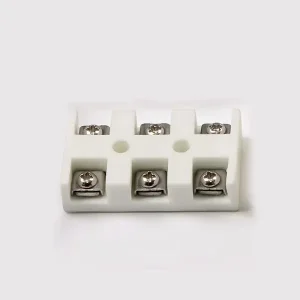
Wholesale Porcelain Terminal Block Manufacturers & Export Factories
View Specifications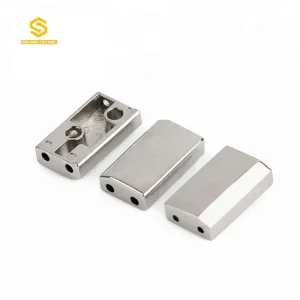
China OEM Custom MIM Stainless Steel Watch Buckles & Clasps Supplier
View Specifications
Metal Injection Moulding MIM Mold for Communications Hardware
View Specifications
China Factory Precision Zinc Alloy & Aluminum Die-Casting Components
View Specifications
Wholesale High Precision MIM Small Metal Structural Parts & Powder Metallurgy
View Specifications
China Manufacturer Custom Brass & Zinc Die Casting Mould Parts with Anodizing
View SpecificationsFrequently Asked Questions (Technical FAQ)
Expert responses to critical engineering, manufacturing, and procurement inquiries regarding custom worm gear manufacturing.
Partner with a Premier Wholesale Worm Gears Manufacturer
Send us your 2D/3D CAD models (STEP, IGES, or PDF) today. Our engineering team will deliver a comprehensive DFM manufacturability evaluation and a transparent quotation within 48 hours.