
Immediate Manufacturing Capabilities for Ethiopian Industry
High-precision custom component solutions engineered for rapid deployment into Ethiopia's booming manufacturing, automotive, medical, and infrastructure sectors.
Ethiopia’s Industrial Renaissance: Navigating the Additive Manufacturing Frontier
As the fastest-growing economy in East Africa, Ethiopia is undergoing a structural economic evolution driven by the government's Ten-Year Development Plan (2021–2030) and the expanded development of modern industrial parks such as Bole Lemi, Hawassa, Kilinto, Adama, and Dire Dawa. However, as local assembly plants, textile operations, commercial vehicle operations, and medical device sectors scale up, manufacturing businesses across Addis Ababa face a systemic operational challenge: severe supply chain disruptions caused by lengthy international procurement timelines and foreign exchange (FX) bottlenecks.
The Supply Chain Imperative: Overcoming Tooling & Spare Part Scarcity
Traditional industrial expansion in Ethiopia relies heavily on imported cast iron, turned steel, or forged replacement parts. When a critical gear, custom housing, or specialized bracket breaks down in an industrial plant outside Bishoftu or Akaki, standard procurement channels require ordering physical tooling or replacement assemblies from overseas. This process often incurs 8 to 16 weeks of lead time, compound shipping costs through the Djibouti corridor, and unpredictable customs holds.
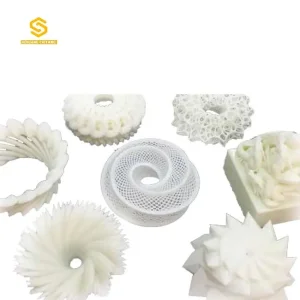
Additive Manufacturing (3D Printing) combined with digital inventory management fundamentally shifts this dynamic. By transitioning from traditional subtractive manufacturing to Direct Metal Laser Sintering (DMLS), Selective Laser Melting (SLM), and Binder Jetting, international engineering partners like Ningbo Jiehuang Chiyang Electronic Tech Co., Ltd. (JHMIM) provide Ethiopian enterprises with an end-to-end framework to leapfrog legacy tooling constraints.
China Industry 4.0: Bridging 3D Printing Prototyping to High-Volume MIM & Casting
How enterprise buyers in Ethiopia leverage China’s advanced hybrid manufacturing ecosystem to achieve complete supply chain resilience from single prototype to 1,000,000+ mass production units.
Digital Twin & DfAM Design
Our engineering teams execute Design for Additive Manufacturing (DfAM) checks on every client STEP model, converting dense traditional cast parts into lightweight, topology-optimized lattice structures that reduce material usage without sacrificing tensile strength.
Seamless Scale-Up Pathway
Start with 3D metal printed functional samples for pre-assembly and field testing in Ethiopia. Once validated, smoothly transition production to Metal Injection Molding (MIM) or Precision Powder Metallurgy to cut unit costs by up to 60%.
IATF 16949 & ISO 9001 Governance
Every batch delivered to Addis Ababa, Mojo Dry Port, or Bole International Airport undergoes full CMM inspection, laser spectrum chemical verification, and 100% critical dimension validation before dispatch.
High-Impact 3D Printing Applications Across Ethiopian Industries
Understanding the unique operating environment in Ethiopia requires custom material selection and precision engineering adapted to regional climatic conditions, heavy usage cycles, and specialized industrial equipment. Here is how our 3D printing and powder metallurgy capabilities serve key national sectors:
1. Automotive Assembly & Fleet Aftermarket
In Ethiopia’s commercial transit hubs and vehicle assembly corridors (Bishoftu and Gelan), downtime for heavy trucks and passenger fleets is costly. 3D metal printing enables on-demand manufacturing of hard-to-source engine brackets, turbocharger impellers, customized sensor housings, and wear-resistant ABS rings, eliminating the need to wait months for OEM replacements.
2. Medical Devices & Surgical Instruments
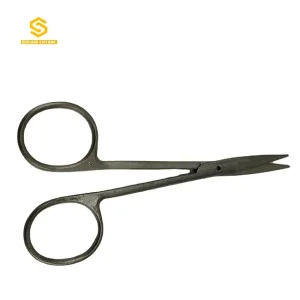
Collaborating with healthcare providers and specialized distributors serving Tikur Anbessa (Black Lion) Hospital and regional medical hubs, JHMIM produces biocompatible 316L stainless steel and titanium (Ti-6Al-4V) components. Applications include custom surgical handles, orthopedic implant prototypes, forceps, and complex diagnostic equipment hardware.
3. Textile & Agricultural Processing Machinery
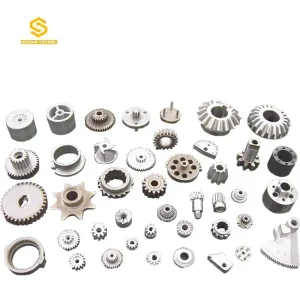
Industrial parks such as Hawassa and Kombolcha host large-scale textile mills and agro-processing plants. We utilize metal 3D printing and powder metallurgy to fabricate high-hardness stainless steel yarn guides, drive pulleys, wear plates, and conveyor gears that withstand high-speed continuous operations in dusty, humid environments.
4. Power Grid & Telecom Infrastructure
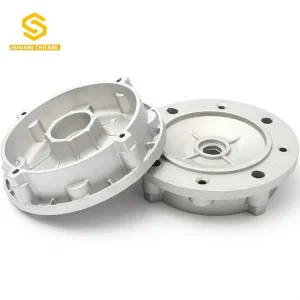
Supporting Ethiopia's national electrification expansion under Ethiopian Electric Power (EEP) and rural telecom initiatives, JHMIM manufactures weather-resistant aluminum die-cast housings, terminal connectors, and 3D printed heat sinks designed to operate reliably under intense thermal cycles.
Comparing Metal Manufacturing Technologies for Ethiopian Procurement Officers
Select the optimal process based on geometry complexity, batch volume, material density requirements, and target unit cost.
| Manufacturing Technology | Ideal Batch Size | Material Density | Tolerance Range | Lead Time (First Articles) | Tooling Investment |
|---|---|---|---|---|---|
| Metal 3D Printing (SLM/DMLS) | 1 – 500 pcs | 99.5% – 99.9% | ±0.05 mm | 3 – 7 Days | $0 (Tooling-Free) |
| Metal Injection Molding (MIM) | 2,000 – 100,000+ pcs | 96.5% – 99.0% | ±0.03 mm | 25 – 35 Days | Medium (Amortized) |
| Powder Metallurgy (PM) | 5,000 – 500,000+ pcs | 88% – 95% | ±0.04 mm | 20 – 30 Days | Medium-High |
| Precision Die Casting (Al/Zn) | 2,000 – 200,000+ pcs | Solid Outer Shell | ±0.05 mm | 30 – 40 Days | High (Long-life Molds) |
| 5-Axis CNC Machining | 10 – 1,000 pcs | 100% (Wrought) | ±0.005 mm | 5 – 10 Days | $0 (Tooling-Free) |
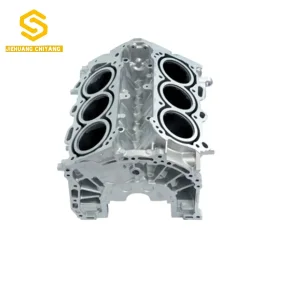
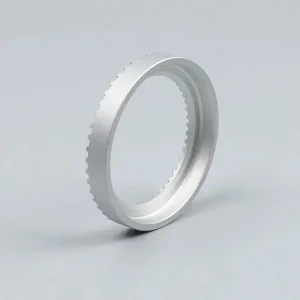
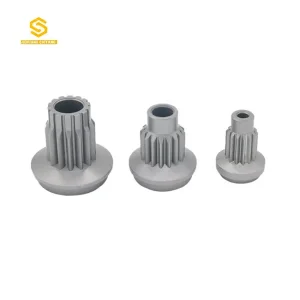
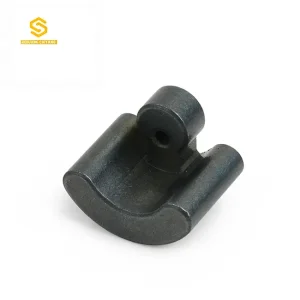
Integrated Precision Metal Components for Global & Regional Supply Chains
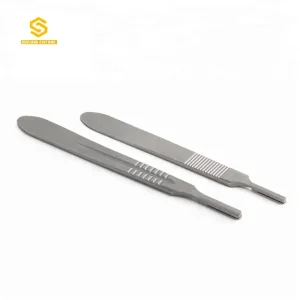
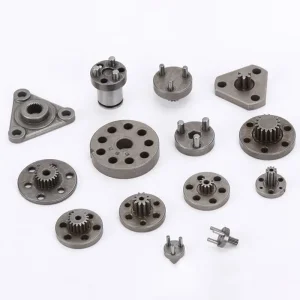
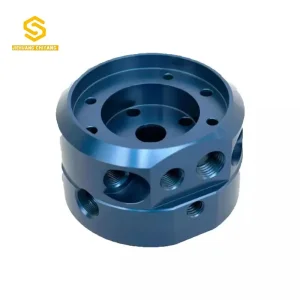
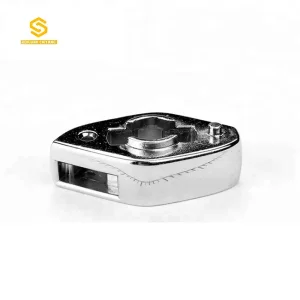
Explore our comprehensive lineup of sintered metal, die-cast, and MIM components engineered to exact OEM technical drawings.
Frequently Asked Questions for Ethiopian & East African Buyers
Clear, detailed engineering and logistics answers regarding custom metal 3D printing, prototyping, shipping routes, and manufacturing guarantees.
How does 3D metal printing compare to conventional machining for Ethiopian orders?
Metal 3D printing (SLM/DMLS) eliminates the need for physical tooling or complex multi-axis CNC setups. For low-to-medium batch sizes (1 to 500 pieces) needed urgently in Addis Ababa, 3D printing cuts overall lead time by up to 80% and eliminates scrap material waste. It also allows complex internal cooling channels, lightweight lattices, and undercuts that conventional CNC mills cannot execute.
What are the primary shipping routes and transit times from Ningbo to Ethiopia?
We provide two main logistics solutions: Air Freight via Ethiopian Airlines Cargo directly from Shanghai (PVG) or Guangzhou (CAN) to Addis Ababa Bole International Airport (ADD) within 3 to 5 business days for urgent 3D printed prototypes. For bulk production shipments, ocean freight ships from Ningbo Port to Djibouti Port (transit time approx. 18 to 22 days), followed by land transport along the Addis Ababa–Djibouti railway corridor to Mojo Dry Port.
Can JHMIM assist with CAD engineering and reverse engineering from worn samples?
Yes. Many industrial clients in Ethiopia possess physical replacement parts from old equipment without original 2D/3D CAD drawings. You can send physical samples or high-precision 3D scan data to our engineering office. We perform full CAD reconstruction, DFM material verification, and structural optimization before 3D metal printing or tooling fabrication.
What quality certifications and inspection reports accompany each order?
JHMIM operates strictly under ISO 9001:2015 and IATF 16949 quality management systems. Every shipment dispatched to Ethiopia includes a comprehensive Quality Inspection Package: Full CMM Dimensional Measurement Report, Material Spectrometer Chemical Composition Certificate, Heat Treatment Hardness Test Data, and Surface Finish Measurement verification.
How does JHMIM ensure confidential IP protection for proprietary Ethiopian designs?
We prioritize intellectual property security. Before sharing sensitive 2D/3D CAD files or project documentation, we routinely execute non-disclosure agreements (NDAs). All digital CAD files are stored in encrypted internal servers with restricted engineering team access.
What metal alloys are available for 3D printing and powder metallurgy?
Our material portfolio encompasses high-performance stainless steels (316L, 17-4PH, 304), low-alloy structural steels (Fe-Ni-C), biocompatible titanium alloys (Ti-6Al-4V Grade 5), tool steels (H13, SKD11), lightweight aluminum alloys (AlSi10Mg, ADC12), and zinc alloys (Zamak 3, Zamak 5).
Ready to Transform Your Production Supply Chain in Ethiopia?
Upload your STEP/IGES/PDF drawings today. Receive an engineer-reviewed DFM feasibility report and transparent cost quotation within 48 hours.