
Featured Additive Manufacturing & Metal Components for Germany
Accelerating German industrial prototyping and production cycles with precision-engineered additive and powder metallurgy technologies.
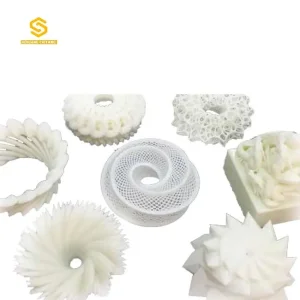
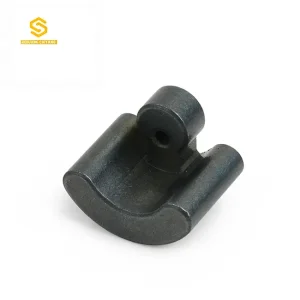
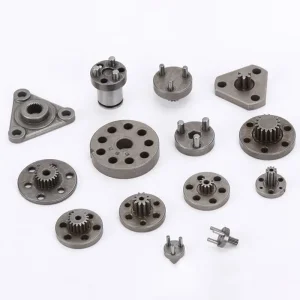
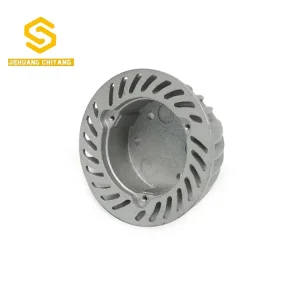
3D Printing Landscape & Macro Industrial Realities in Germany
Germany stands as the global epicenter of Industry 4.0, driven by technical rigor, manufacturing excellence, and high automated engineering standards. However, contemporary market dynamics present both immense innovation pressure and severe cost challenges for German enterprises.
Industrial clusters spanning Baden-Württemberg (Stuttgart automotive hubs), Bavaria (Munich aerospace and MedTech), and North Rhine-Westphalia (mechanical engineering) are facing shifting paradigm trends:
- Energy Cost Pressures & Domestic Bottlenecks: Surging electricity tariffs within Germany have rendered energy-intensive local metal melting and machining operations increasingly costly, pushing Tier-1 buyers toward qualified global additive partners.
- Rapid Electrification (EV Shift): German automotive giants (BMW, Mercedes-Benz, Volkswagen Group) demand faster iterations for EV motor housings, battery management cooling plates, and structural brackets without committing millions upfront to hard tooling.
- High-Mix Low-Volume (HMLV) Demand: Industrial automation machinery builders require functional metal components in batch sizes ranging from 50 to 5,000 units, making traditional injection molding tooling economically unviable.
To maintain global competitiveness, German engineering leaders are actively adopting hybrid supply chain models—combining high-agility additive manufacturing for initial design validation with seamless transition to Metal Injection Molding (MIM) and Powder Metallurgy for mass production.
Technical Selection Matrix: Additive Manufacturing vs. Conventional Processes
Choosing the right process requires balancing geometric complexity, density specifications, lead times, and unit economics. Our engineering team provides transparent evaluations to optimize your landed component costs.
| Manufacturing Technology | Ideal Batch Volume | Material Density (%) | Dimensional Accuracy | Lead Time (First Articles) | Tooling Cost Commitment |
|---|---|---|---|---|---|
| Laser Powder Bed Fusion (LPBF / DMLS) | 1 – 500 units | 99.5% – 99.9% | ±0.05 mm – ±0.1 mm | 3 to 7 Days | €0 (No Tooling Required) |
| Metal Binder Jetting (MBJ) | 500 – 5,000 units | 96.0% – 98.5% | ±0.1 mm – ±0.2 mm | 7 to 14 Days | Low (Minimal Jigging) |
| Metal Injection Molding (MIM) | 2,000 – 500,000+ units | 97.0% – 99.5% | ±0.3% of Nominal (Up to ±0.03mm) | 25 to 35 Days | Medium to High (Hard Mold) |
| Sintered Powder Metallurgy (PM) | 5,000 – 1,000,000+ units | 88.0% – 95.0% | ISO IT 8 – IT 11 | 30 to 40 Days | High (Press Die Sets) |
| 5-Axis CNC Machining | 1 – 1,000 units | 100% (Wrought Stock) | ±0.005 mm – ±0.01 mm | 5 to 10 Days | €0 (Fixture Fees Only) |
*Data derived from internal laboratory bench tests, VDA 6.3 standard auditing metrics, and verified ISO 2768-mK tolerance guidelines.
3D Printing Technology Roadmap & Future Outlook (2025–2030)
Additive manufacturing is evolving from a prototyping technique into a primary production platform. Our R&D facility in Ningbo actively aligns with upcoming European industrial frameworks.
Multi-Laser LPBF Scaling
Integration of quad-laser and octo-laser systems allowing build rates exceeding 150 cm³/h, enabling competitive production for large structural aerospace and automotive components.
Binder Jetting Industrialization
High-throughput metal binder jetting coupled with automated vacuum debinding furnaces to reduce unit manufacturing costs to within 15% of traditional MIM for medium batch series.
In-Situ Closed-Loop QA
Real-time meltpool monitoring via optical tomography and thermography, detecting micro-porosities layer-by-layer during execution to guarantee 100% density integrity.
Sector-Specific Macro Solutions for German Industry
Custom-tailored metallurgical engineering solutions designed to satisfy rigorous German industrial validation standard protocols.
Automotive & Mobility (E-Mobility)
Lightweight topological engine brackets, cooling jackets, transmission shift forks, and sensor housing prototypes using 316L, 17-4PH, and AlSi10Mg alloys. Fully compliant with VDA 6.3 submission criteria.
Compliance: IATF 16949 / DIN EN ISO 9001Medical & Dental Technology (MedTech)
Biocompatible Titanium (Ti6Al4V Grade 5 & Grade 23) orthopedic implants, customized surgical handle grippers, endoscopic tool tips, and dental bridge frameworks with controlled surface roughness.
Compliance: ISO 13485 Standards / ASTM F136Industrial Machinery & Robotics
Conformal cooling manifold blocks, high-wear robotic end-effectors, planetary gear sets, and pneumatic valve bodies that eliminate assembly joints to prevent internal fluid leakage.
Compliance: DIN ISO 2768-mK TolerancingChina Industry 4.0: Supply Chain Resilience & Cost-Efficiency Synergy
Bridge the gap between rapid prototyping and volume production through our integrated manufacturing complex in Ningbo, China.
Sourcing from Ningbo Jiehuang (JHMIM) offers German purchasing managers (Einkaufsleiter) a strategic supply chain asset: German-grade quality assurance combined with high-volume Chinese manufacturing scale.
Seamless Scaling Transition
Validate your component design with our metal 3D printing setup in 5 days. Once design freeze is achieved, our engineers seamlessly transition your part into hard MIM or Powder Metallurgy tooling under one roof.
Robust Material Supply Chain
Direct relationships with global powder suppliers ensure complete lot traceability, consistent particle size distribution (PSD), and chemical stability across all stainless steel, titanium, and low-alloy powders.
Localized Support, Quality Compliance & German Market Logistics
We eliminate international sourcing risks through strict intellectual property management, standard international trade compliance, and comprehensive quality control documentation.
Rigorous IP Protection & NDA
Every drawing, STEP model, and technical specification shared with us is governed by legally binding Non-Disclosure Agreements (NDAs). Data isolation protocols guarantee confidential file handling.
Full Documentation Package
Every order delivered to Germany includes First Article Inspection (FAI) reports, CMM dimensional measurement sheets, Material Test Certificates (3.1 EN 10204), and RoHS/REACH declarations.
Flexible DDP Logistics
Complete handling of EU customs clearing, customs duties, and direct Delivered Duty Paid (DDP) transport to warehouses across Frankfurt, Stuttgart, Munich, Hamburg, and Berlin.
Comprehensive Precision Metal Components Catalog
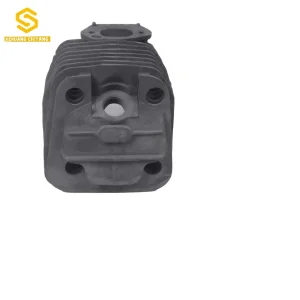
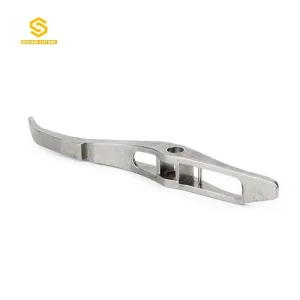
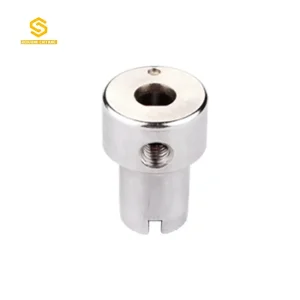
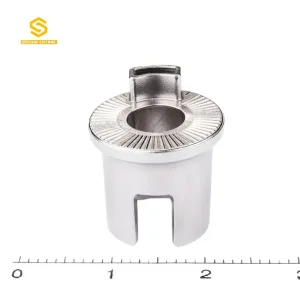
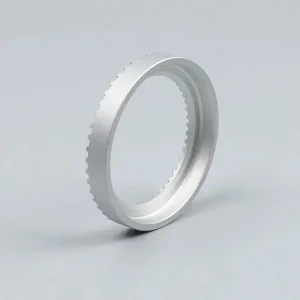
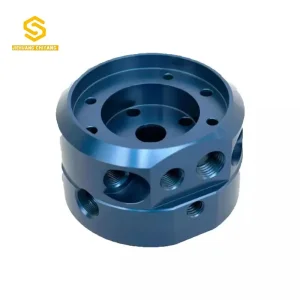
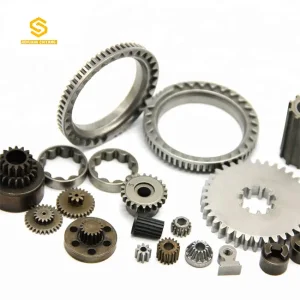
Explore our complete range of additive manufacturing, MIM, die casting, and powder metallurgy solutions trusted by global buyers.
Frequently Asked Questions for German Engineering & Sourcing Teams
Clear engineering answers to clarify your procurement, validation, and production decisions.
Accelerate Your Manufacturing Strategy Today
Send us your 3D CAD models (STEP/IGES) and 2D drawings (PDF) for a comprehensive engineer-reviewed DFM analysis and detailed quotation within 48 hours.