
Featured OEM Precision Tool & Hardware Components
Engineered with 316L Stainless Steel, Titanium Alloys, and Structural Hardened Steels for Heavy Industrial Applications across Kenya and East Africa.
-
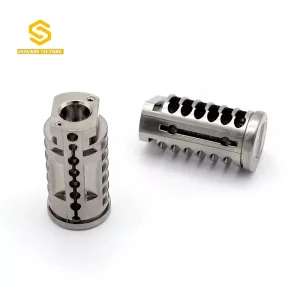
Wholesale Metal Injection Molding Locking Technology Factory, Factories
View Product Details -
View Product Details
-

China MIM Metal Injection Coffee Machine Spare Parts Suppliers, Factory
View Product Details -

Wholesale Stainless Steel Mini Ball Valve Parts With Drawing Manufacturer, Supplier
View Product Details
Executive Industry Whitepaper: The Strategic Role of China MIM for Kenya’s Industrial Revolution
As the economic anchor of East Africa, Kenya is undergoing an unprecedented industrial expansion driven by the framework of Kenya Vision 2030, the establishment of the Naivasha Special Economic Zone (SEZ), and accelerated investment in localized manufacturing. For industrial machinery manufacturers, power tool assemblers, agricultural equipment fabricators, and hardware producers across Nairobi, Mombasa, Eldoret, and Kisumu, sourcing high-precision structural metal components that can withstand demanding operational environments is a pivotal operational hurdle.
Traditional manufacturing methodologies—such as full CNC subtractive machining, sand casting, and conventional investment casting—frequently present critical bottlenecks for Kenya’s growing industrial factories. CNC machining complex 3D geometries results in excessive material waste (up to 70% scrap rate) and exorbitant tooling hours. Investment casting, while capable of complex shapes, often suffers from poor surface finishes (Ra 3.2–6.3 µm) and loose dimensional tolerances that necessitate expensive secondary machining operations.
1. Macro Economic Synergy: Connecting China’s Industry 4.0 Ecosystem to East Africa’s Supply Chains
The bilateral trade architecture between China and Kenya has evolved beyond finished consumer goods into deep industrial integration. With the operational maturity of the Standard Gauge Railway (SGR) connecting the Port of Mombasa directly to the Nairobi Inland Container Depot (ICD), importing precision intermediate components from specialized manufacturing clusters in Ningbo, Zhejiang, has become seamless and highly cost-efficient.
Kenyan industrial buyers face strict cost targets due to regional price sensitivities while needing to meet stringent performance requirements defined by the Kenya Bureau of Standards (KEBS). Chinese MIM manufacturers, operating within state-of-the-art Industry 4.0 digital frameworks, deliver an unrivaled competitive edge through:
- Automated Tooling and Material Yield: Computer-controlled feedstock mixing and multi-cavity hot runner injection molds ensure material utilization exceeding 95%, drastically cutting costs on high-alloy metals like 17-4PH, 316L, and Titanium Grade 5.
- Scalable Production Lines: Mass sintering furnaces with continuous atmosphere control (Hydrogen/Nitrogen vacuum debinding and sintering) allow scalable output from 2,000 units to several million units annually.
- Seamless Compliance: Pre-export Verification of Conformity (PVoC) alignment with international inspecting agencies (such as SGS, Intertek, and BV) guarantees rapid customs clearance at the Port of Mombasa.
2. Technical Deep-Dive: The MIM Process & Material Microstructure Performance
Understanding the microstructural mechanics of MIM parts provides engineering clarity for Kenyan technical directors and procurement managers specifying parts for harsh agricultural, mining, and industrial environments.
Phase 1: Feedstock & Injection Molding
Ultra-fine metal powders are homogeneously compounded with a multi-component polymer matrix. The fluid feedstock is injected into precision steel molds under high pressure, forming green compacts with pristine geometric fidelity.
Phase 2: Debinding & High-Temp Sintering
Solvent and thermal debinding remove the binder matrix. The resulting brown part undergoes vacuum sintering near its melting temperature (1200°C–1380°C), inducing atomic diffusion, isotropic linear shrinkage, and near-full densification.
The resulting metallurgical structure exhibits isotropic physical properties, matching or surpassing traditional wrought metal standards. Key materials utilized for the Kenyan industrial market include:
- 17-4PH (UNS S17400) Stainless Steel: Precipitation-hardened alloy providing tensile strength up to 1150 MPa and hardness up to 40 HRC. Ideal for power tool gears, structural latches, and high-load levers operating in silica-rich volcanic environments in Kenya's Rift Valley.
- 316L (UNS S31603) Stainless Steel: Low-carbon austenitic steel delivering outstanding resistance to pitting and crevice corrosion. Widely deployed in agricultural chemical sprayers, irrigation control valves, and coastal Mombasa marine hardware.
- Fe-Ni Low Alloy Steels (FN-0205 / FN-0208): Heat-treatable powder metal alloys offering exceptional wear resistance and toughness for high-torque planetary gearbox components used in industrial power tools.
- Titanium Alloys (Ti-6Al-4V): Ultra-lightweight material combining high strength-to-weight ratios with extreme corrosion resistance for specialized medical, aerospace, and high-end industrial tools.
3. Macro Industrial Solutions for Key Kenyan B2B Manufacturing Sectors
A. Agricultural Machinery & Food Processing (Kericho, Kiambu, Eldoret Hubs)
Agricultural processing—including tea processing, coffee pulping, and sugarcane milling—is a vital pillar of Kenya's economy. Equipment used in these sectors faces relentless abrasive wear from soil particle ingress and corrosive organic acids. MIM technology enables the manufacture of complex, custom-shaped stainless steel sorting teeth, wear plates, nozzle bodies, and fluid pumps that maintain exact dimensions over millions of operating cycles without requiring frequent maintenance downtime.
B. Infrastructure, Construction & Power Tools (Nairobi Industrial Area)
With infrastructure projects expanding under regional development initiatives, demand for heavy-duty hand tools, pneumatic breakers, and electric power tools has surged. Traditional cast tool components frequently suffer from internal porosity, leading to catastrophic failure under sudden torque spikes. MIM structural parts feature zero internal voids, delivering superior fatigue endurance and impact toughness for bevel gears, impact ratchets, and quick-change lock chucks.
C. Water Management, Irrigation & Fluid Control Systems
Kenya's drive to expand irrigated agriculture in arid and semi-arid regions requires durable fluid handling infrastructure. Mini ball valve bodies, internal rotors, flowmeter impellers, and flange interfaces manufactured via MIM 316L resist aggressive groundwater minerals and agricultural fertilizers, providing leak-free service lifetimes that exceed traditional brass or cast-iron alternatives.
Accelerate Your Kenyan Industrial Supply Chain
Send us your 2D/3D CAD drawings (STEP/IGES/PDF) today. Receive a comprehensive DFM feasibility review and transparent factory-direct pricing within 48 hours.
Send Inquiry NowChina Industry 4.0 Manufacturing Rigor: Ensuring Risk-Free Sourcing for Kenyan Enterprise Buyers
Procuring custom engineered metal parts from international manufacturers demands complete transparency regarding quality systems, production stability, and delivery reliability. Our advanced manufacturing facility operates under audited IATF 16949 (Automotive Quality Management Standard) and ISO 9001 certifications, applying rigors typically reserved for automotive safety components to every industrial tool order.
Smart Digital Twin Tooling
Utilizing Moldflow® simulation software, our engineers predict volumetric shrinkage, gate vestige locations, and potential distortion before cutting steel, accelerating tooling turnarounds to under 30 days.
Automated Inspection Metrology
Every batch undergoes 100% key-dimension inspection using automated optical sorting systems, CMM coordinate measurement machines, and X-ray fluorescence (XRF) alloy verification.
Door-to-Door East Africa Logistics
Complete handling of export customs documentation, COC issuance via accredited PVoC providers, sea-freight booking to Mombasa Port, and inland logistics to Nairobi ICD.
Technical Standards & Material Specification Comparison
To assist Kenyan design engineers and procurement officers in selecting the proper material grade for local machinery applications, the table below provides standardized engineering comparisons:
| Material Designation | Sintered Density (g/cm³) | Tensile Strength (MPa) | Yield Strength (MPa) | Primary Kenyan Application |
|---|---|---|---|---|
| MIM 17-4PH (H900) | ≥ 7.60 | 1,180 | 1,090 | Power tool ratchets, industrial gears, heavy locking jaws |
| MIM 316L (As-Sintered) | ≥ 7.80 | 520 | 210 | Irrigation valves, agricultural sprayers, coastal marine hardware |
| MIM Fe-2Ni (Heat Treated) | ≥ 7.50 | 850 | 620 | Automotive steering links, internal motor gears, structural levers |
| MIM Ti-6Al-4V (Annealed) | ≥ 4.42 | 900 | 830 | Specialized lightweight tools, medical scalpels, aerospace actuators |
Frequently Asked Questions (FAQ) for Kenyan Sourcing Managers
Comprehensive technical and operational insights regarding metal injection molding procurement from China to Kenya.
Comprehensive OEM Industrial Catalog for Kenya & Regional Markets
Explore our full range of sintered powder metal gears, industrial spare parts, titanium MIM components, and automotive fluid control hardware.
-

Wholesale Machinery Industrial Spare Parts Suppliers Manufacturer, Suppliers
View Product Details -
View Product Details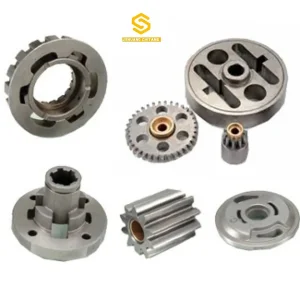
-
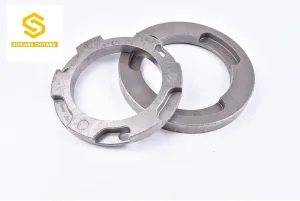
Wholesale PM motorcycle sintered parts Factory, Factories
View Product Details -
View Product Details
-
View Product Details
-
View Product Details -
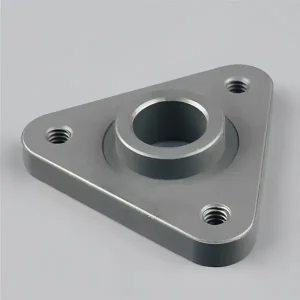
China Sintered Powder Metal Water Pump Flange Supplier Manufacturers, Factories
View Product Details -
View Product Details