
Primary OEM Precision Components for Uruguayan Industry
Engineered for extreme durability, high thermal tolerance, and low unit costs. Designed to meet strict MERCOSUR industrial specifications.
Uruguay’s Industrial Modernization & Demand for Precision OEM Metallurgy
Analyzing Uruguay's shift toward high-efficiency agricultural mechanization, renewable energy infrastructure, and MERCOSUR supply chain consolidation.
The Oriental Republic of Uruguay represents one of South America's most stable, technologically progressive, and export-driven economies. Positioned strategically along the Río de la Plata basin with deep-water port access in Montevideo, Uruguay has evolved from a purely agrarian exporter into a sophisticated industrial-agro hub. As the nation intensifies investments in high-tech forestry (pulp production led by UPM and Montes del Plata), mechanized agriculture (soy, rice, wheat, and livestock processing), and renewable energy transition under the state utility UTE (Unión Eléctrica), the structural demand for engineering-grade OEM metal components has surged exponentially.
Historically, Uruguayan Original Equipment Manufacturers (OEMs) and industrial maintenance firms relied heavily on costly European or regional imports subject to lengthy lead times and fluctuating regional tariffs. Today, local engineers in key industrial corridors—such as the Salto agro-machinery hub, Paysandú manufacturing zones, and the Free Trade Zones (Zonas Francas) of Nueva Palmira and Punta Pereira—require precise, reliable, and scalable manufacturing partners capable of delivering custom metal parts with zero quality variance.
Localized Application Vectors Across Uruguayan Sectors
Agribusiness & Forestry Machinery
High-wear stainless steel gears, planetary gearboxes, and hydraulic valve components designed to withstand humid, corrosive conditions in pulp processing and heavy tillage.
Smart Grid & Clean Energy Infrastructure
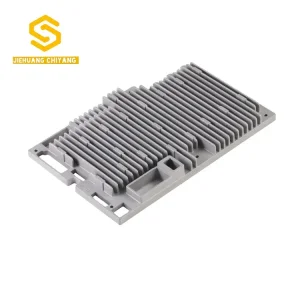
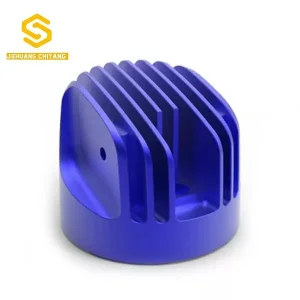
Aluminum and zinc die-cast electrical enclosures, heat sinks, and terminal clamps for UTE wind power farms, solar photovoltaic parks, and national grid distribution systems.
Maritime & Port Handling Hardware
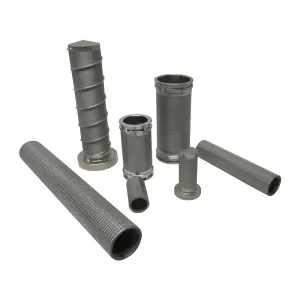
Corrosion-resistant 316L MIM components and sintered bronze filter elements optimized for maritime transshipment crane units at the Port of Montevideo.
Metallurgical Engineering & Technology Roadmap (2025–2030)
Integrating advanced Powder Metallurgy (PM), Metal Injection Molding (MIM), and High-Pressure Die Casting (HPDC) to maximize density, mechanical strength, and geometry complexity.
Modern OEM component manufacturing requires matching the exact physical, chemical, and dimensional constraints of an application to the optimal forming technology. At Ningbo Jiehuang Chiyang Electronic Tech Co., Ltd. (JHMIM), we leverage over two decades of metallurgical research to eliminate internal porosity, optimize grain structure, and achieve near-net-shape accuracy without costly secondary machining.
Technical Process Matrix & Structural Capabilities
When selecting a process for Uruguayan industrial projects, engineers must evaluate part mass, wall thickness, strength requirements, and batch sizes:
- Metal Injection Molding (MIM): Combines the design freedom of plastic injection molding with the structural strength of wrought metal. Ideal for intricate geometries under 286 grams in 17-4PH, 316L stainless steel, or Ti-6Al-4V titanium. Densities exceed 98% of theoretical maximum, ensuring high fatigue strength.
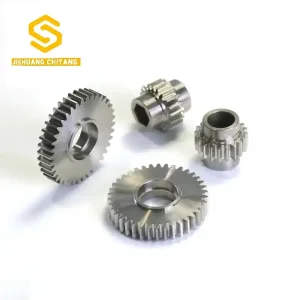
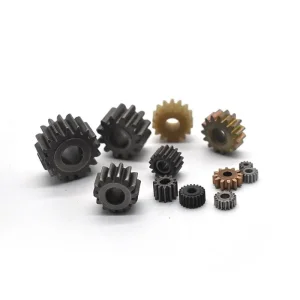
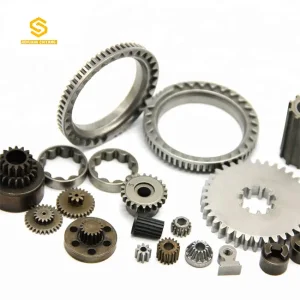
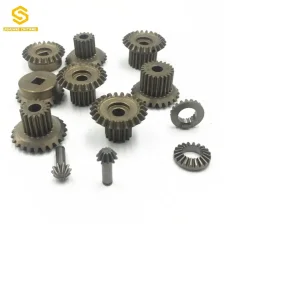
- Powder Metallurgy (PM): Leverages automated 1,000-ton compaction presses to produce high-density planetary gears, timing pulleys, and structural hubs. Excellent wear resistance per MPIF Standard 35 guidelines at unit costs up to 50% lower than full CNC machining.
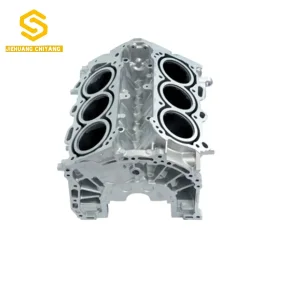
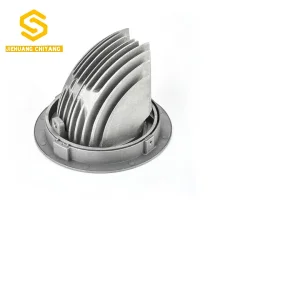
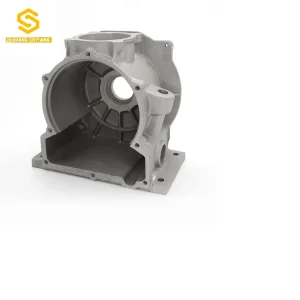
- High-Pressure Die Casting (HPDC): Specialized aluminum (ADC12, A380) and zinc alloy casting for light-weight structural housings, engine cylinder sets, and thermal dissipation systems. Integrated with internal automated vacuum casting to minimize gas porosity.
DFM & MoldFlow Analysis
Computer simulation of thermal stress, feed pathways, and binder removal to prevent distortion prior to tool cutting.
In-House Hardened Dies
High-precision CNC and EDM die sink machining maintaining tooling tolerances within ±0.002 mm.
Atmosphere Sintering
Vacuum and continuous hydrogen sintering furnaces providing controlled thermal profiles up to 1400°C.
100% CMM Verification
Automated optical sorting, CMM coordinate measurement, and x-ray flaw detection for certified zero-defect shipments.
China Supply Chain Resilience & Direct Logistics to Montevideo
How Ningbo JHMIM’s industrial cluster yields unprecedented speed, raw material traceability, and landed cost efficiency for Uruguayan buyers.
In global manufacturing, supply chain agility and geographical location determine market competitiveness. Located in Ningbo, Zhejiang Province—home to the world's largest deep-water sea port (Ningbo-Zhoushan Port)—JHMIM provides direct, highly reliable shipping routes to Montevideo, Uruguay. This eliminates intermediate transshipment delays and lowers CIF costs for South American procurement managers.
Our integrated manufacturing eco-system pools raw material synthesis, precision toolmaking, heat treatment, surface finishing (anodizing, PVD, electroplating), and secondary CNC machining within a 30-kilometer radius. This geographic aggregation delivers unique operational advantages:
- Rapid Tooling Turnaround: Prototype samples ready in as little as 15–20 days using direct metal 3D printing (SLM/DMLS) or rapid tooling, allowing Uruguayan OEMs to compress product validation cycles.
- Raw Material Control: Strategic partnerships with CAS Ningbo and Tianjin University enable proprietary alloy formulations with 8 granted material invention patents.
- Inflation Protection: Highly automated production lines buffer against global labor volatility, offering locked-in, long-term unit pricing for multi-year vehicle or equipment build runs.
Quality Governance, LATU Compliance & Regulatory Safeguards
Meeting ISO 9001, IATF 16949, and Uruguayan Technological Laboratory (LATU) standards for global seamless import.
Importing manufactured metal parts into Uruguay requires full compliance with domestic regulatory agencies such as LATU (Laboratorio Tecnológico del Uruguay) and customs declarations aligned with MERCOSUR Common External Tariffs (AEC). JHMIM simplifies international procurement by accompanying every shipment with rigorous documentation:
Full Traceability & Material Test Reports (MTR)
Every shipment includes EN 10204 3.1 chemical spectro-analysis and mechanical test certs matching exact ASTM/DIN standards.
PPAP & FAI Documentation
Automotive and high-reliability industrial orders feature Complete Level 3 PPAP (Production Part Approval Process) and First Article Inspection data.
IP & NDA Safeguards
Strict non-disclosure agreements before drawing review. Digital security controls isolate client proprietary engineering designs.
Comprehensive OEM Metal Parts & Assemblies Portfolio
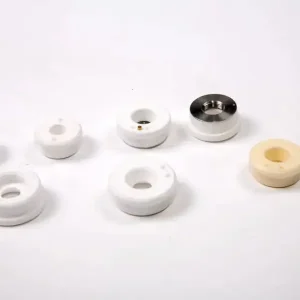
Explore our extended series of custom powder metallurgy gears, sintered filter elements, precision ceramics, and automotive die castings serving Uruguay.
Technical & Procurement FAQ for Uruguayan OEMs
Direct engineering answers addressing logistics, tooling execution, minimum order quantities, and MERCOSUR customs requirements.
How does JHMIM manage sea freight shipping and customs clearing to Montevideo, Uruguay?
We provide full FOB Ningbo or CIF Montevideo freight options. We work with leading international shipping lines (e.g., Maersk, MSC, COSCO) to ensure direct sea transit routes to the Port of Montevideo. All export paperwork, including commercial invoices, packing lists, Certificate of Origin, and MTR documentation, is issued in full compliance with Uruguayan customs standards.
What minimum order quantities (MOQ) apply for custom metal parts?
To optimize tooling amortizations and unit costs: MIM parts carry an MOQ of 2,000 pcs; Aluminum/Zinc Die Casting carries an MOQ of 2,000 pcs; Powder Metallurgy structural parts have an MOQ of 5,000 pcs. For pilot production runs or pre-series validation in Uruguay, lower quantities can be accommodated following initial DFM review.
Why is standard 2D (PDF) and 3D (STEP/IGES) CAD required for DFM analysis?
The 3D model allows our software to evaluate volumetric fill, mold flow, parting lines, and shrinkage factors. The 2D drawing specifies critical dimensional tolerances (e.g., ISO 2768-mK), surface finish specs (Ra values), hardness standards (HRC/HV), and specific material grades. Together, they enable a binding quotation within 48 hours.
Can JHMIM produce samples via metal 3D printing prior to cutting hard tooling?
Yes. We operate in-house Selective Laser Melting (SLM) metal 3D printers that produce functional prototypes in 316L, 17-4PH, or Titanium. This allows Uruguayan design engineers to execute fit-for-purpose bench testing before authorizing die production.
How does MIM compare to CNC machining in terms of cost savings?
For complex 3D geometries with undercuts, internal threads, or thin walls, CNC machining loses substantial material and requires multi-axis tool setups. MIM yields a near-net-shape part directly from the sintering furnace with minimal scrap, reducing unit cost by 30% to 50% on volume runs above 2,000 units.
What quality certifications guarantee product reliability?
JHMIM is certified under IATF 16949 (Automotive Quality Management) and ISO 9001. All parts undergo automated optical inspection, density checking, tensile testing, and salt-spray corrosion testing. Every batch carries a 1-year functional warranty.
Accelerate Your Uruguayan OEM Manufacturing Project
Send us your engineering drawings (STEP/PDF) today. Our engineering team will review manufacturability and deliver a comprehensive quotation and DFM report within 48 hours.
Send Inquiry Now