
High-Precision Powder Metallurgy & Sintered Solutions
Engineered for high mechanical strength, dimensional repeatability, and mass production cost efficiency for Thailand manufacturing operations.
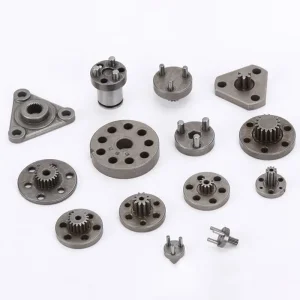
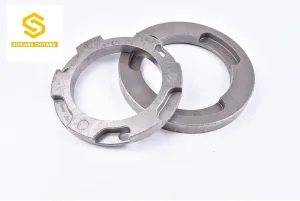
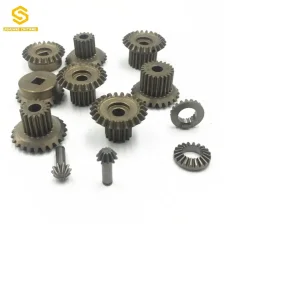
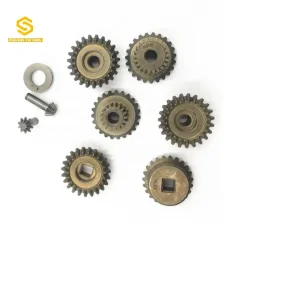
Thailand's Powder Metallurgy & Manufacturing Ecosystem
Analyzing the shift toward high-efficiency sintered metal components across Rayong, Chonburi, and the Eastern Economic Corridor (EEC).
1. The Strategic Macro Environment for PM in Thailand
Thailand has earned its reputation as the "Detroit of Asia." With major automotive hubs concentrated in the Eastern Economic Corridor (EEC)—spanning Rayong, Chonburi, and Chachoengsao—the demand for precision structural parts, engine timing gears, oil pump rotors, and electric vehicle (EV) drivetrain components is surging. As global OEMs shift operations toward Southeast Asia to diversify manufacturing risks, tier-1 and tier-2 suppliers in Thailand face immense pressure to optimize piece-part production costs without compromising micro-structural integrity.
Conventional subtractive manufacturing methods, such as multi-axis CNC milling and turning, generate substantial material waste (chip scrap rates up to 60%) and suffer from inflated cycle times for complex geometries. Powder Metallurgy (PM) and Metal Injection Molding (MIM) provide near-net-shape processing that delivers up to 95% material utilization. For Thai industrial buyers, transitioning to sintered metal alloys yields critical advantages in fatigue strength, wear resistance, and unit economics.
2. The EV Revolution and the Demand for Advanced Powder Metallurgy
Under the Thai Government’s "30/30 Policy," Thailand aims for 30% of total automotive production to consist of Zero-Emission Vehicles (ZEVs) by 2030. This transformation fundamentally changes component requirements:
- Electrified Drivetrains: High-torque planetary gearboxes, electric motor hub gears, and actuator gears require high core density (≥ 7.3 g/cm³) and superior fatigue limits.
- Soft Magnetic Composites (SMC): Modern electric motors and solenoids utilize SMC powder components to lower eddy current losses at elevated operating frequencies.
- Thermal Management & Lightweighting: Sintered aluminum, copper-infiltrated iron alloys, and specialized stainless steels (316L, 17-4PH) deliver custom thermal conductivity and lower vehicle mass.
Selecting the Right Metal Forming Process for Your Thai Plant
A rigorous engineering comparison between Powder Metallurgy, Metal Injection Molding, Die Casting, and CNC Machining.
| Manufacturing Attribute | Powder Metallurgy (PM) | Metal Injection Molding (MIM) | Aluminum / Zinc Die Casting | Multi-Axis CNC Machining |
|---|---|---|---|---|
| Target Part Geometry | 2.5D stepped shapes, gears, pulleys, symmetrical profiles | Complex 3D geometries, thin-walled, undercuts, micro-parts | Medium-to-large thin-walled housings and structural covers | Flexible 3D profiles; limited by cutting tool access |
| Typical Part Mass | 5 g to 2,500 g (Up to 150 mm diameter) | 0.2 g to 100 g (Max. ~280 g) | 50 g to 10,000 g+ | Unlimited (Un-economic for mass micro-parts) |
| Material Density | 6.8 – 7.5 g/cm³ (High pressing & sinter hardening) | 7.5 – 7.9 g/cm³ (> 97% of theoretical density) | Solid (Subject to internal porosity/gas voids) | 100% Solid wrought stock density |
| Material Options | Fe-Cu, Fe-Ni, Sint-D11, MPIF 35 alloys, Stainless Steels | 316L, 17-4PH, Titanium (TiMIM), Tool Steels, Ceramics | A380, A360, ADC12, Zamak 3, Zamak 5 | All machinable metals and alloys |
| Material Utilization Rate | 95% – 98% (Zero Scrap Process) | 95% – 98% (Feedstock recycled) | 85% – 90% (Runners remelted) | 20% – 50% (High scrap generation) |
| Annual Volume Threshold | Optimal for > 5,000 pcs / year | Optimal for > 2,000 pcs / year | Optimal for > 2,000 pcs / year | Best for prototypes & low volume (< 500 pcs) |
| Unit Cost Scaling | Lowest in high volume | Highly competitive for small complex parts | Low unit cost for medium/large parts | High; linear scale with machine runtime |
Why Thai Procurement Teams Partner with China OEM Sintering Factories
Combining Ningbo's world-class PM manufacturing infrastructure with local Thai assembly operations.
10,000 kN Compaction Power
Our facility houses 1,000-ton automated compacting presses capable of high-tonnage multi-level pressing for extra-large gears up to 150 mm in diameter with uniform core density.
IATF 16949 Certified Quality
Strict automotive quality system management. Every shipment bound for Laem Chabang or Bangkok Port includes complete dimensional CMM reports, density tests, and material spectrum certificates.
30-50% Total Cost Reduction
By eliminating post-machining operations through near-net-shape sintering, our Thai clients drastically reduce per-unit procurement costs and minimize assembly scrap rates.
In-House Tooling & DFM Support
Our senior metallurgists and tooling engineers perform complete Design for Manufacturability (DFM) analyses within 24–48 hours, optimizing part draft angles, wall thicknesses, and radius fillets.
8 Material Invention Patents
Developed in joint R&D partnerships with CAS Ningbo and Tianjin University, pushing sintered alloy microstructures to wrought-like tensile strengths and fatigue durability.
Rapid Sea Freight to Laem Chabang
Direct shipping routes from Ningbo Port to Laem Chabang Port take only 5–7 transit days, ensuring robust, low-risk supply chain continuity for Thai production lines.
Powder Metallurgy Application Scenarios across Thailand
Custom OEM solutions tailored to specific industrial clusters operating in Rayong, Chonburi, Ayutthaya, and Pathum Thani.
1. Automotive Engine & Transmission Components
Widely adopted by Tier-1 suppliers in Chonburi and Rayong for Variable Valve Timing (VVT) rotors, engine oil pump gerotors, transmission synchronizer rings, shock absorber valves, and seat adjustment mechanism gears.
2. Motorcycles & Agricultural Machinery
Thailand produces millions of two-wheelers and tractors annually. High-density sintered drive sprockets, starter clutch gears, and engine valve guides deliver extreme impact strength and longevity under tough working conditions.
3. Smart Home Appliances & Consumer Electronics
Factories in Pathum Thani and Bangpakong utilize MIM and PM components for refrigerator compressor valve plates, washing machine gearboxes, power tool planetary gears, and smart door lock mechanisms.
4. Industrial Automation & Pneumatic Systems
High-precision sintered brass bushings, stainless steel valve bodies, fluid filter sintered elements, and robotic gripper linkages designed for high structural precision and long maintenance-free service lives.
Regulatory Compliance, TISI Standards & Customs Optimization
Ensuring frictionless importing, tax preference qualification, and certified quality for Thai OEM factories.
Form E & ASEAN-China Free Trade Area (ACFTA) Tax Benefits
Importing sintered metal and powder metallurgy parts from China to Thailand qualifies under the ASEAN-China Free Trade Area (ACFTA) agreement. By issuing a valid Form E Certificate of Origin, JHMIM helps Thai buyers reduce import tariffs down to 0% for most powder metallurgy HS codes (e.g., HS Code 7326.90, 8483.40, 8409.91). This tax optimization provides an immediate reduction in total landed costs compared to sourcing from non-FTZ regions.
TISI Standard Alignment & BOI Privilege Integration
Many foreign-invested companies operating under Board of Investment (BOI) privileges in Thailand require strict traceability for raw materials and structural safety. JHMIM complies fully with Thai Industrial Standards Institute (TISI) requirements and international standards including MPIF Standard 35, DIN 30910, and ISO 9001 / IATF 16949. Every production batch undergoes non-destructive testing, micro-hardness checking (Vickers/Rockwell), and density analysis via Archimedes methods to satisfy BOI manufacturing audit standards.
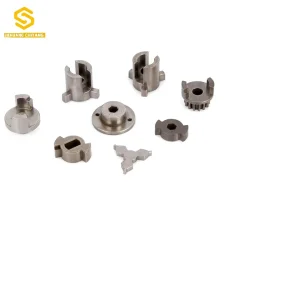
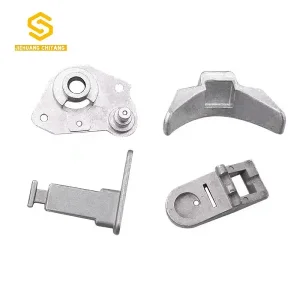
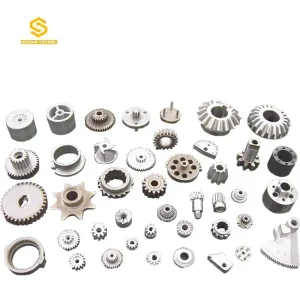
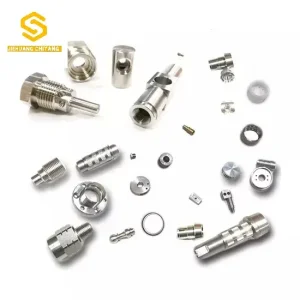
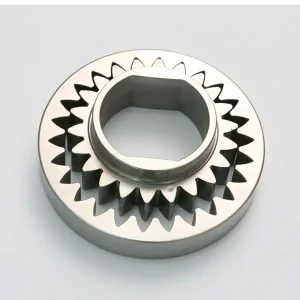
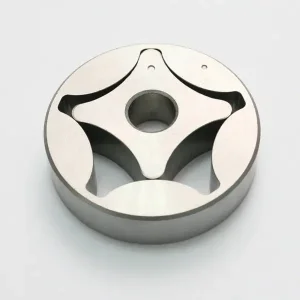
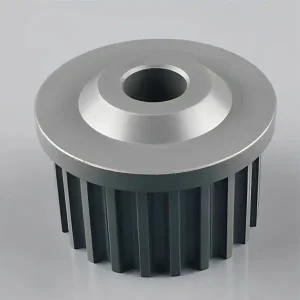
Advanced Powder Metallurgy & MIM Components for Thailand
Explore our complete range of sintered metal, MIM, ceramic, and structural components engineered for global OEM applications.
Powder Metallurgy Sourcing FAQ for Thai Manufacturers
Direct technical and commercial answers for engineering leads and procurement specialists in Thailand.
Ready to Optimize Your Powder Metallurgy Supply Chain for Thailand?
Send your 2D PDF and 3D STEP drawings today. Receive an engineer-verified DFM report and a full transparent quotation within 48 hours.
Send Inquiry Now