
High-Precision Sintered Components for Brazil Operations
Direct OEM manufacturing of high-density sintered structural parts engineered to replace high-cost CNC machining across Brazilian industrial clusters.
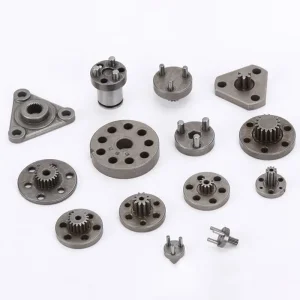
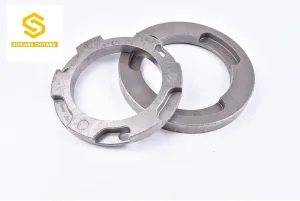
High-Torque Motorcycle PM Sintered Clutch & Transmission Parts for Manaus Industrial Hub
View Details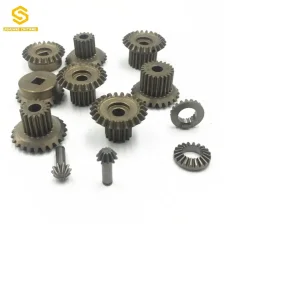
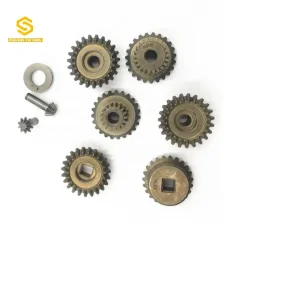
Brazilian Industrial Ecosystem: Demand for Powder Metallurgy
Analyzing the shift in South America's largest economy toward near-net-shape metallurgy to overcome domestic cost pressures and supply chain bottlenecks.
Automotive Powerhouses (ABC & Resende)
Brazil hosts dominant OEM manufacturing hubs in São Paulo (ABC Region), Paraná, and Resende. The localized production of flex-fuel internal combustion engines, variable valve timing (VVT) systems, and transmission pumps requires high-precision sintered iron-copper and alloy steel gears certified to IATF 16949 standards.
Agribusiness Machinery (Mato Grosso & SP)
As a global agricultural giant, Brazil demands heavy-duty component reliability for sugarcane harvesters, tractors, and grain processing machinery. Powder metallurgy gearboxes, planetary carriers, and oil-impregnated sintered bronze bushings deliver extreme wear resistance under high torque in harsh environment operations.
Overcoming "Custo Brasil" Challenges
High domestic electricity tariffs, complex tax structures (PIS/COFINS/ICMS), and limited localized advanced sintering facilities create intense cost inflation for Brazilian manufacturers. Sourcing pre-engineered, fully finished sintered parts from China yields net landed savings of 30% to 50%.
Strategic Sourcing Imperatives for Brazilian Purchasing Executives
Supply chain leaders across Brazil’s manufacturing hubs—ranging from the industrial centers of Greater São Paulo and Joinville to the Manaus Free Trade Zone (Zona Franca de Manaus)—are under increasing pressure to shorten product development cycles while lowering component unit costs. Traditional subtractive machining from solid billet material generates up to 60% scrap rates, driving up raw material consumption and machine time costs.
In contrast, Powder Metallurgy (PM) and Metal Injection Molding (MIM) utilize near-net-shape processing, achieving over 95% material utilization. For high-volume automotive pumps, motorcycle transmission clutches, and fluid control valves imported through the Port of Santos or Port of Paranaguá, China’s advanced powder metal production capability provides unmatched cost efficiency without sacrificing metallurgical integrity.
PM & MIM Technology: Material & Density Matrix
Understanding density levels, mechanical properties, and international standards (MPIF 35 / DIN 30910) to optimize part performance for South American operational environments.
| Material Class | MPIF / DIN Standard | Density (g/cm³) | Tensile Strength (MPa) | Key Applications in Brazil |
|---|---|---|---|---|
| Sintered Iron-Copper Steel | MPIF FC-0208 / DIN Sint-F10 | 6.8 - 7.2 | 350 - 550 | Automotive oil pump gears, timing pulleys, agricultural actuators |
| Nickel-Steel Alloys | MPIF FN-0205 / DIN Sint-D11 | 7.0 - 7.4 | 450 - 780 | High-torque transmission sprockets, shock absorber valves |
| MIM Stainless Steel (17-4PH) | MPIF MIM-17-4PH | 7.6 - 7.75 | 900 - 1150 | Surgical instrument handles, oil & gas subsea sensors, aerospace latches |
| MIM Austenitic (316L) | MPIF MIM-316L | 7.8 - 7.9 | 520 - 620 | Corrosion-resistant valves, food processing equipment, offshore hardware |
| Titanium Alloys (Ti-6Al-4V) | ASTM B348 / TiMIM | 4.4 - 4.5 | 860 - 960 | Aerospace structural brackets, medical implants, high-end sporting goods |
Densification and Heat Treatment Engineering
In high-stress Brazilian applications such as ethanol flex-fuel engine variable valve timing (VVT) systems or heavy agricultural power take-off (PTO) units, standard sintering density (6.8 g/cm³) may not suffice. Our manufacturing operations utilize advanced warm compaction and continuous mesh-belt sintering furnaces under controlled cracked-ammonia or vacuum atmospheres.
By achieving core densities exceeding 7.2 to 7.6 g/cm³, combined with secondary operations such as case hardening, carbonitriding, and steam treatment, our powder metal parts achieve fatigue endurance limits comparable to wrought steel alloys at a fraction of the unit production cost.
Global Powder Metallurgy Technological Evolution
Key innovations shaping the future of global powder metallurgy and metal injection molding for international supply chains.
Titanium Metal Injection Molding (TiMIM)
Breakthroughs in debinding chemistry and high-vacuum sintering now allow mass production of complex titanium alloy components. TiMIM offers bio-compatibility and lightweight structural strength for medical devices and aerospace assemblies operating in South America.
Automated High-Tonnage Compaction
Integration of CNC multi-level hydraulic compaction presses up to 10,000 kN (1,000 tons) enables complex multi-step geometries—such as dual-gear structures and helical teeth—to be pressed in a single operation with zero secondary machining.
Eco-Friendly Net-Shape Manufacturing
Powder metallurgy aligns directly with global ESG directives. Consuming up to 50% less energy per kg produced compared to drop forging or continuous CNC milling, PM technology minimizes carbon intensity across the entire automotive tier supply chain.
China Industry 4.0: Precision, Capacity & Speed
Leveraging Ningbo's advanced manufacturing hub to provide Brazilian OEMs with uncompromised quality, rapid DFM engineering, and supply chain resilience.
End-to-End Quality Control & Technical Co-Development
Our manufacturing complex in Ningbo combines decades of metallurgical expertise with digitalized Industry 4.0 factory management systems (MES/ERP). Partnering with senior research institutes, including CAS Ningbo and Tianjin University, our metallurgical R&D team holds 8 invention patents in specialized powder formulation and high-density sintering algorithms.
For Brazilian importers facing strict quality protocols, every shipment undergoes rigorous testing: optical coordinate measuring machine (CMM) dimensional checks, metallographic grain structure analysis, density verification via Archimedes method, and 100% key-dimension automatic optical inspection (AOI).
Localized Application Scenarios Across Brazil
Tailored sintered metal engineering solutions designed to solve specific sector challenges across Brazilian states.
1. Flex-Fuel Powertrains (São Paulo & Paraná)
Flex-fuel vehicles running on hydrated ethanol produce unique chemical combustion environments and demand lightweight engine timing control. Our sintered VVT stators, rotors, and variable displacement oil pump gears provide strict wear resistance and ultra-precise tooth profiles under ethanol-blend lubrication.
2. Sugarcane Harvesters (Ribeirão Preto & Mato Grosso)
Agricultural equipment deployed in intense harvesting seasons operates 24/7. High-density sintered alloy planetary gear systems and oil-impregnated self-lubricating bearings prevent unexpected downtime in heavy grain combine harvesters and sugarcane loaders.
3. Deepwater Subsea Valves (Rio de Janeiro Offshore)
Petrobras pre-salt deepwater exploration demands maximum component corrosion resistance. Our Metal Injection Molded 17-4PH and 316L stainless steel mini-valve parts and actuator linkages withstand extreme hydrostatic pressures and sour-gas corrosive environments.
4. Two-Wheeler Sector (Zona Franca de Manaus)
Brazil’s massive motorcycle assembly zone in Manaus requires vast volumes of sintered driven gears, starter motor sprockets, and clutch hubs. Our high-tonnage multi-station presses deliver consistent batch-to-batch repeatability with zero defects.
Optimize Your Component Sourcing for Brazil Operations
Upload your 2D (PDF) and 3D (STEP) drawings for a comprehensive engineering DFM review and transparent quotation within 48 hours.
Send Inquiry NowHigh-Precision OEM Metal Parts Serving Brazil Buyers
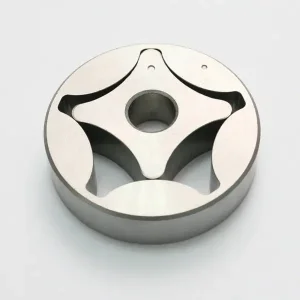
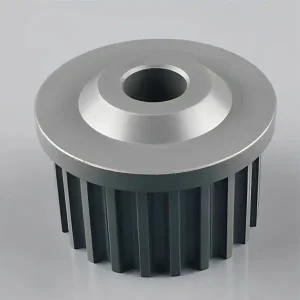
Explore our range of Metal Injection Molding (MIM), powder metallurgy gears, oil pump rotors, and sintered titanium components.
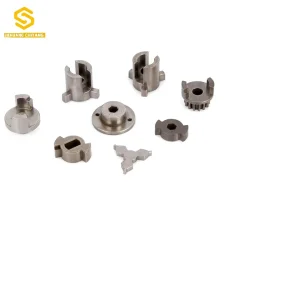
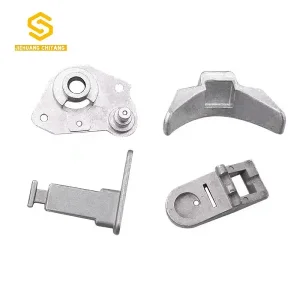
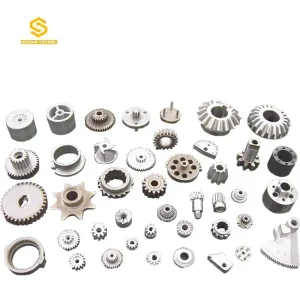
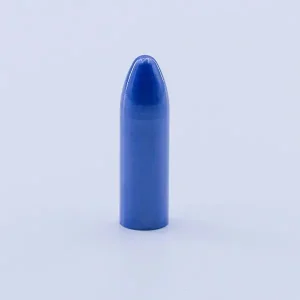
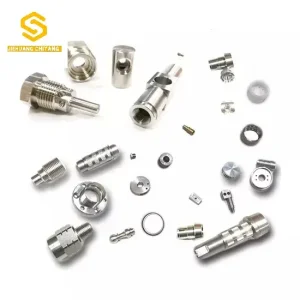
Metal Injection Molding (MIM) Sintered Parts for Brazil's Medical & Oil-Gas Valve Systems
View Details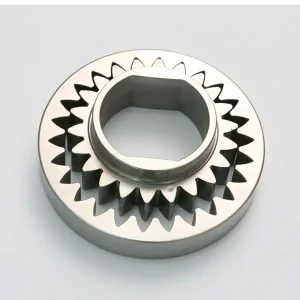
Frequently Asked Questions by Brazilian Buyers
Addressing import logistics, customs clearance, quality standards, and technical engineering considerations for Brazil imports.
How do you assist Brazilian importers with customs clearance (SISCOMEX & NCM tariffs)?
We provide complete, fully compliant export documentation tailored for Brazilian Receita Federal customs entry via SISCOMEX. All shipments include exact Mercosul Common Nomenclature (NCM / HS Code) classifications (such as NCM 7326.90 or 8483.40), detailed commercial invoices, packing lists with net/gross weights per pallet, and Certificates of Origin to streamline duty clearance at Port of Santos or Paranaguá.
What quality certifications back your powder metallurgy parts?
Our manufacturing complex operates under fully audited IATF 16949 (Automotive Quality Management Standard) and ISO 9001 certified systems. Every production batch undergoes comprehensive First Article Inspection (FAI), full CMM dimensional checks, metallographic analysis, density testing, and 1-year product warranty protection.
What is the typical tooling lead time and prototype delivery to Brazil?
Standard tooling development and T1 sample production require approximately 30 days. For rapid design verification, we offer direct metal 3D printing (SLM) samples within 5 to 7 days before tooling commitment. Shipping via air freight (DHM/FedEx) to Brazil takes 5–7 days, while ocean freight directly to Santos takes approximately 30–35 days transit time.
Can you manufacture custom alloy formulations according to Brazilian ABNT or DIN specs?
Yes. Our in-house metallurgical R&D laboratory custom formulates elemental and pre-alloyed metal powders to match DIN, MPIF 35, ASTM, or customized OEM material specifications. We regularly formulate Fe-Cu-C, Fe-Ni-Cu, 17-4PH, 316L, and specialized titanium blends with strict alloy consistency.
What is your Minimum Order Quantity (MOQ) for Powder Metallurgy & MIM parts?
Our standard MOQ is 2,000 pieces for Metal Injection Molding (MIM) and 5,000 pieces for conventional Powder Metallurgy (PM) structural components. Lower quantity pilot runs and prototype lots can be arranged during initial project engineering evaluation.
Ready to Upgrade Your Sourcing Efficiency in Brazil?
Connect directly with our senior application engineers. We provide DFM feasibility analysis, material selection, and quotation within 48 hours. NDA protection included.
Send Inquiry Now