
Navigating Sydney’s High-Tech Manufacturing Transformation
As Greater Sydney consolidates its position as the primary hub for advanced manufacturing, defense engineering, and medical innovation in the Southern Hemisphere, OEM buyers face a shifting supply chain environment. From the burgeoning Western Sydney Aerotropolis industrial zone to established manufacturing nodes in Wetherill Park, Smithfield, and Campbelltown, the regional demand for micro-precision metal components with near-net-shape accuracy has accelerated exponentially.
Sovereign Supply Capability
Australian federal initiatives (such as AUKUS Pillar II and the National Reconstruction Fund) place stringent demands on domestic OEM resilience, driving Sydney purchasing managers toward reliable manufacturing partners offering IATF 16949 certified precision.
High Labor Cost Mitigation
With local CNC machining labor rates in New South Wales reaching premium levels, Powder Metallurgy (PM) and Metal Injection Molding (MIM) deliver up to 50% cost reductions by eliminating subtractive scrap and multi-axis machining operations.
Aerospace & MedTech Hubs
Macquarie Park’s biopharmaceutical corridor and the Western Sydney Defense precinct require zero-defect micro-geometries, medical-grade stainless steel (316L/17-4PH), and high-strength titanium MIM components validated to international standards.
Featured Industrial Components for Sydney OEMs
Selected high-precision tooling and molded components customized for the Australian market.

Sydney High-Precision Defense Comms MIM Powder Metallurgy Tooling

Sydney Smart Wearable & Sensor MIM Micro Connector Assemblies

Sydney Marine & Medical Grade 316L Stainless Steel Structural Frames

Sydney Bio-Medical & Diagnostic Device Precision Die Cast Alloy Housings
Global Powder Metallurgy Benchmarks & Sydney Cost Analysis
On a global scale, the Metal Injection Molding (MIM) and Powder Metallurgy (PM) market is experiencing a structural pivot. Transitioning away from high-scrap subtractive CNC milling, global industrial design centers in Frankfurt, Tokyo, Detroit, and now Sydney are adopting near-net-shape technologies to fulfill complex part requirements. By combining ultra-fine metal powders (typically 2 to 20 microns) with custom thermoplastic binder systems, MIM achieves density levels exceeding 98% of theoretical wrought metal values.
For Sydney-based engineering enterprises, utilizing offshore specialized manufacturing hubs backed by localized Australian engineering compliance creates a distinctive economic moat. Traditional CNC machining of complex geometries in Australia often incurs high machine-hour costs and significant raw material wastage (often up to 70% removed as chips). Conversely, powder metallurgy processes yield near 100% material utilization, lowering total landed costs by 30% to 50% on medium-to-high volume production runs (MOQ 2,000+ units).
Metallurgical Process Comparison for Engineering Teams
Selecting the ideal fabrication methodology requires evaluating mechanical specifications, surface roughness tolerances, wall thickness constraints, and annual production volumes.
| Manufacturing Process | Ideal Part Weight | Geometric Complexity | Dimensional Tolerance | Surface Finish (Ra) | Sydney OEM Cost Advantage |
|---|---|---|---|---|---|
| Metal Injection Molding (MIM) | 0.2g to 100g (Max 286g) | Ultra High (3D Undercuts) | ±0.3% to ±0.5% | 0.8 – 1.6 µm | Up to 50% vs Multi-Axis CNC |
| Powder Metallurgy (PM) | 10g to 2.5kg | Medium (2.5D Press Axis) | ±0.1% to ±0.3% | 1.6 – 3.2 µm | Lowest cost at >5,000 pcs/yr |
| Precision Die Casting (Al/Zn) | 50g to 5kg+ | High (Thin-wall housings) | ±0.2% to ±0.4% | 0.8 – 3.2 µm | Optimal for structural enclosures |
| Subtractive CNC Machining | Unlimited | Constrained by tool paths | ±0.005mm (Ultra tight) | 0.4 – 1.6 µm | High cost; ideal for prototyping |
Technical Deep-Dive: Thermal Debinding & Atmosphere Sintering Protocol
The structural integrity of custom sintered metal components relies on precise thermal cycle management. The green compacts undergo a controlled two-stage debinding process: first, a solvent debind stage dissolves the primary paraffin wax plasticizers; second, a catalytic thermal debind removes remaining backbone polymers. Vacuum sintering follows in hydrogen or argon-nitrogen atmospheres at temperatures approaching 1380°C (for 17-4PH stainless steel). Controlled shrinkage (typically 15% to 20%) is calculated into the original mold design using advanced Moldflow finite-element software to guarantee critical dimensional integrity.
Localized Industrial Application Scenarios in New South Wales
How our high-volume custom powder metal and die-casting capabilities support key industry sectors across New South Wales.
Western Sydney Defense & Aerospace Corridor
Supplying ultra-lightweight titanium MIM brackets and high-strength nickel-alloy internal lock components for defense land systems and aerospace unmanned aerial vehicles (UAVs) centered around the Badgerys Creek Aerotropolis tech ecosystem.
Macquarie Park MedTech & Surgical Hardware
Delivering biocompatible 316L and 17-4PH surgical tool handles, laparoscopic jaws, and endoscopic articulating links featuring complex internal radii that meet stringent Australian TGA and ISO 13485 biocompatibility parameters.
Heavy Rail & Transport Infrastructure (Port Botany/Wetherill Park)
High-density sintered powder metal spur gears, oil-impregnated bronze bushings, and hydraulic valve flanges engineered to endure high wear and vibration loads across Sydney’s freight and rail logistics networks.
Renewable Energy & Smart Grid Infrastructure
Corrosion-resistant die-cast zinc and aluminum heat-sink enclosures alongside powder metal structural hardware for solar tracking systems and green hydrogen electrolysis plants deployed across regional NSW.
Future Technology Roadmap: Smart Metallurgy
Integrating artificial intelligence, digital-twin simulation, and green metallurgy into high-volume component manufacturing.
1. AI-Powered Moldflow & DFM
Utilizing generative design algorithms to calculate exact shrinkage factor compensation and eliminate internal void risks prior to cutting steel tooling.
2. Hybrid Binder Chemistry
Developing eco-friendly aqueous and catalytic binder systems that cut VOC emissions during debinding by over 40% while accelerating cycle times.
3. 100% Automated Optical Inspection
Deploying high-speed AI machine-vision sorting systems to inspect critical dimensions on 100% of production parts prior to overseas air/sea shipment.
Comprehensive Product Catalog for Sydney Wholesale Buyers
High-performance metal injection molded, sintered, and die-cast components manufactured to tight tolerances for global OEM clients.

Sydney Infrastructure & Heavy Machinery OEM Cast Structural Components

Sydney Rail & Transport Precision Aluminum Squeeze Die-Cast Parts
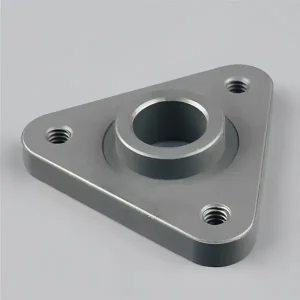
Sydney Fluid Handling High-Density Sintered Water Pump Flanges

Sydney MedTech Stainless Steel Surgical Knife Handles (MIM Technology)

Sydney Industrial Filtration Sintered Stainless Steel Porous Elements

Sydney Aerospace & Luxury Micro Precision Titanium MIM Components

Sydney Commercial Vehicle & Truck High-Wear MIM Metal Accessories

Sydney Automation High-Torque Custom Sintered Metal Spur Gears
Frequently Asked Questions for Sydney Buyers
Direct insights from our engineering director regarding specifications, lead times, compliance, and logistics to Sydney, NSW.
Our operations run under strict ISO 9001 and IATF 16949 quality management systems. Every shipment dispatched to New South Wales includes a comprehensive Material Test Report (MTR), CMM dimensional validation sheet, and full compliance documentation aligned with Standards Australia (AS/NZS) requirements. DFM reviews are conducted prior to tooling creation to ensure drawings match production tolerances.
Standard mold/tooling design and creation requires approximately 25 to 30 days. First Article Inspection (FAI) sample parts are dispatched via express air freight (DHL/FedEx) arriving in Sydney within 3 to 5 business days. Once samples are approved, full mass production requires 3 to 4 weeks, with sea freight directly to Port Botany taking approximately 14 to 18 days.
Yes. We routinely execute bi-lateral Non-Disclosure Agreements (NDAs) tailored to Australian commercial jurisdiction before receiving 3D STEP files or proprietary CAD drawings. Your intellectual property remains protected under secure offline servers throughout the DFM, prototyping, and production cycles.
For Metal Injection Molding (MIM) and precision CNC finished parts, the standard MOQ is 2,000 pieces. For press-and-sinter Powder Metallurgy (PM) structural gears and bushings, the MOQ is 5,000 pieces. Aluminum and Zinc die casting runs start at 2,000 units. Prototype and pilot runs can be requested for design validation prior to full volume runs.
5-axis CNC machining incurs cumulative tooling wear, long cycle times per part, and high labor overheads—especially for intricate 3D curves, internal splines, or blind undercuts. MIM forms the entire complex geometry in a single injection stroke using precision molds, achieving isotropic mechanical properties comparable to wrought steel while cutting piece-part cost by up to 50% on volume production.
Accelerate Your Sydney OEM Supply Chain Today
Submit your 2D (PDF) and 3D (STEP) CAD models for an immediate engineering DFM evaluation and transparent cost estimate. Get a complete quote covering part pricing and tooling options within 48 hours.