
Featured Precision Components & Sensor Ring Hardware (Part I)
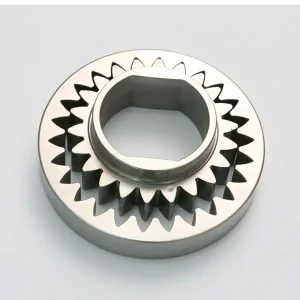
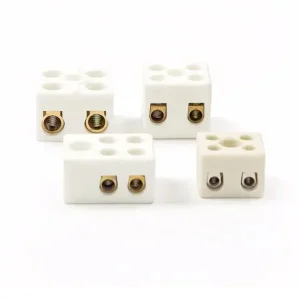
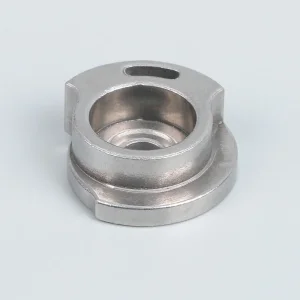
Explore our primary OEM manufacturing scope spanning high-density sintered parts, injection-molded alloys, and die-cast structural assemblies for automotive Tier-1 vendors.





Executive Technical Report: The Engineering Evolution of Automotive Sensor Rings
In modern automotive powertrains, active chassis safety, and electric vehicle (EV) propulsion systems, automotive sensor rings (frequently termed ABS tone wheels, magnetic encoder rings, target wheels, or impulse rings) function as the critical physical interface between mechanical rotation and digital vehicle control units (ECUs).
Historically produced via low-efficiency CNC turning or stamped sheet metal prone to radial distortion, next-generation automotive sensor rings demand stringent pitch accuracy (down to ±0.02 mm), complex multi-pole magnetic signatures, high mechanical strength under thermal shock (-40°C to +160°C), and zero target tooth erosion. As a premier **China automotive sensor rings supplier**, Ningbo Jiehuang Chiyang Electronic Tech Co., Ltd. (JHMIM) leverages state-of-the-art **Powder Metallurgy (PM)** and **Metal Injection Molding (MIM)** technologies to replace high-cost machining with near-net-shape, mass-producible solutions.
Understanding Information Gain in Sintered Sensor Ring Manufacturing
The primary metric determining sensor ring efficacy is not merely dimensional geometry, but magnetic permeability uniformity and pulse-amplitude stability. Sintered steel components produced via controlled powder compaction exhibit uniform isotropic physical properties. Unlike rolled steel, which possesses directional anisotropy that can introduce signal distortion during high-speed sensor excitation (e.g., crankshaft positioning above 7,000 RPM), sintered soft-magnetic alloys (such as Fe-Ni, Fe-Si-P, and stainless steel 430L grades) deliver flat frequency response curves and consistent flux concentration.
Metallurgical Formulations & Production Methodologies
Choosing the right manufacturing process depends on part geometry, required density, magnetic induction requirements, and annual volume target.
Ideal for flat or 2.5D concentric sensor rings, such as wheel hub ABS impulse rings and oil pump sensor drive gears. Using 1,000-ton fully automated hydraulic presses, metal powders (Fe-Ni-Cu, Sint-D11) are compacted into green bodies and sintered at 1,120°C to 1,280°C in pure hydrogen or endothermic gas atmospheres.
- Density range: 7.1 g/cm³ to 7.5 g/cm³
- High volume economy (>100,000 pcs/year)
- Integrated target teeth without secondary milling
Preferred for 3D intricate geometries, ultra-thin target rings, and multi-functional sensor components with internal spline teeth or snap-fit grooves. Ultrafine metal powders mixed with polymer binders allow injection molding on standard plastic machinery prior to debinding and high-temperature vacuum sintering.
- Sintered density up to 98% of theoretical
- Complex undercuts & micro-pitch teeth
- Materials: 17-4PH, 316L, 430L Stainless Steel
For smart magnetic encoder rings requiring rubber or plastic overmolding (e.g., ferrite-filled NBR over a sintered metal carrier ring). JHMIM provides combined aluminum/zinc die casting and plastic injection capabilities for complete sensor housing and encoder wheel sub-assemblies.
- Multi-material bonding strength
- In-house magnetic pole magnetization
- 100% automated optical & magnetic inspection
Engineering Process Matrix: Sintering vs. Traditional Machining
| Evaluation Parameter | JHMIM Powder Metallurgy (PM) | Metal Injection Molding (MIM) | Conventional CNC Machining | Stamped Sheet Metal |
|---|---|---|---|---|
| Material Efficiency | 95% – 98% (Near Net Shape) | 97% – 99% (Reclaimable Feedstock) | 40% – 60% (High Chip Waste) | 70% – 85% (Scrap Trim) |
| Pitch Line Accuracy | ±0.020 mm | ±0.015 mm | ±0.010 mm | ±0.050 mm |
| Magnetic Soft Permeability | High (Isotropic Grain Structure) | Very High (Near Wrought Density) | Medium (Directional Grain Stress) | Low-Medium (Cold-Work Strained) |
| Unit Cost at Mass Volume | Extremely Low | Low to Medium | High (Scale-Limited Machine Time) | Low (High Initial Die Cost) |
| 3D Geometrical Freedom | Moderate (Press Directional) | Unrestricted (Complex Undercuts) | Moderate (Tool Clearance Constraints) | Very Low (2D Stamped Profiles) |
Why Sourcing Automotive Sensor Rings from China Yields Unmatched Value
As global OEMs accelerate the transition toward electrification and autonomous vehicle platforms, sourcing critical sensor components from certified Chinese specialized suppliers delivers distinct technical and financial benefits.
Situated in Ningbo, Zhejiang—the hub of China's advanced precision manufacturing corridor—JHMIM enjoys seamless access to high-purity elemental metal powders, specialized toolmaking centers, vacuum heat-treatment operations, and automated surface plating facilities. This localized cluster shrinks lead times for custom tooling development to just 25–30 days.
Automotive sensor rings are zero-defect safety components. Our facility operates strictly under IATF 16949:2016 management standards. Every target wheel design undergoes complete Advanced Product Quality Planning (APQP), Production Part Approval Process (PPAP Level 3), Failure Mode and Effects Analysis (FMEA), and 100% automated optical sorting for tooth pitch, height, and concentricity.
Partnering with premier metallurgical institutes such as the Chinese Academy of Sciences (CAS Ningbo) and Tianjin University, Jiehuang holds 8 invention patents in custom soft-magnetic powder blends and sinter-hardening techniques. We tailor electrical resistivity and magnetic saturation values to prevent sensor signal clipping at elevated temperatures.
Industry Trends & Localized Automotive Application Scenarios
The modern automobile utilizes between 15 and 45 magnetic position and speed sensor rings across powertrain, chassis safety, braking, and thermal management loops.
Mounted directly on wheel hubs or drive shafts, these impulse rings provide real-time wheel rotation velocity inputs to anti-lock braking and electronic stability systems. Must withstand aggressive road salt, moisture, and gravel impact.
Engine timing target wheels enable precise fuel injection timing and variable valve timing (VVT). Sintered high-density iron-nickel alloys ensure high mechanical strength against high-frequency vibration and oil sludge corrosion.
Electric motors operating up to 20,000 RPM require ultra-dynamically balanced rotor position sensor rings (resolvers). High concentricity (<0.02 mm runout) prevents high-speed phase lag and motor torque ripple.
Input/output shaft target rings require high wear resistance and integrated keyways or gear teeth. Sinter-hardened steel provides surface hardness exceeding HRC 45 without requiring secondary induction quenching.
Macro Macro-Industry Shift: Transition to High-Resolution Magnetic Multipole Encoders
Traditional passive tooth-and-slot target wheels are increasingly complemented by active magnetic encoder rings. These components consist of a precision-formed sintered metal ring bonded with a vulcanized elastomer matrix embedded with alternating magnetic North-South pole pairs (e.g., 48 or 96 pole pairs).
JHMIM supplies both the precision sintered backplate carrier rings and complete magnetized assemblies, ensuring seamless integration with Hall-effect and Anisotropic Magnetoresistive (AMR/GMR) sensors utilized in drive-by-wire and autonomous steering modules.
Global Procurement Criteria & Technical DFM Guidelines
When evaluating a **China automotive sensor rings manufacturer**, international procurement managers and design engineers should verify the following engineering parameters during early DFM (Design for Manufacturability) stages:
To ensure optimal compaction density uniformity during pressing, sensor target teeth should incorporate generous root radii (minimum R 0.3 mm) and draft angles of 1° to 3°. Sharp corner configurations lead to stress concentration and local density variations during sintering.
Radial runout on high-speed encoder rings must be controlled within 0.03 mm TIR (Total Indicator Reading). JHMIM utilizes specialized CNC sizing presses (re-striking) post-sintering to achieve precision dimensional tolerances without machining.
Our Quality Control laboratory is outfitted with 3D Coordinate Measuring Machines (CMM), optical profile measurement systems, magnetic flux density mappers, salt spray corrosion test chambers, and dynamic spin-test rigs capable of testing up to 25,000 RPM.
Frequently Asked Technical Questions (FAQs)
Detailed answers for automotive design engineers and procurement directors sourcing precision sensor rings and powder metallurgy parts from China.
Featured Precision Components & Sensor Ring Hardware (Part II)
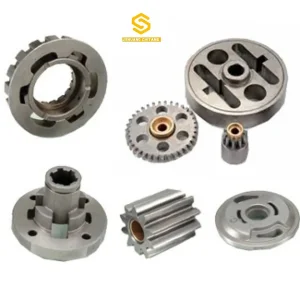
Explore additional precision sintered parts, micro-machined stainless components, and OEM hardware manufactured at our Ningbo facility.





Ready to Optimize Your Automotive Sensor Ring Supply Chain?
Submit your 2D/3D CAD drawings today. Our engineering team provides a comprehensive DFM manufacturability evaluation and transparent quotation within 48 hours.