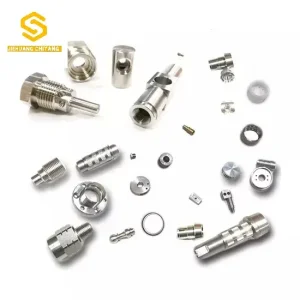
Featured OEM Powder Metallurgy & Casting Products (Group 1)






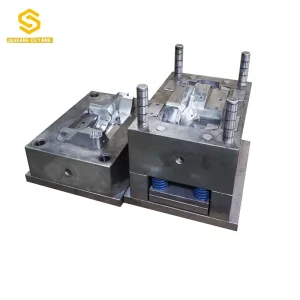

Global Sourcing Dynamics: Why Modern Procurement Teams Turn to China Powder Metallurgy
The global precision component manufacturing paradigm has reached a critical inflection point. As automotive OEMs transition toward electric drivetrains, medical technology vendors demand sub-millimeter surgical mechanisms, and consumer technology firms introduce complex foldables and wearables, conventional subtractive manufacturing (CNC machining) faces insurmountable cost and scalability limits. Machining up to 70% of material away from solid alloy forged stock generates unsustainable scrap rates, energy overhead, and tool wear.
Herein lies the competitive advantage of modern China powder metallurgy (PM) manufacturers and suppliers. Powder metallurgy, encompassing both high-density axial powder press-sintering and 3D Metal Injection Molding (MIM), presents an optimal near-net-shape manufacturing route. By consolidating multi-piece assemblies into single, highly refined structural geometries with over 95% material utilization, Chinese PM manufacturing hubs offer global procurement executives an extraordinary balance of structural integrity, dimensional repeatability, and landed cost reduction.
To successfully navigate sourcing from China, industrial buyers require transparent evaluations of physical metallurgy, feedstock quality, debinding chemistries, atmospheric sintering control, and strict compliance with international quality management systems (such as IATF 16949 and ISO 9001). Leading Chinese manufacturers have evolved from low-cost casting shops into high-tech metallurgical powerhouse institutions equipped with continuous mesh belt furnaces, high-vacuum batch sintering units, automated CNC sizing presses, and advanced coordinate measuring machines (CMM).
Total Cost of Ownership (TCO) Optimization
Direct material reduction is the primary financial driver. By transforming elemental or pre-alloyed metal powders directly into finished parts, tool wear is virtually eliminated from primary shaping. Chinese suppliers offer competitive tooling costs, lowering the financial threshold for high-volume custom molds.
Complex Part Consolidation
Engineers can merge multi-part welded assemblies into a single PM or MIM component. Eliminating assembly steps, fasteners, and brazing seams improves structural reliability while reducing supply chain administration overhead for global buyers.
Resilient Dual-Sourcing Clusters
China's Yangtze River Delta (Ningbo, Shanghai, Suzhou) and Pearl River Delta regions represent the world's highest density of powder metallurgy raw material atomizers, sintering furnace builders, and secondary plating vendors, enabling fast lead times.
Technical Deep Dive: Press-and-Sinter (PM) vs. Metal Injection Molding (MIM) vs. Die Casting
Selecting the optimal manufacturing route requires a thorough analysis of part geometry, mechanical requirements, annual production volume, and material specifications. Below is an engineering comparison matrix designed by lead powder metallurgists to assist design engineers and procurement teams in making informed process selection decisions.
| Process Parameter | Conventional Press & Sinter (PM) | Metal Injection Molding (MIM) | Aluminum / Zinc Die Casting | 5-Axis CNC Machining |
|---|---|---|---|---|
| Primary Material Spectrum | Iron-Copper, Fe-Ni Steels, Bronze, Soft Magnetics | 17-4PH, 316L Stainless, Ti-6Al-4V, Low Alloy Steels | A380, ADC12 Aluminum, Zamak 3/5 Zinc Alloys | Wrought Aluminum, Stainless, Titanium, Brass |
| Achievable Sintered Density | 85% – 94% (Density can be increased via Repressing) | 96% – 99.5% (Wrought-like mechanical properties) | 100% Solid (Potential interior porosity voids) | 100% Solid Wrought Stock |
| Geometric Complexity | Moderate (2.5D shapes, multi-level stepped gears) | Extreme (3D undercut shapes, micro holes, thin walls) | High (Thin-walled housings, complex ribs) | Unlimited (Tool access bound, costly for inner features) |
| Dimensional Tolerance | ±0.3% to ±0.5% (±0.05 mm via coining sizing) | ±0.3% to ±0.5% of nominal dimension | ±0.1 mm to ±0.2 mm depending on die size | ±0.005 mm to ±0.01 mm (Ultra-precise) |
| Economic Volume Threshold | 5,000 to 1,000,000+ units/year | 2,000 to 500,000+ units/year | 2,000 to 100,000+ units/year | 1 to 1,000 units (Cost prohibitive for mass production) |
| Scrap & Sustainability | Virtually Zero Scrap (>98% material yield) | Near-Zero (Runners and sprues recycled) | Moderate (Flash and overflows remelted) | High Scrap Rate (Up to 70% material wasted) |
Metallurgical Insight: Metal Injection Molding (MIM) achieves tensile strength, elongation, and corrosion resistance comparable to wrought materials because its final sintering temperature (typically 1250°C to 1380°C) approaches the solidus temperature, inducing grain growth and atomic diffusion that eliminates interconnecting pore networks.
Detailed Powder Metallurgy Sub-Processes Architecture
1. Powder Atomization
Water or gas atomization produces spherical or irregular micro powders (1–45 µm for MIM, 45–150 µm for conventional PM) ensuring optimal packing density.
2. Feedstock Compounding
Metal powders are blended with thermoplastic polymer binders (polyethylene, paraffin wax, or catalytic binder systems) creating homogenous feedstock pellets.
3. Debinding Chemistry
Solvent, thermal, or nitric acid catalytic debinding removes the binder matrix, converting the molded 'green part' into a fragile, porous 'brown part'.
4. Vacuum Sintering
High-temperature vacuum furnaces densify the component, shrinking it isotropically by 15-20% to reach target physical and mechanical densities.
Engineered Solutions across High-Precision Industrial Sectors
Leading Chinese powder metallurgy manufacturers serve a broad range of global sectors. By matching custom alloy formulations with application-specific post-processing treatments, PM and MIM components deliver performance in mission-critical environments.
Automotive & E-Mobility Drivetrains
Applications: Variable Valve Timing (VVT) sprockets, oil pump rotors, transmission synchronizer rings, turbocharger vanes, and electric vehicle (EV) drive motor planetary gearing.
Technical Value: Fe-Ni and Fe-Cu-C sintered alloys hardened via carbonitriding achieve surface fatigue resistance exceeding 1200 MPa, with self-lubricating oil-impregnated porosity options for reduced noise and wear.
Medical Instruments & Surgical Devices
Applications: Endoscopic grasper jaws, laparoscopic surgical scissors, orthopedic surgical tool heads, dental brackets, and titanium bio-implant fixtures.
Technical Value: 316L and 17-4PH medical stainless steels sintered to >98% theoretical density undergo electropolishing and passivation, guaranteeing biocompatibility and resistance to aggressive autoclave sterilization cycles.
Consumer Technology & Wearables
Applications: Foldable smartphone liquid-metal and MIM hinges, smartwatch stainless/titanium bezels, camera lens actuator gears, and earphone magnetic armatures.
Technical Value: Micro-MIM technologies support component weights below 0.05 grams with wall thicknesses down to 0.2 mm, finished with physical vapor deposition (PVD) coating for long-term wear resistance.
Robotics, Power Tools & Hardware
Applications: Planetary gearboxes for power tools, hydraulic valve spools, door lock latches, pneumatic fittings, and high-torque impact wrench anvils.
Technical Value: Custom tungsten carbide and tool steel powder blends yield high hardness (>60 HRC post heat treatment) and high impact energy absorption without secondary gear hobbing or broaching.
Future Outlook: Next-Generation Advances in Powder Metallurgy
The powder metallurgy domain is advancing beyond traditional press-and-sinter boundaries. As global industrial trends emphasize low carbon footprints, lightweight structural alloys, and smart manufacturing integration, premier Chinese PM suppliers are heavily investing in next-generation processing technologies.
1. Spark Plasma Sintering (SPS) & HIPing
Field-Assisted Sintering Technology (FAST/SPS) utilizes pulsed direct electric currents to achieve full density in seconds at lower temperatures, preserving nanostructured grain profiles and maximizing mechanical strength for aerospace-grade superalloys.
2. Binder Jetting AM Synergy
Metal Binder Jetting (MBJ) 3D printing leverages existing MIM debinding and sintering infrastructure while eliminating hard tooling. This enables seamless transitions from rapid prototyping to medium-volume production without tooling costs.
3. Titanium & Special Alloy MIM
Titanium MIM (TiMIM using Ti-6Al-4V) and soft magnetic nickel-iron (Fe-Ni-Co) materials are expanding options for aerospace hydraulics, medical implants, and high-frequency wireless communications where weight and magnetic response are key.
Enterprise Quality Management, DFM Audits & Intellectual Property Protection
Building a successful manufacturing partnership with a Chinese powder metallurgy supplier requires rigorous quality oversight. Premier suppliers implement closed-loop Quality Assurance (QA) frameworks that cover every stage of production—from raw powder lot validation to final dimensional inspection.
IATF 16949 & ISO 9001 Governance
Full implementation of Automotive Core Tools: APQP (Advanced Product Quality Planning), PPAP Level 3 (Production Part Approval Process), FMEA (Failure Mode and Effects Analysis), SPC (Statistical Process Control), and MSA (Measurement System Analysis).
Rigorous DFM Engineering Reviews
Before mold steel is cut, certified DFM reports evaluate mold draft angles, wall thickness uniformity, thermal shrinkage factors, gate location stresses, and ejector pin placement to eliminate defects prior to production.
Strict NDA & IP Protection Protocols
Data security policies ensure customer 3D CAD STEP files, material property requirements, and custom tooling designs are protected under enforceable Non-Disclosure Agreements (NDAs), encrypted servers, and segregated production lines.
Frequently Asked Questions (FAQ) for Global Procurement Officers
Direct technical answers to common questions about sourcing custom powder metallurgy and metal injection molding components from China.