
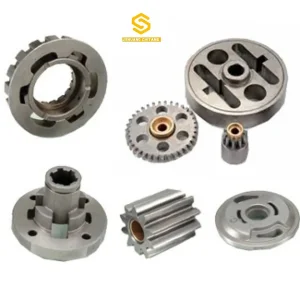
Featured Precision Gear & Powder Metallurgy Solutions (Batch 01)
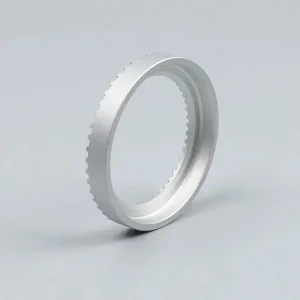
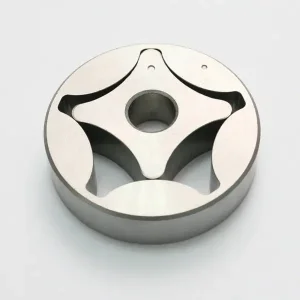
Explore our primary mass-production capabilities across powder metallurgy sintering, metal injection molding (MIM), and high-pressure die casting engineered for global OEMs.





Global Worm Gear Sourcing Landscape & China's Manufacturing Evolution
The global market for worm gears and compact angular gearboxes is undergoing a massive shift towards near-net-shape powder metallurgy (PM) and micro Metal Injection Molding (MIM). Modern robotic actuators, EV seat adjusters, medical drives, and industrial automation demand ultra-compact right-angle torque transmission without the cost penalties of conventional 5-axis gear cutting.
Shift to Near-Net-Shape PM
Traditional solid gear machining wastes 45–60% of raw bar stock. Powdered metallurgy worm wheels achieve 95%+ material utilization, dramatically curtailing total cost of ownership (TCO) for high-volume OEMs.
MIM Micro-Gearing Advances
For module size < 0.5 mm, conventional hobbing encounters severe tool wear and interference limits. Metal Injection Molding enables complex multi-stepped worm gear geometries with zero secondary machining.
Supply Chain Resilience
Tier-1 automotive and medical buyers require vertical integration: tooling design, compaction press automation, vacuum sintering, and CMM inspection under one IATF 16949 certified roof in Ningbo, China.
Kinematic Design, Efficiency Equations & Metallurgy Matrix
Worm gearing provides smooth, near-silent right-angle motion with high torque multiplication ratios in a single stage. However, sliding friction dominates the contact zone, making material selection and surface tribology paramount for preventing sliding wear and thermal runaway.
Worm Gear Kinematics & Lead Angle Dynamics
The mechanical efficiency ($\eta$) of a worm gear pair depends intrinsically on the lead angle ($\gamma$) of the worm and the normal friction angle ($\phi$). Below is the standard gearing efficiency relationship:
η = [ tan(γ) ] / [ tan(γ + φ) ]
// Self-Locking Condition (Static)
If γ ≤ static friction angle (φs), the drive is self-locking.
Standard industrial self-locking range: γ = 3° to 5°.
When manufacturing via powder metallurgy or MIM, density distribution in the gear tooth root is controlled using multi-plate tooling systems. This prevents density gradients that cause micro-pitting during sliding contact under high torque loads.
Tribology & Self-Lubricating Porous Bronze
Powder Metallurgy allows for controlled oil impregnation (15–25% interconnected porosity filled with synthetic lubricants, ISO VG 68–220). As operational temperature rises, the lubricant expands out of the pores into the mesh zone, forming a dynamic hydrodynamic boundary layer.
- Reduced NVH: Porous structure dampens acoustic vibrations.
- Zero Maintenance: Eliminates grease replenishment in sealed automotive and HVAC actuators.
- High PV Ratings: Capable of handling high Pressure-Velocity thresholds without galling.
Material Engineering Matrix for Worm Gear Manufacturing
| Manufacturing Process | Material Grade / Specification | Tensile Strength (MPa) | Hardness (HRB / HRC) | Primary Industrial Application |
|---|---|---|---|---|
| Powder Metallurgy (PM) | Sintered Bronze (MPIF CT-1000-K26) | 210 - 260 MPa | 45 - 60 HRB | Self-lubricating worm wheels for HVAC, smart home actuators |
| Powder Metallurgy (PM) | Sintered Fe-Ni Steel (MPIF FN-0208) | 550 - 750 MPa | 25 - 35 HRC (Heat Treated) | High-load automotive power seat worm gears & window lifters |
| Metal Injection Molding (MIM) | 17-4PH Stainless Steel (MIM-17-4PH) | 1,080 - 1,200 MPa | 36 - 42 HRC (H900 Condition) | Micro worm gears for surgical robotics, precision optics, weapons |
| Metal Injection Molding (MIM) | 4605 Low Alloy Steel (MIM-4605) | 1,450 - 1,650 MPa | 48 - 54 HRC (Case Hardened) | Heavy-duty power tool gearboxes, industrial valve rotators |
| Aluminum Die Casting | A380 / ADC12 Aluminum Alloy | 310 MPa | 80 HRB | Lightweight worm gearbox housings & structural enclosures |
| Zinc Die Casting | Zamak 3 / Zamak 5 (Zinc Alloy) | 280 - 330 MPa | 82 - 91 HRB | High-precision thin-wall structural worm housings & caps |
Process Selection Guide: MIM vs. PM vs. Die Casting vs. CNC
Choosing the ideal manufacturing route depends on component weight, gear tooth complexity, annual production volume, and critical tolerances. Ningbo Jiehuang operates all major routes under one engineering management framework.
Powder Metallurgy (Sintering)
Best for: Medium to high volume spur, helical, and worm gear wheels (5,000+ pcs/year). Ideal for self-lubricating bronze and steel gear structures with uniform axial profiles.
- Part Size: Up to 150 mm outer diameter
- Tolerances: IT8 - IT10 (AGMA 7-8) as-sintered
- Primary Advantage: Lowest unit cost at high volume; porous matrix holds oil
Metal Injection Molding (MIM)
Best for: Highly complex, ultra-small 3D gear geometries (< 100 grams) that require stainless steel or high-alloy strength where hobbing is impossible.
- Part Size: 0.1 gram to 250 grams
- Density: 96% - 99% theoretical wrought density
- Primary Advantage: Complete geometric freedom, micro-pitch gear capability
Aluminum & Zinc Die Casting
Best for: Gearbox housings, mounting brackets, and structural covers that encapsulate worm drives and motors.
- Casting Force: 160 Ton to 1,200 Ton automated cells
- Wall Thickness: Down to 0.8 mm for zinc, 1.2 mm for aluminum
- Primary Advantage: Excellent EMI shielding, superior thermal conductivity
CNC Precision Secondary Machining
Best for: Prototype verification, high-precision shaft journals, keyways, or post-sinter grinding to reach AGMA 10+ precision grades.
- Machining: 5-axis CNC, Swiss-type CNC lathes, gear hobbing
- Tolerances: Down to ±0.005 mm (±5 microns)
- Primary Advantage: Ultra-fine surface finish on worm shafts (Ra < 0.4 μm)
Engineering Guidelines & Metrology Assurance
Designing a high-performance worm drive requires close collaboration between gear designers and powder metallurgists. Applying proper Design for Manufacturability (DFM) rules early reduces tooling iterations and guarantees zero-defect mass production.
Tooth Root Fillet Optimization
Sharp internal corners create severe stress concentrations during sintering shrinkage and load transfer. Incorporate a minimum tooth root fillet radius of $R \ge 0.2 \times \text{Module}$ to enhance fatigue life by up to 40%.
Face Width & Web Thickness
In PM compaction, avoid radical transitions between the hub thickness and gear tooth face width. Equalizing wall thickness ensures uniform compaction pressure distribution and eliminates distortion during high-temperature sintering.
CMM & Gear Profile Inspection
Every gear batch undergoes strict inspection via ZEISS Coordinate Measuring Machines (CMM), gear measuring centers (profile error $F_\alpha$, lead error $F_\beta$), optical comparators, and density testing per ISO 2738 standards.
OEM Strategic Sourcing & Total Cost Optimization
When sourcing precision worm gears from China manufacturers, global Tier-1 and Tier-2 buyers must evaluate total landed costs, engineering support responsiveness, tooling lead times, and rigorous supply chain compliance.
Transparent Tooling & Amortization Models
Jiehuang provides itemized, fully transparent quotations within 48 hours. Tooling costs for MIM and Powder Metallurgy molds can be amortized directly into the unit component price across initial multi-year purchase orders, minimizing upfront capital expenditure (CapEx).
IATF 16949 & PPAP Level 3 Documentation
Automotive and medical clients receive comprehensive Production Part Approval Process (PPAP Level 3) packages, including Process Flow Diagrams, PFMEA, Control Plans, Dimensional Results, Material Certifications, and Gauge R&R studies prior to volume shipment clearance.
Technology Roadmap: Next-Generation Gear Metallurgy
As industrial automation, humanoid robotics, and clean energy devices demand higher torque density and zero maintenance, Ningbo Jiehuang is pioneering advanced powder metallurgy techniques.
1. Nanocomposite Powder Alloys
Incorporating nano-dispersed ceramic phase lubricants (graphene/MoS2) directly into sintered metal powder matrices to achieve super-hydrophobic and self-repairing sliding gear contacts under extreme temperatures.
2. Titanium MIM (TiMIM) Gearing
Leveraging Grade 5 Titanium (Ti-6Al-4V) MIM technology to produce lightweight, biocompatible micro gear systems for wearable surgical tools and aerospace actuators, reducing weight by 42% compared to steel.
3. Sensor-Embedded Gear Systems
Combining 3D printed sensor channels with sintered metal gear housings for real-time vibration, torque load, and temperature telemetry directly fed into smart factory IoT controllers.
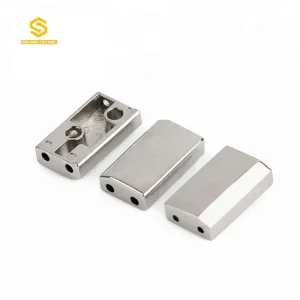
Featured Precision Gear & Powder Metallurgy Solutions (Batch 02)
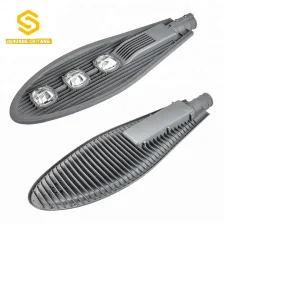
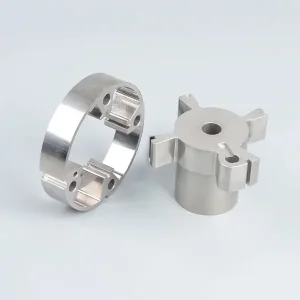
Review our complete OEM product lineup featuring precision aluminum die casting, sintered variable timing components, 316L stainless steel MIM parts, and structural powder metallurgy items.



Frequently Asked Engineering & Procurement Questions
In-depth answers from our senior metallurgists and gearing engineers to help speed up project validation and RFQ evaluation.
Static self-locking generally occurs when the lead angle ($\gamma$) is less than the static friction angle ($\phi_s$) of the dynamic material interface (typically $\gamma \le 4^\circ$ to $5^\circ$ for steel worm shafts on sintered bronze worm wheels). For high-vibration applications, a mechanical brake is still recommended as dynamic shaking can overcome static friction.
Powder metallurgy eliminates over 50% material scrap compared to machining solid bronze. Furthermore, sintered bronze contains interconnected micropores (15–25% by volume) impregnated with synthetic lubricants, providing permanent self-lubrication, lower dynamic friction, and superior acoustic damping.
Yes. We utilize in-house Direct Metal Laser Sintering (DMLS / Metal 3D Printing) and 5-axis CNC machining to supply functional metallic prototypes for gear mesh validation, thermal testing, and assembly check prior to cutting hard production tooling.
We request both 3D STEP/IGES files for mold design and 2D PDF drawings detailing critical tolerances, gear module, pressure angle, number of teeth, surface finish requirements, heat treatment, and material specifications. Quotes are returned within 48 hours.
Our typical mass-production MOQs are 2,000 pcs for Metal Injection Molding (MIM) and aluminum die casting, and 5,000 pcs for Powder Metallurgy (PM) sintered gears. Prototype and pilot runs are fully supported under engineering agreement.
NVH control is achieved by optimizing gear tooth profile crowning, enforcing precise pitch control, maintaining continuous sintered porosity for acoustic damping, and performing 100% optical gear profile rolling inspection on sensitive automotive and medical lots.
Accelerate Your Gear Engineering Project Today
Send your 2D and 3D drawings to our Ningbo engineering team for a comprehensive DFM manufacturability evaluation and transparent 48-hour cost quote under complete NDA protection.