
Featured Powder Metallurgy & Molded Components
Explore our flagship OEM solutions manufactured via state-of-the-art metal injection molding, sintered powder metallurgy, and high-precision die casting setups.


Wholesale 2019 Good Quality China Metal Injection Moulded Copper Base Gears for Automobile Parts Manufacturer, Suppliers
View Product Specs
China Price Sheet for China Powder Metallurgy Motor Shaft Sleeve Metal Powder Sintered Parts Supplier, Factories
View Product Specs
China Discount wholesale China Powder Metallurgy Customized Components Sintered Spare Parts Manufacturers, Suppliers
View Product Specs
Wholesale factory Outlets for China Factory Manufacturer Customized Precision Cheapcnc Machining Zinc Alloy Die Casting Supplier, Factory
View Product Specs
China Ordinary Discount Custom Metal Injection Molding Stainless Steel Parts for Complex CNC Metal Components Sintering Metal Parts for Machinery Spare Parts Manufacturers, Factories
View Product Specs
Wholesale factory Outlets for OEM Customerized Engine Cylinder Block Rapid Prototype 3D Printing Sand Mold Patternless Casting MFG Auto Part Metal Casting Pressure Casting Die Casting Manufacturers, Factories
View Product Specs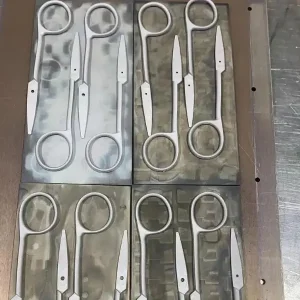
Evolution & Market Dynamics of Aluminum Injection Molding (AIM)
How next-generation powder metallurgy is overriding traditional die casting and CNC machining limitations to deliver high-density, complex aluminum components at scale.
Global Lightweighting Imperative
With electric vehicles (EVs), aerospace structures, and portable telecommunication systems demanding stringent mass reduction, aluminum alloys (such as 6061, 7075, and Al-Si systems) have surfaced as essential engineering materials. The global push toward energy efficiency makes Wholesale Aluminum Injection Molding a crucial manufacturing discipline.
Beyond Die Casting Limitations
Traditional die casting suffers from porosity issues, tool wear, and structural wall-thickness boundaries (>1.5mm). Aluminum MIM achieves 95%–98% theoretical density, permitting wall thicknesses down to 0.4mm, internal thread molding, and zero draft angles—drastically eliminating post-machining scrap.
The Metallurgy Breakthrough
Historically, aluminum injection molding was hindered by the tenacious surface oxide layer ($Al_2O_3$) on fine aluminum powders. Advanced micro-alloying additives (Magnesium, Silicon, Copper) paired with nitrogen-atmosphere liquid phase sintering now break native oxides, yielding high structural integrity.
Technical Deep Dive: The Aluminum Injection Molding Architecture
A granular walk-through of the chemical, thermal, and mechanical stages involved in manufacturing OEM precision aluminum MIM components.
Powder & Binder Prep
Gas-atomized spherical aluminum powders ($D_{50} \approx 10-15\,\mu\text{m}$) are compounded with customized multi-component wax-polymer binder systems.
Precision Injection
Homogenized feedstock is injected into multi-cavity hardened molds under controlled barrel temperature ($140^\circ\text{C}-180^\circ\text{C}$) to form "green parts".
Solvent Debinding
Green parts undergo catalytic or solvent extraction, removing primary paraffin wax elements while preserving structural skeletal binders ("brown parts").
Atmospheric Sintering
Brown parts enter high-purity $N_2$ furnaces ($580^\circ\text{C}-630^\circ\text{C}$). Liquid-phase assistance destroys surface oxide layers, triggering pore diffusion.
Heat Treatment / T6
Sintered parts receive solution heat treatment and artificial aging (T4/T6 temper) to achieve tensile strength exceeding 320 MPa.
Process Benchmarking: AIM vs. Alternate Manufacturing Technologies
This matrix highlights key trade-offs when selecting between Wholesale Aluminum Injection Molding, conventional Die Casting, CNC Machining, and Stainless Steel MIM.
| Engineering Metric | Aluminum MIM (AIM) | Aluminum Die Casting | 5-Axis CNC Machining | Stainless Steel MIM (17-4PH) |
|---|---|---|---|---|
| Geometric Complexity | Ultra-High (3D Freeform) | Moderate (Draft limited) | High (Tool access limited) | Ultra-High (3D Freeform) |
| Material Density | 2.68 – 2.75 g/cm³ | 2.55 – 2.65 g/cm³ (Porosity risks) | 2.70 g/cm³ (Wrought stock) | 7.75 – 7.85 g/cm³ |
| Min. Wall Thickness | 0.4 mm | 1.5 mm | 0.8 mm | 0.3 mm |
| Material Utilization Rate | > 95% | 75% – 85% (Runners/Sprues) | 15% – 40% (Scrap heavy) | > 95% |
| Unit Cost @ 50k+ Volume | Very Low | Low | Extremely High | Moderate to High |
| Thermal Conductivity | 150 – 180 W/m·K | 90 – 120 W/m·K | 160 – 200 W/m·K | 15 – 24 W/m·K |
Global Enterprise Procurement Demand & Risk Mitigation
Frameworks for Supply Chain Officers, B2B Procurement Leads, and Manufacturing Directors evaluating volume OEM aluminum MIM partnerships.
Total Cost of Ownership (TCO) Optimization
While initial tooling costs for aluminum injection molding molds range between $8,000 and $25,000, the near-zero scrap loss and elimination of secondary CNC operations amortize tooling expense within the first 15,000 to 25,000 production units.
Vendor Qualification Metrics
Enterprise buyers must evaluate aluminum injection molding suppliers on atmospheric control capabilities ($N_2$ purity > 99.999%), in-house DFM simulation tools (Moldflow analysis), and non-destructive testing assets (X-ray CT scanning for internal void detection).
Supply Chain Resilience Strategy
To protect against raw powder price volatility and regional logistics delays, leading OEMs establish dual-sourcing feedstock agreements and leverage regional buffer stock programs for critical auto and telecom components.
Macro-Industry Solutions & Customized OEM Applications
Deploying precision-molded aluminum components across mission-critical technological verticals.
Automotive & EV Systems
Critical lightweight parts including electric motor rotor end rings, thermal management cold plates, steering column lock housings, and variable valve actuator levers demanding low inertia.
5G Telecom & RF Modules
Complex microwave filter housings, heat sinks with ultra-thin radial fins, and active antenna array brackets requiring non-magnetic behavior combined with high thermal dissipation.
Aerospace Avionics
Flight instrument chassis, optical sensor brackets, drone gimbal arms, and satellite communication components where structural weight correlates directly with payload cost penalties.
Medical Devices
Ergonomic handles for surgical instruments, portable diagnostic housings, and wearable infusion pump internal chassis requiring biocompatibility, light weight, and chemical resistance.
Localization Support, Quality Assurance & Global Standards
Rigorous international certification frameworks supporting seamless cross-border supply chain integration.
IATF 16949 & ISO 9001 Integration
Every batch of wholesale aluminum injection molded components undergoes automated Statistical Process Control (SPC), PPAP Level III documentation, and full batch traceability back to raw elemental powder lots.
Environmental & Chemical Compliance
All binder formulations and secondary finishing processes comply strictly with EU RoHS 3 and REACH directives. Closed-loop solvent recycling units eliminate volatile organic compound (VOC) emissions during debinding.
Local Technical Support
Our field application engineers provide rapid 48-hour DFM feedback, regional warehousing hubs, local customs clearing assistance, and on-site assembly integration support across Europe, North America, and Asia-Pacific.
Technology Roadmap & Future Outlook (2025–2030)
Anticipating technological leaps in metal injection molding, binder jetting hybrids, and advanced nano-composite alloys.
Additive-AIM Hybrid Workflows
Convergence of Binder Jetting 3D printing with standardized AIM sintering cycles allows ultra-fast prototyping without hard tooling, seamlessly scaling into multi-cavity production molds upon design freeze.
Nano-Reinforced MMC Alloys
Incorporation of Silicon Carbide (SiC) and Carbon Nanotubes (CNTs) into aluminum feedstock formulations yields metal matrix composites (MMCs) with stiffness matching titanium while retaining aluminum density.
AI-Assisted Closed-Loop Sintering
Computer vision and thermal gradient sensors inside sintering furnaces continuously adjust dew point and atmosphere pressure in real-time, driving dimensional repeatability to sub-micron variance levels.
Frequently Asked Questions: Aluminum Injection Molding
Direct technical and procurement answers addressing key engineering challenges, cost models, and material properties.
Why is aluminum more difficult to injection mold and sinter than stainless steel?
Aluminum particles form a stable, refractory oxide film ($Al_2O_3$) immediately upon exposure to air. This film resists breakdown at typical sintering temperatures. Overcoming this requires micro-alloying with Mg/Si, precise liquid phase sintering dynamics, and ultra-dry nitrogen furnace atmospheres (dew point < -60°C).
What linear shrinkage rate occurs during the AIM sintering stage?
Aluminum injection molded parts exhibit predictable volumetric shrinkage between 12% and 18% (typically 14.5% linear) as binder elements burn off and powder particles consolidate. Precision mold tooling is scaled up using CAD algorithms to compensate for this exact shrinkage factor.
Can aluminum MIM components be anodized for cosmetic or wear applications?
Yes. Because AIM components achieve densities near 98%, they possess minimal surface interconnected porosity. This allows standard Type II clear/color anodizing and Type III hardcoat anodizing for enhanced corrosion and wear protection.
What is the typical Minimum Order Quantity (MOQ) for wholesale production?
Due to initial tooling design and debinding/sintering furnace batching economics, standard production MOQs start at 2,000 to 5,000 units per order. Prototype and pilot runs (100–500 units) can be accommodated via 3D binder jetting or soft-tooling setups.
How does aluminum MIM compare in unit price against 5-axis CNC machining?
For complex geometries involving undercuts, internal channels, or thin ribs, AIM reduces unit production costs by 40% to 70% at volumes exceeding 10,000 pieces by eliminating multi-axis machining time, cutting tool wear, and material scrap.
Which aluminum alloy grades are most commonly available for MIM?
The most versatile alloys include 6061 (heat-treatable, excellent corrosion resistance), 7075 (high-strength aerospace grade), Al-7Si-0.5Mg (excellent castability and thermal properties), and Al-Cu systems designed for elevated temperature strength.
Additional Powder Metallurgy & Casting Solutions
Discover more certified components engineered for demanding industrial, automotive, and mechanical applications.
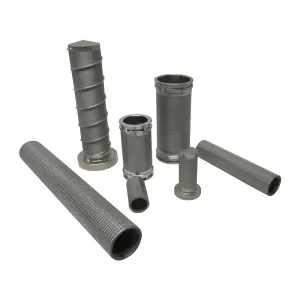
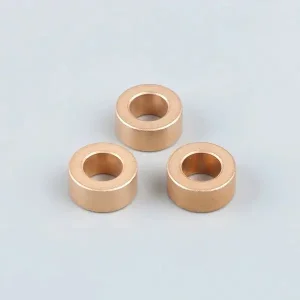
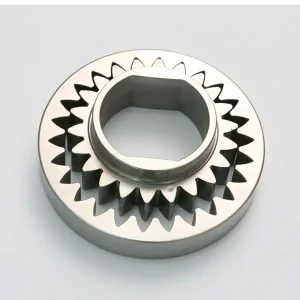
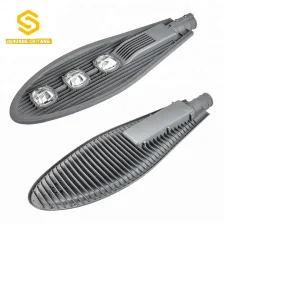
Wholesale China Factory for OEM Industrial Machinery Auto Parts Die Casting Aluminium Alloy Custom Manufacturer, Factories
View Product Specs
Wholesale Factory wholesale Auto Parts Accessory Sintered Engine Parts Tensioner Spare Powder Metallurgy Company Supplier, Suppliers
View Product Specs

Wholesale Wholesale Price China Manufacturer OEM Custom Made Casting Metal Parts Aluminum Zinc Alloy Cast Iron Die Casting Manufacturers, Suppliers
View Product SpecsAccelerate Your Production With Precision Aluminum MIM
Partner directly with certified engineering experts. Send us your 3D CAD files (STEP/IGES) and receive a comprehensive DFM manufacturability analysis & quotation within 48 hours.