
Core Manufacturing Catalog & Custom Parts
Discover our high-precision die-cast housings, sintered metal components, and custom powder metallurgy solutions optimized for thermal performance and structural integrity.

Wholesale Factory making Df-Slm260 Selective Laser Melting Powder Dental 3D Printer Metal Powder High Purity Slm Printing Manufacturers, Supplier
View Product Details
China Hot sale Factory Customized High Precision CNC Machining Die Casting Parts Metal Housing China Manufacturer Manufacturers, Supplier
View Product Details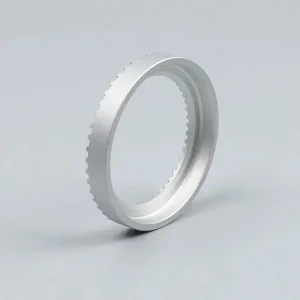

Wholesale Professional Factory for Wholesale Motorcycle Accessories Aluminum Alloy Part Motorcycle Windscreen Die Casting Supplier, Factories
View Product Details
Wholesale Factory Selling China Cheap OEM Metal Powder Metallurgy Hardened Iron Sector Gear Supplier, Suppliers
View Product Details
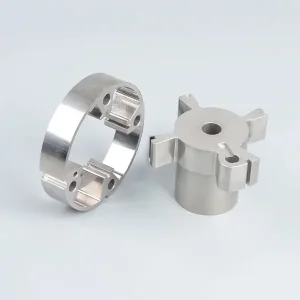
China Engine Variable Timing Systems: PM Parts Outperform Traditional Components Manufacturer, Manufacturers
View Product Details
China Trending Products Factory OEM Customized Zinc Alloy Aluminum Precision Casting Precision Metal Die-Casting Aluminum Castings Manufacturer, Manufacturers
View Product DetailsIn high-power electric drivetrains, brushless DC motors (BLDC), permanent magnet synchronous motors (PMSM), and industrial automation actuators, thermal dissipation directly governs continuous power rating, volumetric efficiency, and long-term operating reliability. Sourcing through qualified wholesale electric motor heat sinks suppliers and factories is no longer just a procurement function—it is a core thermal engineering strategy.
Modern electric motors push power densities beyond 10 kW/kg. Copper $I^2R$ stator losses, iron core eddy currents, and rotor windage loss generate localized heat spots reaching up to 180°C. Unmitigated heat degrades winding insulation, demagnetizes NdFeB magnets, and drastically reduces bearing grease lifespan.
Leading Chinese manufacturing hubs have shifted from conventional extruded aluminum profiles (6063-T5) to high-conductivity die-cast aluminum alloys (A380, ADC12, AlSi10Mg) and Metal Injection Molding (MIM) copper-aluminum composites, enabling volumetric thermal conductivity values exceeding 200 W/m·K with complex 3D fin geometries.
Driven by the global transition to EV passenger vehicles, heavy e-mobility, industrial robotics, and renewable energy pumping systems, the global market for electric motor heat sinks is projected to grow at a CAGR of 8.4%, exceeding $6.2 Billion globally within the next decade.
E-E-A-T Technical Benchmark: A 10°C drop in peak motor stator temperature doubles the operational lifespan of Class H electrical insulation and prevents catastrophic irreversible demagnetization in high-grade permanent magnets.
2. Technical Roadmap & Thermal Dynamics Future Outlook
The evolutionary trajectory of electric motor heat sink manufacturing reflects the demand for lower thermal resistance ($R_{th}$), lighter weight, and seamlessly integrated cooling channels.
Phase 1: High-Density Pin-Fin & radial Die-Cast Assemblies
Transitioning from uniform linear extruded fins to radial, staggered pin-fin structures produced via high-pressure die casting (HPDC). Pin-fin arrays induce turbulent airflow boundary layer breaking, improving convective thermal transfer coefficients ($h$) by 35% compared to laminar straight fins in forced-air environments.
Phase 2: Liquid-Cooled Stator Jackets & Conformal Channels
Integration of aluminum gravity cast or vacuum die-cast motor housings featuring internal helical water-glycol cooling channels. By removing thermal interface material (TIM) barriers through direct motor casing integration, system thermal impedance drops significantly below 0.05 K/W.
Phase 3: Metal Powder Metallurgy & MIM Hybrid Composites
Leveraging Selective Laser Melting (SLM 3D Printing) and Metal Injection Molding (MIM) to combine copper's extreme thermal conductivity (~390 W/m·K) with aluminum's low mass density. Sintered copper core inserts directly embedded into aluminum fin structures optimize heat flux spreading in high-surge current applications.
Phase 4: Phase-Change Material (PCM) & Additive Conformal Thermal Storage
Next-generation motor heat sinks incorporate micro-encapsulated Phase Change Materials inside additive-manufactured hollow fin cavities. During peak transient overloads (e.g., EV acceleration or heavy machine startup), the PCM absorbs latent heat, dampening thermal spikes without adding active cooling power draw.
Different operational environments require tailored metallurgical compositions, surface finishing treatments, and structural geometries. Sourcing custom heat sinks from experienced suppliers ensures exact alignment with operating duty cycles.
Operating Environment: Severe thermal cycling (-40°C to 150°C), constant vehicle vibration (ISO 16750-3), exposure to road de-icing salts and moisture.
- Solution: Die-cast aluminum alloy housings with integrated cooling fins and anti-corrosion chromate conversion or anodized coatings.
- Thermal Target: Dissipating up to 15 kW continuous heat load in compact wheel-hub or e-axle envelopes.
Operating Environment: Continuous acceleration/deceleration, space-constrained robotic arm joints requiring ultra-low mass inertia.
- Solution: Thin-wall, high-density MIM aluminum/magnesium alloy heat sink rings mounted directly on stator laminations.
- Key Feature: Micron-level precision tolerances (±0.02mm) eliminating dynamic imbalance during high RPM operation.
Operating Environment: Altitude pressure drop reducing air density, requiring maximum thermal dissipation per gram of weight.
- Solution: Additive SLM 3D-printed hollow fin heat sinks or lightweight magnesium-aluminum die castings with optimized CFD pin-fin arrays.
- Weight Savings: Up to 40% mass reduction compared to solid extruded aluminum.
Operating Environment: Highly corrosive saltwater mist, chemical dust, continuous S1 duty cycles under extreme humidity.
- Solution: Hard-coat anodized or ceramic slurry coated sintered aluminum/copper composite heat sink sleeves with stainless steel inserts.
- Corrosion Resistance: Exceeds 1,000 hours neutral salt spray testing (ASTM B117).
China's manufacturing ecosystem provides global OEMs with an unmatchable combination of rapid engineering iteration, vertical supply chain integration, and cost-effective volume scaling for custom heat sinks and motor housings.
From initial mold design and toolmaking to alloy ingot smelting, high-tonnage die casting, CNC secondary finishing, and automated CMM inspection, full vertical integration eliminates third-party markups and reduces project lead times by 30-50%.
Equipped with 500-Ton to 2,800-Ton cold-chamber die casting machines, 1,000-Ton powder compaction presses, and vacuum sintering furnaces capable of producing zero-porosity components with tight thermal wall uniformity.
High material utilization rates (>95% in MIM and powder metallurgy), combined with localized raw material sourcing in Ningbo/Zhejiang industrial clusters, drastically reduce unit costs for orders from 2,000 to over 1,000,000 pieces per annum.
Manufacturing Process Decision Matrix for Electric Motor Heat Sinks
| Manufacturing Process | Optimal Heat Sink Geometry | Thermal Conductivity | Wall Thickness Min. | MOQ / Volume | Unit Cost Scale |
|---|---|---|---|---|---|
| High Pressure Die Casting (HPDC) | Complex 3D Pin-Fin & Motor Housings | 120 - 160 W/m·K (A380/ADC12) | 1.2 mm | 2,000+ pcs | Very Low at High Volume |
| Metal Injection Molding (MIM) | Micro-channel & Ultra-compact Rings | 180 - 380 W/m·K (Cu/Al Hybrid) | 0.5 mm | 2,000+ pcs | Low for Complex Small Parts |
| Powder Metallurgy (Sintering) | Symmetrical Radial Fin Sleeves | 140 - 200 W/m·K (Fe-Cu/Al) | 1.5 mm | 5,000+ pcs | Extremely Low |
| CNC Precision Machining | Low-volume Prototype Fin Blocks | 200 - 220 W/m·K (Al 6061-T6) | 0.8 mm | 100+ pcs | High (Machine Time Heavy) |
| SLM 3D Metal Printing | Conformal Liquid Coolers & Prototypes | 160 - 210 W/m·K (AlSi10Mg) | 0.4 mm | 1 - 500 pcs | Highest (Tooling-free) |
Global industrial buyers require verifiable quality documentation, rigorous metallurgical testing, and multi-lingual engineering coordination to guarantee seamless integration into overseas assembly lines.
Our manufacturing operations follow strict automotive-grade IATF 16949 quality protocols. Every production run includes full material heat-number traceability, chemical spectral analysis, and SPC dimensional charting.
Equipped with Zeiss 3D Coordinate Measuring Machines (CMM), X-ray NDT porosity scanners, laser thermal flash conductivity meters, and helium leak detectors for liquid-cooled heat sink jackets.
All finished heat sinks, surface platings (anodizing, nickel plating, powder coating), and thermal interface pads adhere strictly to EU RoHS 3 and REACH environmental directives.
Fast-Track DFM (Design for Manufacturability): Submit your 2D/3D STEP files today and receive a complete engineering DFM report and transparent mold/part cost quotation within 48 hours, protected by NDA.
Direct answers from our senior thermal engineers and procurement specialists regarding custom motor heat sink manufacturing.
Industrial Metal Components & Assembly Hardware
Explore our full suite of sintered steel gears, custom ceramic blocks, die-cast actuator cups, and precision MIM machinery parts.
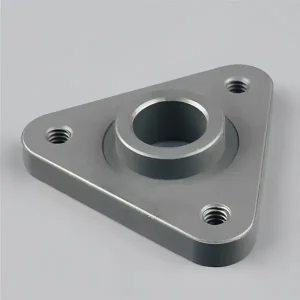
China Sintered Powder Metal Water Pump Flange Supplier Manufacturers, Factories
View Product Details
China Europe style for Aluminum Actuator End Cup Die Casting Manufacturers, Factories
View Product Details
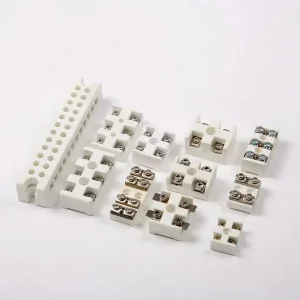
China OEM Manufacturer Custom Stainless Steel Hardware Special Parts Non-Standard Powder Metallurgy Metal Injection Molding MIM Process for Machinery Components CNC Turning Parts Manufacturers, Supplier
View Product Details
Wholesale Hot New Products China 2021 Trending Products Custom Processing Steel Powder Metallurgy Sintered Parts Manufacturers, Supplier
View Product Details
China Factory Directly supply Sintered Steel Timing Gear Rings Custom Die Casting Parts Manufacturers, Factory
View Product Details
China Ordinary Discount Custom Metal Injection Molding Stainless Steel Parts for Complex CNC Metal Components Sintering Metal Parts for Machinery Spare Parts Manufacturers, Factories
View Product Details
Ready to Optimize Your Electric Motor Thermal Architecture?
Partner with China's leading OEM heat sink manufacturer. Receive an engineer-reviewed DFM analysis, thermal simulation review, and transparent quotation within 48 hours.