
Wholesale Medical Injection Molding Manufacturers & Supplier
Precision OEM Metal & Ceramic Injection Molding (MIM/CIM) Solutions for Surgical Instruments, Dental Appliances, and Critical Medical Devices
High-Precision OEM Components & Assemblies
Explore our top wholesale product lines engineered for medical, micro-mechanical, and industrial applications requiring tight tolerances and superior biocompatibility.

Spherical Ta1 Alloy Powder for Spraying/Weldable Supplier

Precision Aluminum Vacuum Casting & Die Casting Motor Housing

China Customized High-Precision Spur Gear Supplier

Custom Metal Injection Molding Stainless Steel Parts

Precision Gear Custom Metal PM Powder Metallurgy Gear
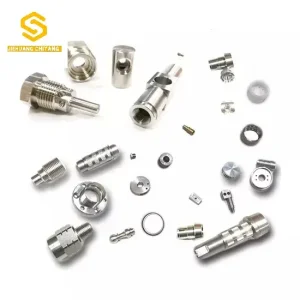
Metal Injection Molding (MIM) Sintering Industry Parts

Metal Injection Moulding MIM Mold for Communications

OEM Custom High Precision CNC Machining & Die Casting Parts
Engineering Excellence in Medical Injection Molding
Medical Injection Molding—encompassing both Metal Injection Molding (MIM) and Ceramic Injection Molding (CIM)—represents a convergence of powder metallurgy and plastic injection technology. It enables mass manufacturing of intricate, high-strength, biocompatible metal and ceramic components with geometric complexities unachievable through conventional subtractive CNC machining.
High-Density Material Performance
By combining fine metal powders (typically 3–15 microns) with customized thermoplastic binder systems, medical MIM components achieve sintered densities exceeding 96% to 99% of theoretical density. This eliminates internal porosity concerns, ensuring hermetic sealing, superior yield strength, and exceptional fatigue resistance vital for surgical tools and implantable hardware.
Biocompatible Alloys & ISO Standards
We specialize in medical-grade alloys compliant with ASTM F2885 (17-4PH SS), ASTM F138 (316L SS), ASTM F2885/F1472 (Ti-6Al-4V Titanium alloy), and Zirconia/Alumina ceramic matrices. All materials undergo stringent chemical verification and pass ISO 10993 cytotoxicity, sensitization, and systemic toxicity testing for clinical safety.
Why Global OEMs Source Medical MIM from China
China's precision powder metallurgy ecosystem offers world-class technological infrastructure, unmatched supply chain integration, and scalable cost structures for medical device manufacturing.
End-to-End Ecosystem
Located in Ningbo's high-tech manufacturing cluster, our facility operates integrated feedstock preparation, mold tooling design, solvent/thermal debinding, vacuum sintering furnaces, and secondary CNC finishing under one unified quality system.
Economies of Scale & Tooling Costs
Multi-cavity tooling design (up to 32 or 64 cavities per mold) combined with optimized automated production reduces unit costs by 30–50% compared to Western manufacturing hubs while maintaining zero-defect quality goals.
Agile Rapid Tooling
Our dedicated toolshop utilizes high-precision Swiss wire-EDM and Japanese CNC machining to deliver custom medical production tooling within 25–35 days, accelerating your time-to-market for clinical trials and mass rollouts.
Future Directions in Medical Injection Molding
As surgical techniques shift toward Minimally Invasive Surgery (MIS) and robotic assistance, component requirements demand unprecedented miniaturization, higher strength-to-weight ratios, and functional integration.
1. Micro-MIM for Surgical Robotics
Surgical robotics and laparoscopic wrist tools require micro-articulating hinges, cable gears, and pulleys weighing as little as 0.05 grams with wall thicknesses down to 0.25 mm. Micro-MIM allows complex 3D features that standard Swiss machining cannot replicate economically.
- Sub-millimeter internal channels for wire routing
- High-torque stainless steel micro-gears
- Zero backlash mechanical joint tolerance
2. Titanium MIM (TiMIM) & Orthopedic Implants
Ti-6Al-4V MIM eliminates the severe tool wear associated with machining solid titanium alloys while delivering yield strengths matching wrought titanium. TiMIM components provide excellent osseointegration properties for orthopedic trauma clips, spinal cages, and dental implants.
- Superior fatigue strength under cyclical physiological loads
- Lower elastic modulus reducing bone stress shielding
- Passivated corrosion-resistant oxide layer
3. Ceramic Injection Molding (CIM) for High Wear
High-purity Yttria-stabilized Zirconia (YSZ) and Alumina (Al2O3) ceramic injection molding are replacing metals in wearable drug delivery pumps, electrosurgical insulators, and aesthetic dental abutments where extreme wear resistance and dielectric isolation are required.
- High hardness (>1200 HV) avoiding abrasive particulate wear
- Complete chemical inertness to physiological fluids
- Non-magnetic properties for MRI compatibility
4. Smart Wearables & CGM Components
With the explosion of continuous glucose monitors (CGM) and wearable drug infusion pumps, MIM provides miniaturized structural latches, insertion needle drivers, and battery contacts that withstand continuous sweat corrosion and physical impact.
- High magnetic permeability nickel-iron alloys for sensors
- Ultra-compact mechanical interlocks
- Biocompatible skin-contact gold/pVD plating options
Localized Application Scenarios & Engineering Solutions
From single-use endoscopic staplers to reusable autoclavable scalpel handles, our medical MIM products excel in diverse healthcare environments.
Endoscopic & Surgical Tools
Components for endoscopic graspers, scissor jaws, needle holders, and surgical knife handles manufactured in 17-4PH stainless steel. Heat treated to H900 condition to achieve hardness above 40 HRC and exceptional cutting edge retention.
Orthodontic & Dental Appliances
MIM production of complex dental orthodontic brackets, self-ligating doors, buccal tubes, and implant abutments using 316L and Ti-6Al-4V powders. Delivers ultra-smooth slot dimensions and contoured torque bases for improved patient comfort.
Cardiovascular & Diagnostic Gear
Miniature fluidic valve bodies, blood analyzer pump rotors, and catheter insertion locks manufactured with precise internal threads and zero burrs, ensuring continuous fluid tightness and sterile performance.
MIM vs CNC Machining vs Investment Casting
Selecting the appropriate manufacturing route for medical components requires evaluating annual volume, geometric complexity, material yield, and total unit cost.
| Evaluation Parameter | Metal Injection Molding (MIM) | CNC Machining (5-Axis) | Precision Investment Casting |
|---|---|---|---|
| Annual Production Volume | High (5,000 to 5,000,000+ pcs) | Low to Medium (1 to 2,000 pcs) | Medium (1,000 to 50,000 pcs) |
| Geometric Complexity | Unlimited (Internal undercut, cross-holes) | Limited by tool access & setups | Moderate (Draft angles required) |
| Dimensional Tolerance | ±0.3% to ±0.1% nominal | ±0.005 mm (High precision) | ±0.5% nominal |
| Material Utilization Rate | >95% (Near-net shape, zero waste) | 10% to 40% (High scrap rate) | 70% to 80% (Gating waste) |
| As-Sintered Surface Finish | Ra 0.8–1.6 µm | Ra 0.8–3.2 µm | Ra 3.2–6.3 µm |
| Unit Cost at Volume | Lowest (30-50% savings) | Highest (Linear scale with time) | Moderate |
Design for Manufacturability (DFM) in Medical MIM
Optimizing component drawings for MIM reduces tooling risk, eliminates sintering distortion, and lowers unit manufacturing costs. Our technical team provides free DFM evaluation for every RFQ.
Wall Thickness & Core-Outs
Maintain uniform wall thickness between 0.5 mm and 3.0 mm. Thick sections should be cored out with weight-reduction pockets to prevent sink marks, void formation, and differential binder removal rate during solvent debinding.
Draft Angles & Internal Fillets
While MIM accommodates zero-draft walls in many cases, introducing 0.5° to 1.0° draft angles facilitates smooth mold ejection. Internal transition radii (>0.2 mm) reduce stress concentration points and improve feedstock melt flow.
Isotropic Sintering Shrinkage
During thermal sintering, green compacts shrink predictably by 15% to 20% in linear dimensions as the binder evaporates and powder particles fuse. Mold dimensions are scaled using high-precision CAD software to achieve net-shape dimensions.
Support Sintering Fixtures
Flat resting surfaces or dedicated ceramic ceramic setter plates are designed into complex geometry parts to prevent sagging and warping at peak sintering temperatures (1300°C–1380°C).
Specialized Medical & Industrial Components
Explore our extended portfolio of OEM sintered metals, orthodontic hardware, custom handles, and precision cast housings.

Powder Metallurgy Lock Core & Sintered Hardware Tools

Wholesale Medical Dental Orthodontic Bracket by MIM

Wholesale MIM For Custom Medical Knife Handle
Precision Sinter MIM 3C Industrial Component Supplier
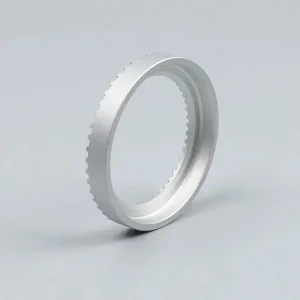
Wholesale High-Precision ABS Rings Manufacturer

Precision Aluminum Zinc Alloy OEM Die Casting Parts

Stainless Steel Sintered Iron Powder Metallurgy Parts

Low MOQ Aluminum Alloy Die Casting Precision Parts
Frequently Asked Questions by Global Medical Buyers
In-depth technical answers addressing procurement, quality compliance, tooling timelines, and material selections for medical injection molding.
What quality certifications do you hold for medical component manufacturing?
Our manufacturing facility operates under strict ISO 13485:2016 (Medical Devices Quality Management) and IATF 16949 certified quality management systems. We maintain full lot traceability from raw metal powder atomization through binder mixing, debinding, sintering, and final CMM dimensional inspection.
Which stainless steel grades are best suited for autoclavable surgical tools?
17-4PH (UNS S17400) is the preferred grade for surgical shears, needle drivers, and scalpel handles due to its precipitation hardening capability, enabling tensile strength up to 1350 MPa and hardness above 40 HRC after H900 heat treatment. For implanted or extended body-contact devices, 316L (UNS S31603) offers superior nickel-stable pitting corrosion resistance during repeated steam autoclaving.
What is the typical Minimum Order Quantity (MOQ) and lead time for custom tooling?
Our standard MOQ for wholesale medical MIM components is 2,000 pieces per batch. Tooling development and T1 sample delivery typically require 30 calendar days. We provide metal 3D-printed prototype samples (DMLS/SLM) within 5–7 business days for functional verification prior to tool cutting.
How do you guarantee cleanroom packaging and biocompatibility compliance?
Sintered medical parts undergo ultrasonic cleaning, citric/nitric acid passivation (per ASTM A967), and primary packaging inside ISO Class 8 cleanrooms. Raw feedstocks pass ISO 10993 cytotoxicity, sensitization, and intracutaneous reactivity evaluations.
Can MIM produce internal threads and hollow channels for medical fluidics?
Yes. Internal threads larger than M3 can be molded directly using unscrewing core pins in the mold. Under-cuts, cross-holes, and complex fluid channels are formed seamlessly during the green injection phase, completely eliminating secondary drilling operations.
Request Your Medical MIM DFM Analysis & RFQ
Send us your 2D (PDF) and 3D (STEP/IGES) CAD models today. Our senior engineering team will provide a complimentary DFM analysis and itemized wholesale quotation within 48 hours.