
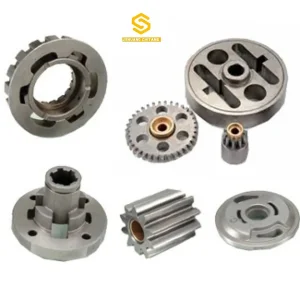
Featured Auto Parts & Powder Metallurgy Products
Engineered components designed for zero-defect automotive manufacturing, compliant with stringent TS16949 & ISO 9001 quality frameworks.





Automotive MIM Technology Evolution & Global Market Trends
How Metal Injection Molding is Redefining Component Weight, Geometry Complexity, and Cost Efficiency in Modern Vehicle Platforms
EV & Hybrid Platform Shift
The global transition toward Electric Vehicles (EVs) and hybrid powertrains demands intense component miniaturization, higher electromagnetic performance, and severe weight reduction. MIM technology enables complex soft magnetic components, e-motor actuators, and thermal management assemblies at net-shape without expensive secondary machining.
Subtractive to Near-Net-Shape
Traditional CNC milling and turning of high-alloy automotive stainless steel result in material yield loss exceeding 60-70%. MIM reduces scrap rates to under 2%, combining fine metal powders (4–20 µm) with binder systems to achieve complex 3D contours, internal channels, and undercut geometries directly out of the sintering furnace.
Zero-Defect Quality Demands
Automotive Tier-1 buyers require CPK > 1.67, full PPAP Level 3 documentation, and 100% automated optical inspection (AOI). Leading MIM suppliers integrate continuous vacuum sintering with closed-loop process monitoring to achieve density levels >98% of theoretical maximum, matching wrought material mechanical properties.
Automotive MIM Alloy Performance & Engineering Matrix
Comparative mechanical properties of specialized MIM alloys for powertrain, chassis, steering, and electrical vehicle actuator applications.
| Alloy Classification | MIM Grade Equivalent | Sintered Density (g/cm³) | Tensile Strength (MPa) | Yield Strength (MPa) | Elongation (%) | Typical Automotive Application |
|---|---|---|---|---|---|---|
| Precipitation Hardening Stainless Steel | MIM 17-4PH / AISI 630 | 7.60 – 7.75 | 1,150 – 1,350 | 1,000 – 1,180 | 4 – 8% | Turbocharger VGT Vanes, VVT Lock Pins, High-Pressure Fuel Rails |
| Austenitic Stainless Steel | MIM 316L / AISI 316L | 7.80 – 7.90 | 520 – 620 | 220 – 280 | 40 – 50% | Exhaust Gas Recirculation (EGR) Sensors, Door Lock Latching Hardware |
| Low Alloy Structural Steel | MIM 4605 (Fe-2Ni-0.5Mo) | 7.55 – 7.70 | 1,400 (Heat Treated) | 1,200 | 2 – 5% | Transmission Selector Forks, Parking Lock Pawls, E-Differential Gears |
| Soft Magnetic Iron-Nickel Alloy | MIM Fe-50Ni | 7.65 – 7.75 | 450 | 200 | 25% | EV Brake-by-Wire Solenoid Cores, Magnetic Actuator Stators |
| Titanium Alloy | Ti-6Al-4V (Ti-Grade 5) | 4.40 – 4.45 | 900 – 1,000 | 820 – 910 | 10 – 14% | Motorsport Connecting Rods, High-Frequency Valve Spring Retainers |
Design for Manufacturability (DFM) Guidelines for Automotive MIM Parts
To maximize cost-effectiveness and dimensional stability during liquid phase sintering, automotive design engineers must adhere to specific geometric rules optimized for MIM feedstock behavior:
- Uniform Wall Thickness: Maintain wall thickness between 0.5 mm and 4.0 mm. Abrupt wall transitions induce differential cooling rates during debinding, causing warpage and internal voids.
- Draft Angles & Radii: Incorporate 0.5° to 1.0° draft angles for deep cavity features. Internal radii should be kept above 0.2 mm to reduce stress concentrations during the 15-20% volumetric shrinkage during sintering.
- Threading & Under-Cuts: External threads can be molded directly without secondary thread chasing. Internal threads can be formed using unscrewing core pins in automated tooling setups.
- Gating & Sintering Support: Locate gates on non-functional, cosmetic surfaces. Design flat reference planes or dedicated sintering runners to support parts during high-temperature thermal processing (1,250°C to 1,380°C).
Comprehensive Automotive Sub-System Solutions
How Tier-1 OEM suppliers integrate MIM components into critical automotive subsystems for high-volume, defect-free production.
Powertrain & Variable Valve Timing (VVT)
VVT solenoids, rotor vanes, variable geometry turbocharger (VGT) levers, and fuel injection nozzles operate under extreme temperature and cyclic stress. MIM 17-4PH and custom nickel-chromium alloys provide outstanding wear resistance, fatigue strength, and high corrosion protection in hot gas environments.
- Endurance up to 1,000,000 thermal cycles
- Consolidated multi-piece assemblies into single MIM parts
- Elimination of expensive multi-axis CNC contour milling
Electric Vehicle (EV) Drive Units & Actuators
EV powertrains utilize MIM soft magnetic components for high-efficiency flux conductors, e-parking lock actuators, differential gear sets, and battery disconnect switches. Ultra-pure iron-silicon and iron-nickel MIM formulations yield high magnetic permeability and minimized hysteresis loss.
- Net-shape planetary gears with AGMA Class 8 accuracy
- High permeability Fe-Ni alloys for low electrical power draw
- Integrated structural clips for lightweight EV battery packs
Safety, Steering & Passenger Comfort
Safety-critical systems demand flawless reliability. MIM produces seatbelt pretensioner ratchets, airbag deployment sensor housings, electronic steering column lock components, and brake-by-wire hydraulic control valves with 100% full density assurance through Hot Isostatic Pressing (HIP).
- 100% X-ray CT scan verification for zero internal porosity
- PPAP Level 3 documentation with full raw material traceability
- High-durability case hardening (up to 60 HRC)
End-to-End MIM Manufacturing Lifecycle
How raw metal powder is transformed into high-precision, dense automotive components through state-of-the-art multi-stage processing.
Feedstock Preparation
Gas-atomized micro metal powders (D50 ~ 10 µm) are homogeneously mixed with thermoplastic binder systems (wax, polymer matrix) at precise volumetric ratios to ensure batch consistency.
Precision Injection
Feedstock is injected into multi-cavity closed-loop electric molds using state-of-the-art CNC injection molding machinery, forming oversized "green parts" with exact geometric details.
Solvent & Thermal Debinding
Green parts undergo catalytic solvent debinding to extract primary binder components, creating a porous "brown part" structural backbone while maintaining mechanical integrity.
Continuous Vacuum Sintering
Brown parts enter controlled atmosphere vacuum furnaces at temperatures up to 1,380°C. Particles fuse into solid metal, shrinking uniformly by 15-20% to achieve >98% density.
| Inspection Dimension | Metrology Equipment Utilized | Automotive Quality Standard / Tolerances |
|---|---|---|
| Dimensional Accuracy | ZEISS 3D Coordinate Measuring Machine (CMM) & Laser Profilometers | ISO 2768-mK / Fine MIM Standard (±0.3% Nominal, down to ±0.015 mm with secondary machining) |
| Internal Porosity & Micro-Structure | Industrial X-Ray Computed Tomography (CT) & Optical Metallographic Microscope | Zero internal voiding in primary stress risers; grain size uniform to ASTM E112 standards |
| Mechanical & Hardness Testing | Instron Universal Tensile Tester & Vickers/Rockwell Microhardness Tester | 100% compliance with MPIF Standard 35 and OEM material specification datasheets |
| Surface Finish & Roughness | Mitutoyo Contact Stylus Profilometer & White Light Interferometer | As-sintered Ra 1.0 – 1.6 µm; polishable down to Ra 0.2 µm via automated mass finishing |
Global Regulatory Compliance & Localized OEM Engineering
Delivering end-to-end supply chain transparency, international environmental compliance, and localized technical support across North America, Europe, and Asia-Pacific.
PPAP Level 1–5 & VDA 6.3 Audit
Our automotive manufacturing protocols strictly conform to AIAG PPAP standards. We provide comprehensive inspection documentation including Process Flow Diagrams, Process Failure Mode and Effects Analysis (PFMEA), Control Plans, Gauge R&R studies, and full Dimensional Results for fast APQP engineering sign-off.
RoHS, REACH & IMDS Declaration
All powder feedstock blends and secondary plating/coating processes comply fully with EU RoHS 3 (Directive 2015/863) and REACH SVHC requirements. Material data is systematically uploaded directly to the International Material Data System (IMDS) for seamless OEM vehicle integration.
JIT Consignment & Buffer Stocking
To insulate global Tier-1 automotive assembly lines against maritime logistics disruptions, we offer localized hub warehousing, VMI (Vendor Managed Inventory), and safety buffer stock maintenance, guaranteeing Just-In-Time (JIT) delivery across global manufacturing centers.
Next-Generation Automotive MIM Technological Horizon
Pioneering advancements in micro-MIM, additive binder jetting synergies, and ultra-high-temperature superalloys for 2025 and beyond.
Micro-MIM & Fine Powder Synthesis
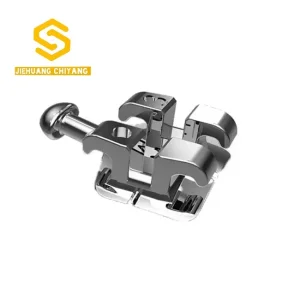
Developing ultra-fine sub-micron metal powders coupled with micro-injection techniques. This enables complex automotive micro-sensor housings, optical connector brackets, and miniature medical-grade surgical implants weighing less than 0.05 grams with sub-10 micron features.
Binder Jetting (BJT) Bridge Prototyping
Combining additive Binder Jetting Technology (BJT) with traditional MIM sintering furnaces allows rapid prototyping of complex metal components in 72 hours without hard tooling, creating a seamless transition from functional prototype to high-volume MIM mass production.
High-Entropy Superalloys
Formulating advanced nickel-based Inconel (Inconel 718, Inconel 625) and Cobalt-Chromium MIM alloys specifically optimized for extreme heat environments in hydrogen fuel cell recirculation turbines and high-performance commercial vehicle turbocharging systems.
Frequently Asked Automotive MIM Technical Questions
Expert technical answers covering tolerance capabilities, tooling lifespans, material equivalencies, and quality documentation.
Additional Wholesale MIM & Precision Metal Components
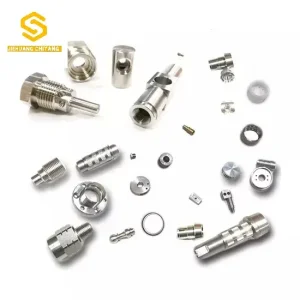
Explore our extended manufacturing range, encompassing medical components, hardware locks, titanium MIM, and custom powder metal gears.






Optimize Your Automotive Components with Expert MIM Engineering
Send us your 3D STEP/IGES models or 2D production drawings. Our senior metallurgical team will return a comprehensive DFM feasibility report, material recommendations, and a competitive wholesale quotation within 24 hours.
Request Free DFM Review & Quotation