
Featured OEM MIM & Powder Metallurgy Catalog
Explore our top-tier precision sintered components, custom MIM parts, and structural powder metal solutions engineered for demanding global industries.

Wholesale Online Exporter Wholesale Custom High Precision MIM Metal Injection Molding Powder Metallurgy MIM Small Metal Parts Manufacturer, Factory
View Product Details
Wholesale China Gold Supplier for OEM High Precision Powder Metallurgy Metal Sintered Parts Manufacturers, Factories
View Product Details
Wholesale Low price for High Precision Customized Sintered Parts for Garden Tool Accessories Manufacturer, Supplier
View Product Details
China 2019 Good Quality Manufacturer Customerization Wear-Resistant Anti-Corrosion Heat-Treatment Aluminium Oxide Sintering Non-Standard Alumina Ceramic Components & Parts Manufacturers, Factory
View Product Details
China 2023 High quality Custom CNC Machine Aluminum Die Casting for Auto Spare Parts Manufacturer, Suppliers
View Product Details
Wholesale Low cost China MIM powder metallurgy factory customized parts power mechanical part Supplier, Factory
View Product Details
Wholesale Best Price for OEM Custom High Precision CNC Machining/Machined/Machine/Milling/Turning/Stamping/Die Casting Metal Aluminum Alloy Auto Spare Machinery Parts Manufacturers, Supplier
View Product Details
China Super Lowest Price Powder Metallurgy Micro Precision Machining for Auto Metal Truck Stainless Stee Accessory Auto Parts by MIM Suppliers, Factories
View Product DetailsExecutive Overview: Paradigm Shift in Precision Metal Manufacturing
A technical synthesis on how Metal Injection Molding (MIM) and advanced binder-fiber feedstock systems overcome traditional CNC machining constraints for high-volume, highly complex metal components.
Understanding Metal Injection Molding (MIM) & Feedstock Dynamics
Metal Injection Molding (MIM) combines the design freedom of plastic injection molding with the structural integrity and material performance of wrought metals. The process begins by atomizing pure elemental metals or pre-alloyed powders (typically under 20 micrometers in size) and mixing them with a multi-component polymer binder matrix—often incorporating structural fibers, paraffin waxes, and thermoplastic resins—to synthesize standardized MIM feedstock.
This feedstock is heated and injected under precise pressure into intricate mold cavities. The resulting "green body" undergoes chemical or thermal solvent debinding to remove the primary binder, yielding a porous "brown body." Subsequent high-temperature vacuum sintering at temperatures near the alloy's melting point causes atomic diffusion, consolidating the metal structure to near-theoretical densities exceeding 95% to 99%.
Bypassing CNC Machine Time & Waste Escalation
Traditional subtractive subtractive manufacturing (5-axis CNC milling, turning, micro-drilling) encounters exponential cost scaling when handling complex 3D contours, internal threads, splines, and undercut features. Material utilization in aerospace or medical CNC machining frequently drops below 10%, leading to massive alloy scrap and costly tool wear.
Conversely, MIM operates as a true Near-Net-Shape (NNS) manufacturing route. Material yield consistently exceeds 95% because unused feedstock and sprues can be re-granulated and reused within strict metallurgical parameters. When annual batch sizes exceed 2,000 to 5,000 units, MIM delivers 30% to 50% unit cost reductions compared to multi-axis CNC machining while maintaining sub-millimeter repeatable tolerances.
Technical Roadmap & Future Horizons: MIM, Fibers & Materials Science
Inside the metallurgical advancements redefining component strength, micro-scale features, bio-compatibility, and binder system chemistry.
Next-Gen Binder Matrices & Green Debinding
The transition from solvent-intensive debinding to environmentally responsible water-soluble and catalytic debinding (e.g., polyoxymethylene-based systems) represents a major breakthrough in process speed. Modern catalytic debinding vaporizes binder components cleanly using gaseous nitric acid atmospheres, accelerating debinding times by up to 80% while eliminating green-body distortion.
Titanium MIM (TiMIM) & Superalloys
Driven by medical implant and aerospace demands, Titanium Metal Injection Molding (TiMIM using Ti-6Al-4V and commercially pure titanium) has overcome historical interstitial oxygen uptake challenges. Utilizing inert argon gas atomization and ultra-clean vacuum sintering furnaces, TiMIM delivers high strength-to-weight ratios with exceptional fatigue resistance equal to forged titanium alloys.
Micro-MIM & High-Aspect-Ratio Geometries
Micro-MIM caters to micro-surgical tools and micro-electronics, handling components weighing under 0.01 grams with wall thicknesses down to 0.15mm. Advanced mold temperature control systems, paired with nano-sized metal powders, prevent powder-binder segregation during high-velocity injection, ensuring complete cavity filling without flash or void formation.
Macro Industry Solutions: Engineering Precision by Application
Targeted manufacturing methodologies designed to meet sector-specific regulatory standards, physical stress limits, and operating environments.
Automotive Electrification & Actuator Hardware
Modern vehicles demand high mechanical reliability under high thermal cycling and dynamic loads. MIM parts excel in Variable Valve Timing (VVT) components, turbocharger vanes, sensor housings, door lock latches, and electric vehicle (EV) battery disconnect switches. Utilizing 17-4PH precipitation hardened stainless steel and Fe-Ni low-alloy steels, these components provide tensile strength exceeding 1,100 MPa while meeting strict IATF 16949 quality standards.
Biocompatible Surgical Instruments & Dental Brackets
Surgical endo-cutters, laparoscopic jaws, biopsy forceps, and orthodontic brackets demand smooth surface finishes, corrosion resistance, and total biocompatibility. Utilizing 316L austenitic stainless steel and custom surgical grade titanium, MIM produces ergonomic, highly detailed metallic instruments that withstand repeated autoclave sterilization without degradation.
Smart Device Hinges, Camera Frames & Wearables
For foldable smartphone display hinges, smartwatch housings, camera bezel rings, and laptop heat-dissipation modules, MIM offers unmatched geometry control in compact layouts. Advanced secondary finishing treatments—such as PVD coating, electroplating, and precision tumbling—achieve high aesthetic quality along with high impact resistance.
High-Torque Planetary Gears & Wear-Resistant Jaws
Industrial cordless tools, pneumatic equipment, and outdoor power machinery rely on MIM and powder metallurgy for planetary gearboxes, impactors, quick-change chuck mechanisms, and hydraulic valve bodies. Case-hardening and stress-relieving heat treatments maximize surface hardness (HRC 58-62) while preserving core toughness to withstand high shock loads.
China Factory 4.0: Supply Chain Resilience & Manufacturing Scale
Combining automated press technology, digital MES quality tracking, and localized raw material integration to ensure long-term supply stability.
Automated Pressing & Continuous Sintering
Our smart manufacturing facility operates automated compaction presses ranging up to 1,000 tons (10,000 kN) capacity alongside continuous mesh-belt sintering furnaces and high-vacuum batch furnaces. Closed-loop sensor monitoring ensures uniform temperature distribution within ±2°C, preventing thermal warping and shrinkage variation across high-volume production runs.
Localized Material Synthesis & Cost Agility
Located in the Ningbo industrial hub, our facility benefits from direct supply chains for ultra-fine carbonyl iron powder, stainless steel alloys, specialized binders, and custom ceramic powders. Localized raw material synthesis insulates global procurement managers from international material price spikes and shortens raw material lead times to under 48 hours.
Digital MES & End-to-End Traceability
Every batch of MIM feedstock, green molding lot, debinding cycle, and sintering run is logged in our Manufacturing Execution System (MES). Optical sorting machines paired with automated 3D Coordinate Measuring Machines (CMM) ensure 100% inspection of critical functional dimensions, backed by complete material test reports (MTR) and certificate of conformance documentation.
Localization Support, Regulatory Compliance & Quality Protocols
Comprehensive engineering communication, strict intellectual property protections, and international compliance standards for global risk mitigation.
Global NDA & IP Safeguards
Protecting client intellectual property is fundamental to our enterprise operations. We enforce bilateral Non-Disclosure Agreements (NDAs) prior to receiving 2D/3D CAD files. Internal file access is restricted using encrypted servers, ensuring proprietary part geometries, mold tooling designs, and trade secrets remain fully protected.
RoHS, REACH & Conflict Minerals Compliance
All elemental powders, binder formulations, and secondary plating treatments strictly adhere to European REACH, EU RoHS 3.0, and international Conflict Minerals regulations. Complete material safety data sheets (MSDS) and environmental compliance certifications accompany every sample and mass production batch shipment.
Seamless Cross-Border Engineering Support
Our dedicated bilingual sales engineering group bridges the gap between global design engineering teams and factory floor technicians. Offering rapid 48-hour DFM (Design for Manufacturability) turnarounds, timezone-aligned project reporting, and straightforward logistics management, we help streamline product development from concept to mass production.
Global Procurement Decision Matrix: MIM vs. Alternative Processes
An engineering comparison helping procurement managers and mechanical engineers evaluate process selection across cost, geometry, tolerances, and batch volumes.
| Evaluation Parameter | Metal Injection Molding (MIM) | Conventional Powder Metallurgy (PM) | 5-Axis CNC Machining | Aluminum / Zinc Die Casting |
|---|---|---|---|---|
| Optimal Geometry Complexity | Extreme (3D Contours, Undercuts, Internal Holes) | Moderate (2.5D Pressing direction shapes) | High (Limited by cutting tool access) | High (Thin walls, ribs, enclosures) |
| Typical Weight Range | 0.1g to 250g (Max 286g produced) | 10g to 2,000g+ | Unlimited (1g to 100kg+) | 10g to 10,000g+ |
| Sintered Relative Density | 95% – 99% (Wrought-like mechanical properties) | 80% – 90% (Can be resin impregnated) | 100% (Solid wrought stock material) | N/A (Casting porosity risk) |
| Standard Tolerances | ±0.3% to ±0.5% (Down to ±0.01mm secondary) | ±0.2% to ±0.4% | ±0.005mm to ±0.02mm | ±0.5% to ±1.0% |
| Material Utilization Rate | > 95% (Feedstock recyclable) | > 95% (Powder directly compacted) | 10% – 40% (High metal scrap yield) | > 90% (Runners/Sprues remelted) |
| Economic Order Quantity (MOQ) | 2,000 – 5,000+ units | 5,000+ units | 1 to 500 units | 2,000+ units |
Frequently Asked Questions (FAQ) for Engineering & Sourcing Teams
Clear, straightforward technical answers addressing common manufacturing, quality control, mold tooling, and lead time questions.
Additional Sintered Components & Die Casting Portfolio
Explore our extended OEM manufacturing capabilities across specialized zinc die casting, ceramic molding, and high-precision mechanical assemblies.

China China New Product Die Castings Anodized Powder Coating Precision Pressure Parts Enclosure Zinc Alloy Aluminum Die Casting Manufacturer, Suppliers
View Product Details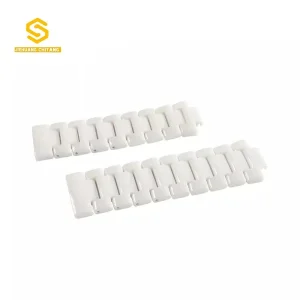
China Ceramic injection molding casting Watch Band For Wrist Strap Manufacturer, Factory
View Product Details
China One of Hottest for Factory OEM Metal Die Casting Part Aluminum Die Casting CNC Machining Large Flywheel Housing Aluminum Replaces Manufacturers, Supplier
View Product Details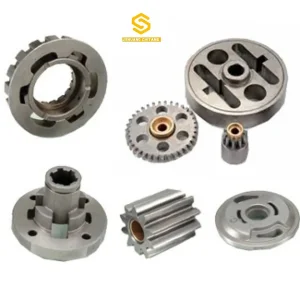
China MIM Metal Injection Molding 316L Stainless Steel textile machinery part mould Suppliers, Factories
View Product Details
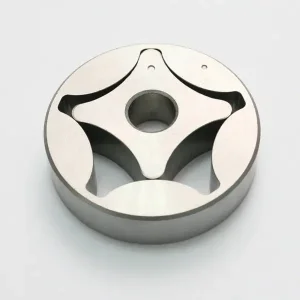
China Discountable price Metal Injection Molding MIM Sintered Parts Manufacturer for Precision Machinery Steel Components Manufacturers, Factories
View Product Details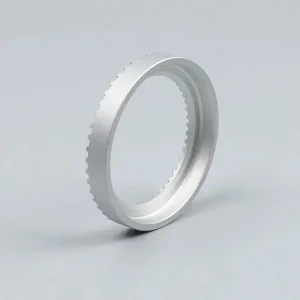

Accelerate Your Precision Manufacturing Procurement
Send your CAD models and 2D engineering drawings to our engineering team. Receive a comprehensive engineering DFM evaluation and transparent unit quotation within 48 hours.