
Featured Sintered Components & Precision Parts
Explore our certified manufacturing output spanning powder metallurgy, MIM, and OEM auto-grade sintered solutions.






Executive Summary & Macro Market Drivers
Information gain whitepaper on the critical role of sintered reluctor rings in modern active safety architecture.
In modern automotive braking dynamics, the Anti-lock Braking System (ABS), Electronic Stability Control (ESC), and Autonomous Emergency Braking (AEB) rely fundamentally on precise, zero-latency wheel speed telemetry. Positioned directly on the wheel hub assembly, axle shaft, or brake disc rotor, the sintered ABS tone ring (frequently designated as a reluctor ring or impulse ring) serves as the physical target generator for magnetic wheel speed sensors (passive variable reluctance or active Hall effect / anisotropic magnetoresistive sensors).
As vehicle platforms transition rapidly toward heavy Electric Vehicles (EVs) and advanced Hybrid Powertrains (HEVs), regenerative braking systems demand instant, ultra-precise wheel speed feedback to manage torque vectoring and motor deceleration safely. Traditional stamped sheet-metal or fully CNC-machined reluctor rings fail to meet the combined demands of high volume production, complex magnetic tooth profile geometry, tight radial runout tolerances, and unit-cost efficiency. Powder metallurgy (PM) sintering has emerged as the definitive global manufacturing process for automotive tone rings.
Technical Breakdown: Metallurgy & Powder Processing
Understanding material selection, compacting physics, and thermal sintering parameters for optimal flux modulation.
Material Formulations
Engineered iron-copper (Fe-Cu) and iron-nickel (Fe-Ni) alloy powders (e.g., MPIF FC-0208 or FN-0205) optimized for high magnetic flux permeability, yield strength, and edge retention across extreme temperature cycles (-40°C to +180°C).
Compaction & Density Control
High-tonnage automated press compaction ensures uniform green density throughout complex window-slot tooth designs. Final sintered density exceeding 6.8 to 7.2 g/cm³ eliminates internal voids and provides robust magnetic pulse signal definition.
Sintering Atmosphere & Sizing
Continuous mesh-belt sintering under endothermic or dissociated ammonia atmospheres creates strong metallic bonds. Secondary re-striking (sizing/coining) achieves precise pitch tolerances and Total Indicator Reading (TIR) runout below 0.03 mm.
Manufacturing Process Comparison for ABS Reluctor Rings
| Process Parameter | Powder Metallurgy (Sintered) | Stamped Sheet Metal | Full CNC Machining |
|---|---|---|---|
| Material Utilization | 95% - 98% (Near-Net Shape) | 60% - 70% (High Scrap) | 30% - 40% (Heavy Chip Waste) |
| Tooth Profile Accuracy | Ultra-High (Sintering Sized) | Medium (Edge Burrs/Draft) | High (Slow Production Time) |
| Magnetic Performance | Homogeneous, Tailored Alloy | Variable Stress-Induced Anisotropy | Good, but High Raw Material Cost |
| Radial Runout (TIR) | < 0.03 mm Post-Coining | 0.08 - 0.15 mm (Warping Risk) | < 0.02 mm |
| Mass Production Unit Cost | Lowest (Automated High-Volume) | Medium | Extremely High |
Global Enterprise Procurement Demands & OEM Risk Mitigation
How leading Tier-1 suppliers evaluate factory capabilities, quality management, and global supply chain resilience.
Strategic sourcing directors and automotive purchasing executives face distinct operational challenges when procuring wholesale sintered ABS tone rings. A failure in a single wheel speed sensor reluctor ring can trigger dashboard ABS warning indicators, deactivate electronic stability control, and force costly safety recalls. Therefore, evaluating OEM factories requires strict adherence to international quality protocols.
IATF 16949 & VDA 6.3 Compliance
Top-tier manufacturing facilities must operate certified quality management systems specifically audited for automotive production. PPAP Level 3 documentation—including FMEA (Failure Mode and Effects Analysis), Control Plans, and full Dimensional Inspection Reports—is non-negotiable for production approval.
Anti-Corrosion Surface Finishing
Located in the wheel well environment, ABS tone rings are constantly exposed to de-icing salt sprays, road slush, sand abrasion, and humidity. Leading manufacturers provide advanced anti-corrosion coatings including Geomet, Zinc-Flake plating, Black Oxide, or E-coating capable of exceeding 1,000 hours in neutral salt spray testing (ASTM B117 / ISO 9227).
Beyond material specifications, enterprise procurement managers evaluate supplier longevity, tooling development turnaround times, and total cost of ownership (TCO). Direct factory engagement with specialized Chinese powder metallurgy hubs provides global buyers with a competitive edge, combining lower tooling investment costs with world-class sintering technology and automated optical sorting systems.
Technology Roadmap & Future Outlook (2025–2035)
Next-generation active sensing, smart bearing integration, and ultra-high-density sintering developments.
The automotive industry is undergoing a dual shift toward electrification and autonomous driving (Level 3+ ADAS). These technological advances place new, rigorous demands on tone ring design and wheel speed sensing technology:
- Higher Tooth Count & Resolution: Autonomous braking algorithms require faster pulse frequencies at low speeds. Sintering mold design has advanced to compress finer tooth pitches without micro-cracks at the root diameter.
- Integration into Hub Bearing Units (Gen 3 Bearings): Tone rings are increasingly press-fitted directly onto double-row ball/roller wheel bearing inner or outer rings, requiring sub-micron press-fit interface tolerances.
- Warm Compaction & High-Temperature Sintering: Next-gen warm compaction methods achieve densities approaching 7.4 g/cm³ without secondary forging, significantly enhancing dynamic fatigue resistance against shock loads.
- Hybrid Magnetic Encoder Rings: While elastomer-based magnetic encoder rings exist, sintered metallic tone rings remain the dominant choice for heavy-duty commercial trucks, off-highway vehicles, and rugged SUV axle applications due to unmatched mechanical wear resistance.
Global Compliance & Localization Support
Ensuring seamless integration across North American, European, and Asian tier-1 automotive supply networks.
Environmental Compliance
100% compliant with EU RoHS and REACH mandates. Heavy-metal-free, hexavalent chromium-free electroplating and organic coating processes safeguard cross-border environmental clearance.
VMI & Logistics Integration
Flexible commercial terms including Vendor-Managed Inventory (VMI), Just-In-Time (JIT) delivery hubs across Europe and North America, and safety buffer stock retention guarantees zero line-stoppages.
Traceability & Serial Numbering
Full batch serialization, laser-etched matrix coding, and material lot certificate archiving (20+ years retention) allow granular traceability from iron powder batch to final installed chassis.
Additional Manufacturing Capabilities & Products
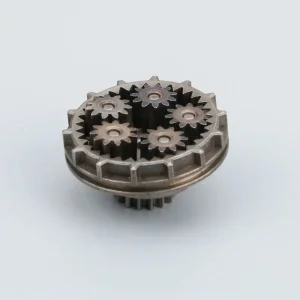
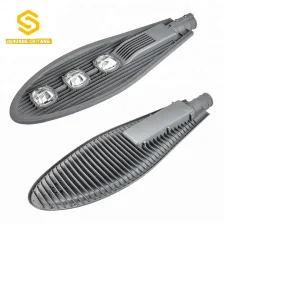
Comprehensive OEM manufacturing capabilities in powder metallurgy, die casting, plastic tooling, and precision assembly.




Technical & Sourcing FAQ (Frequently Asked Questions)
Expert answers addressing magnetic specifications, dimensional tolerances, order quantities, and OEM tooling.
Sintered ABS tone rings predominantly utilize iron-copper steel alloys (such as MPIF FC-0208) or nickel-steel alloys (MPIF FN-0205). These formulations provide an optimal balance between magnetic signal generation (high magnetic permeability), microstructural strength, and cost efficiency. Stainless steel powder blends (316L/434L) are also available for extreme marine or corrosive environments.
Following thermal sintering, parts undergo a high-precision sizing (coining) process using dedicated tungsten-carbide calibration dies. This secondary pressing step ensures inner diameter tolerances, tooth-to-tooth pitch uniformity, and keeps Total Indicator Reading (TIR) radial runout below 0.03 mm, preventing signal jitter in the sensor ECU.
We supply Geomet coating, Zinc-Flake plating, electro-coated (E-coat) paint, and black oxide treatments. Geomet and Zinc-Flake coatings are preferred by global Tier-1 OEMs as they pass up to 1,000 hours of neutral salt spray testing (ASTM B117) without causing hydrogen embrittlement.
The standard Minimum Order Quantity (MOQ) for custom sintered tone rings is typically 5,000 pieces per batch due to automated press setup requirements. Tooling design and initial PPAP sample submission generally take 30 to 45 days, followed by mass production delivery in 20 to 30 days depending on volume.
Yes. Our engineering team conducts full Design for Manufacturability (DFM) reviews on customer 2D (PDF) and 3D (STEP) CAD models. Powder metallurgy tooling allows custom tooth profiles, internal press-fit splines, chamfers, and indexing notches to be formed directly during compaction without secondary machining.