
Featured Sintered Component Portfolio
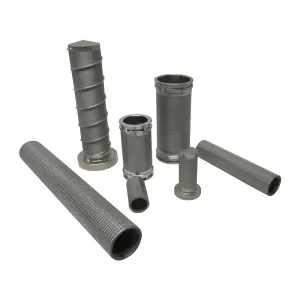
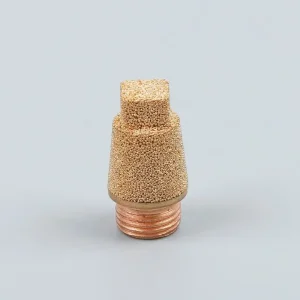
Engineered powder metal bearings, MIM components, and custom alloy parts built to IATF 16949 standards.





Engineering Principles of Sintered Self-Lubricating Bearings
Understanding capillary tribology, controlled porosity sintering, and alloy matrix optimization for zero-maintenance OEM applications.
Controlled Interconnected Porosity
Sintered bronze and iron bearings feature a precisely calibrated porous structure (15% to 25% by volume). Formed through high-pressure powder compaction and solid-state diffusion sintering, these interconnecting micro-cavities serve as a built-in lubricant reservoir.
Hydrodynamic Capillary Action
Upon shaft rotation, frictional heat and hydrodynamic pressure draw vacuum-impregnated oil from the pores to form a continuous microscopic oil film. When rotation ceases, capillary forces draw the lubricant back into the sintered matrix, preventing leakage and dry startups.
Superior Tribological Performance
By blending copper, tin, iron, graphite, and solid lubricants (MoS2), custom sintered bearings deliver outstanding PV values up to 2.5 MPa·m/s, reducing wear rates, dampening acoustic vibration, and extending equipment service life beyond 50,000 operational hours.
Why Partnering with China OEM Manufacturers Delivers Strategic Leverage
Integrated manufacturing clusters, raw material scaling, and rapid tool production redefine global industrial competitiveness.
Vertically Integrated Ecosystem in Ningbo & Eastern China
Chinese powder metallurgy hubs integrate atomized metal powder preparation, high-speed multi-cavity press tooling, high-temperature mesh belt sintering, and vacuum oil impregnation under one regional umbrella. This geographic density drastically reduces logistical lead times and eliminates multi-vendor markups.
Advanced Process Control & Automation
Modern Chinese suppliers utilize state-of-the-art CNC closed-loop hydraulic compaction presses and automated optical sorting systems. Controlled atmosphere sintering (dissociated ammonia or nitrogen-hydrogen blends) guarantees zero oxidation, consistent density distribution (6.4 - 7.2 g/cm³), and exceptional dimensional tolerance stability (IT6 to IT8).
Solving the Core Concerns of Global Enterprise Buyers
Addressing total landed cost, engineering DFM feedback, quality verification, and intellectual property protection.
Early Stage DFM & Material Selection
Global engineering teams require early Design for Manufacturability (DFM) input. Top suppliers offer finite element analysis (FEA) and press simulation to optimize chamfers, keyways, and wall thickness ratios, eliminating cracking risks prior to steel cutting.
Comprehensive Testing & PPAP Level 3
To eliminate cross-border quality risks, Tier-1 suppliers provide complete Production Part Approval Process (PPAP) documentation, including CMM dimensional reports, radial crushing strength analysis (ISO 2739), material spectroscopy, and salt-spray corrosion certification.
Tariff & Supply Chain Resilience
Leading wholesale partners manage multi-port shipping logistics (FOB Ningbo/Shanghai, CIF, DDP) and maintain dual-sourcing material pipelines, shielding overseas buyers from geopolitical tariffs and freight volatility.
Localized Application Scenarios for Sintered Bearings
From automotive steering sub-assemblies to medical surgical instruments, sintered bearings deliver reliable mechanical motion.
Automotive EPS & Steering Racks
Engineered iron-copper sintered bushings handle extreme radial impact loads and reverse torque in Electric Power Steering (EPS) systems, providing noise-free vibration damping (NVH) under severe road conditions.
Micro-Motors & Home Appliances
Bronze spherical self-aligning bearings (SAE 841 equivalent) power fan motors, HVAC actuators, and washing machine drives. Their micro-porous oil reserve guarantees maintenance-free operation for over a decade.
Industrial Power Tools & Automation
Heavy-duty iron-nickel sintered flanged bearings withstand high-RPM continuous friction and axial shock in cordless angle grinders, rotary hammers, and automated robotic end-effectors.
Medical Equipment & Surgical Tools
Non-magnetic 316L stainless steel MIM and sintered bearings are deployed in dialysis pump actuators, surgical drill articulation gears, and sterilizable diagnostic tables where corrosion resistance is critical.
Comparing Bearings: Sintered vs. Cast Bronze vs. Machined Steel
Data-driven evaluation of material efficiency, production speed, and total operational cost.
| Performance Characteristic | Sintered Bronze/Iron (Powder Met) | Cast Bronze Bushings | Machined Solid Steel |
|---|---|---|---|
| Lubrication Requirement | Self-Lubricating (Internal Oil Pore Reserve) | Requires Continuous External Grease/Oil | Requires Constant External Oil Circulation |
| Material Utilization Rate | 95% - 98% (Near-Net Shape) | 60% - 70% (Loss via casting gates) | 30% - 50% (High scrap from CNC chip removal) |
| High-Volume Production Cost | Lowest (Automated compaction cycle < 3s) | Moderate (Secondary machining mandatory) | High (Prohibitive machining cycle times) |
| Dimensional Consistency | Excellent (IT6 - IT8 die precision) | Moderate (Depends on casting shrinkage) | High (Depends on CNC calibration) |
| Noise & Vibration (NVH) | Superior Damping (Porous matrix absorbs sound) | Fair (Solid metal amplifies resonance) | Poor (Prone to metal-on-metal noise) |
Next-Generation Trends in Sintered Metallurgy
Emerging technological shifts driving high-performance self-lubricating component manufacturing.
Lead-Free Eco-Friendly Bronze Formulations
Global environmental mandates (RoHS 3 / REACH) are driving the phase-out of traditional leaded bronze (CuSn10Pb10). Manufacturers are adopting novel Copper-Tin-Bismuth and Copper-Tin-Graphite alloys that deliver equivalent anti-galling performance without toxic heavy metals.
Synthetic & Fluorinated Nanofluids Impregnation
Advanced vacuum oil impregnation now utilizes synthetic PFPE (perfluoropolyether) oils and nanoparticle additives (graphene, nano-MoS2). This allows sintered bearings to operate across extreme temperatures ranging from -50°C to +200°C without lubricant degradation.
Hybrid Powder Injection Molding (MIM) Convergence
Where complex 3D geometry exceeds traditional uniaxial press capability, manufacturers combine Powder Metallurgy (PM) density control with Metal Injection Molding (MIM) flexibility, producing complex self-lubricating structural linkages in a single process step.
Global Compliance & Localized Support Framework
Stringent quality control protocols back every batch of wholesale sintered bearings delivered globally.
IATF 16949 & ISO 9001:2015 Certification
Manufacturing facilities operate under strict automotive quality management systems. Every batch undergoes rigorous statistical process control (SPC), tracking density variations, radial crush strength, and pore volume percentage to guarantee zero defect delivery across millions of units.
Localized Engineering & Custom Warehousing
To reduce international supply chain lead times, China OEM exporters collaborate with regional logistics hubs in Europe, North America, and Southeast Asia. Options include Vendor-Managed Inventory (VMI), safety stock buffering, and on-site engineering consultations for smooth product integration.
Frequently Asked Questions (Q&A)
In-depth technical and commercial answers for OEM buyers and engineering procurement teams.
Additional OEM Custom Components
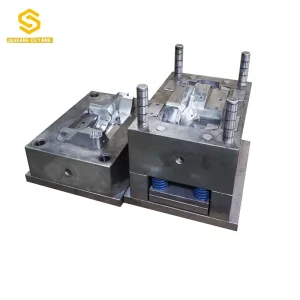
Explore our extended manufacturing line covering CNC machining, zinc/aluminum die casting, and MIM structural parts.







Ready to Optimize Your Bearing Procurement & Unit Costs?
Send us your 2D/3D CAD drawings (STEP, IGES, PDF) today. Receive an engineer-reviewed DFM analysis and transparent bulk quotation within 48 hours.