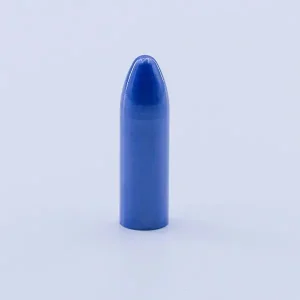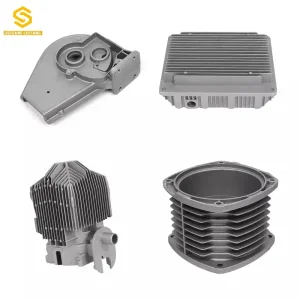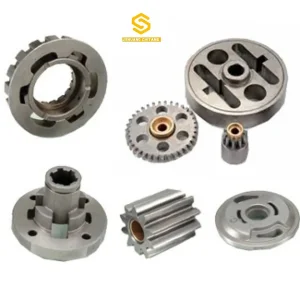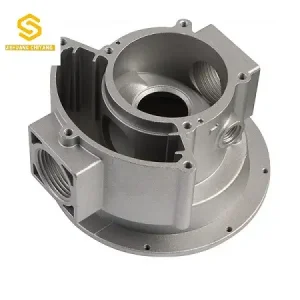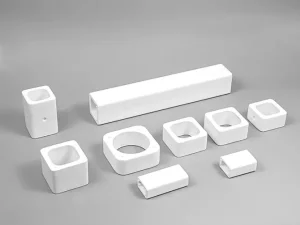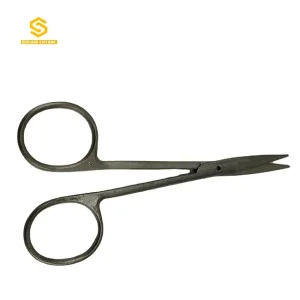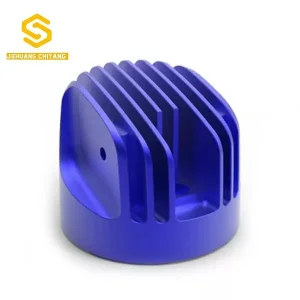
Featured OEM Sintered & Powder Metallurgy Products
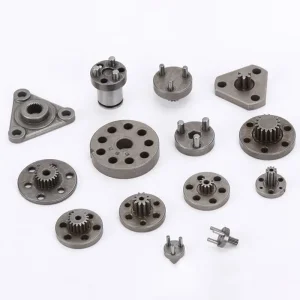
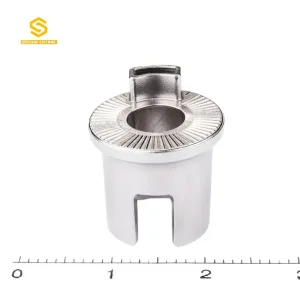
Explore our factory-direct precision-sintered components, MIM parts, gears, and custom hardware manufactured to IATF 16949 standards.
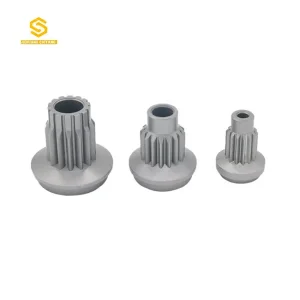
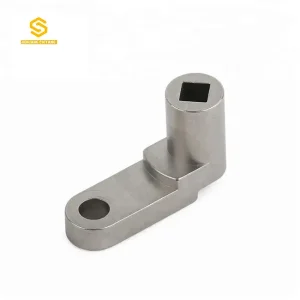
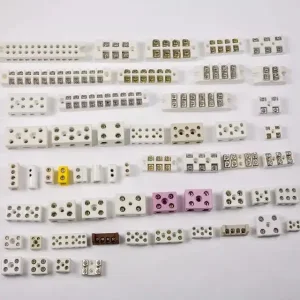
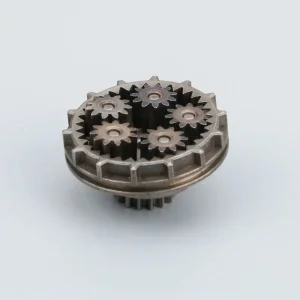
1. Executive Summary & Global Sintered Metal Industry Landscape
In modern high-volume mechanical engineering, the transition from traditional subtractive CNC machining and investment casting toward advanced sintered metal components represents a major shift in production economics and material efficiency. As global original equipment manufacturers (OEMs) demand tighter dimensional tolerances, higher mechanical performance, and reduced total cost of ownership (TCO), powder metallurgy (PM) and Metal Injection Molding (MIM) have emerged as the foundational pillars of high-precision component supply chains.
Sintering—a thermal process that fuses metallic powder particles below their melting point via atomic diffusion—enables the mass production of complex 3D net-shape geometries. This process eliminates up to 90% of material scrap generated by traditional milling and turning operations. According to recent industrial powder metallurgy data, modern sintered steel, stainless steel, bronze, and titanium alloy parts achieve raw material utilization rates exceeding 95%, while simultaneously reducing energy consumption per part by up to 60% compared to forged and machined alternatives.
The global market for wholesale sintered metal components is expanding rapidly across critical sectors, including e-mobility drivetrain assemblies, surgical robotics, industrial planetary gearboxes, fluid control systems, and aerospace hardware. Sourcing managers and chief technology officers (CTOs) must balance component density, microstructural integrity, alloy selection, and unit cost. Selecting an established China sintered metal components supplier equipped with multi-axis automated presses, continuous atmosphere sintering furnaces, and comprehensive DFM (Design for Manufacturability) engineering support is key to achieving a resilient, cost-optimized global supply chain.
2. Metallurgical Principles & Manufacturing Engineering Depth
Achieving superior mechanical properties—such as high yield strength, fatigue resistance, dynamic wear tolerance, and dimensional stability—requires deep expertise in powder metallurgy physics. The quality of a sintered component depends on every stage of manufacturing, from micro-powder atomization to final thermal treatment.
Powder Atomization & Morphology
The manufacturing process begins with gas or water atomization to produce spherical or irregular metallic powders. Particle size distribution (typically 5 to 150 microns) determines packing density, green strength, and sintering shrinkage dynamics.
High-Pressure Compaction
Using CNC-controlled multi-axial hydraulic and mechanical presses, metal powders blended with organic lubricants are compacted under 400 to 800 MPa of pressure. This forms a high-density "green part" with precise initial geometry.
Solid-State Diffusion Sintering
In atmosphere-controlled mesh-belt or vacuum furnaces heated to 1120°C–1350°C, atomic diffusion occurs across particle boundaries. Pores shrink and spheroidize, forming strong metallic bonds without melting the core structure.
Comparison of Sintered Metal Alloys & Standards
| Material Grade | MPIF / ISO Standard | Sintered Density (g/cm³) | Tensile Strength (MPa) | Primary Industrial Applications |
|---|---|---|---|---|
| Fe-Cu-C Steel (FC-0208) | MPIF 35 / ISO 5755 | 6.8 - 7.4 | 350 - 650 | Automotive gears, structural brackets, oil pump rotors |
| Nickel Steel (FN-0205) | MPIF 35 / ISO 5755 | 7.0 - 7.5 | 450 - 850 | High-load planetary gears, power tool sprockets |
| 316L Stainless Steel | MIM-316L / ISO 22068 | 7.6 - 7.9 | 520 - 620 | Medical surgical instruments, valve bodies, marine fittings |
| 17-4PH Stainless Steel | MIM-17-4PH / ASTM B883 | 7.5 - 7.8 | 900 - 1150 | Aerospace latches, defense hardware, high-strength locks |
| Titanium Alloy (Ti-6Al-4V) | Ti-MIM / ASTM B348 | 4.4 - 4.5 | 860 - 960 | Biomedical implants, aerospace structural fasteners |
3. Localized Application Scenarios across Global Industries
Sintered metal components are essential to modern manufacturing. They provide reliable performance across demanding mechanical environments worldwide. Below are real-world application scenarios demonstrating how specialized sintered parts deliver value in global production systems.
Automotive & E-Mobility Drivetrains
In North American and European automotive manufacturing, sintered sector gears, Variable Valve Timing (VVT) rotors, Electric Power Steering (EPS) pulleys, and planetary gearboxes are widely used. Sinter-hardened iron-nickel components handle high dynamic fatigue, reduce gear tooth backlash, and support lower NVH (Noise, Vibration, Harshness) targets in electric vehicle power units.
Medical Technology & Surgical Robotics
In medical manufacturing hubs across Switzerland, Germany, and the US, Metal Injection Molding (MIM) is the leading process for complex 316L and 17-4PH stainless steel instruments. Applications include scalpel blade holders, endoscopic biopsy grasper jaws, and surgical stapler linkages. MIM achieves sub-millimeter geometric features without costly 5-axis CNC machining.
Industrial Automation & Robotics Joints
Modern industrial robotic arms and automated machinery rely heavily on multi-stage planetary gear systems, harmonic drive components, and wear-resistant bushings. Precision powder metallurgy sector gears provide uniform surface hardness (up to HRC 60 following heat treatment) and consistent torque transmission, ensuring long service life in high-duty industrial environments.
Fluid Control & Renewable Energy Filtration
Porous sintered metal filter elements—manufactured from sintered bronze, SS316L, or Hastelloy—offer precise pore size control (0.5 to 100 microns). These elements are critical for high-pressure gas filtration, hydrogen fuel cell fluid diffusion, and aggressive chemical processing where polymer or paper filters fail.
4. Technological Roadmap & Future Outlook (2025–2035)
The powder metallurgy and sintered metals sector is evolving through advances in digital manufacturing, material science, and clean energy processes. OEMs partner with JHMIM to stay ahead of these key industry transformations:
Green Sintering & Decarbonization
Transitioning from traditional natural gas atmosphere furnaces to zero-emission hydrogen-fueled continuous sintering furnaces. This shift drastically reduces the carbon footprint per ton of sintered parts, helping global buyers meet ESG compliance goals.
Binder Jetting & MIM Hybrids
Combining additive manufacturing (3D Binder Jetting) with traditional debinding and sintering techniques enables tool-less prototype verification in 72 hours. This streamlines the bridge to full-scale MIM mold tooling.
AI Computer Vision Inspection
Integrating in-line 3D laser scanners and AI optical neural networks into the compacting and ejection stages. This system automatically flags sub-surface micro-cracks and density variations before final sintering.
5. China Factory Supply Chain Resilience & Operational Efficiency
Sourcing wholesale sintered metal components from Ningbo, China provides significant strategic advantages for global engineering businesses. Ningbo is an international hub for metallurgy, tooling design, and precision manufacturing, offering exceptional industrial cluster efficiency.
Industrial Cluster & Material Access
Our 28,000 m² Ningbo manufacturing plant is located near top-tier elemental metal powder atomization plants, heat treatment facilities, and secondary machining workshops. Raw materials, custom tooling steel, and specialty lubricants can be sourced and processed within a 50 km radius. This cluster reduces supply chain lead times and lowers logistics overhead.
Rapid Tooling & Production Cycles
While European or North American mold building often takes 8 to 12 weeks, JHMIM delivers engineer-reviewed DFM reports within 48 hours and finishes T1 sample tooling in 25 to 30 days. Our in-house toolroom features high-speed CNC centers, wire EDM, and mirror spark erosion machines, enabling fast turnarounds for custom components.
6. Quality Assurance, Global Compliance & Localized Support
Delivering high-reliability components to global clients requires rigorous quality control and strict adherence to international environmental and material compliance standards.
IATF 16949 & ISO Certifications
Our operations follow audited IATF 16949 (Automotive Quality Management Systems) and ISO 9001:2015 frameworks. Every batch includes full PPAP Level 3 documentation, CPK control charts, and lot-level raw material heat traceability.
Advanced Inspection Lab
Our 30+ member QC team operates Hexagon CMMs, Keyence optical profile measurement systems, metallographic grain analyzers, universal tensile testers, density balances, and salt-spray corrosion test chambers.
RoHS, REACH & Conflict Minerals
All sintered metal compositions comply fully with EU RoHS 3 and REACH regulations. Materials are verified 3TG conflict-free, supported by SGS material certification reports included with every export shipment.
7. Frequently Asked Questions (Technical & Commercial FAQ)
Get fast, expert answers to key engineering and procurement questions regarding wholesale custom sintered metal components.
Additional Specialized Sintered & Molded Components
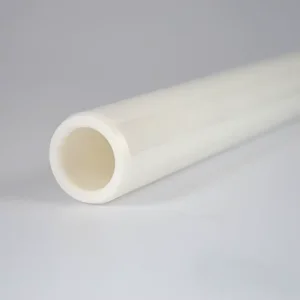
Review our full range of custom ceramics, die-cast hardware, and precision injection molded components available direct from our factory.