
High-Precision Sintered & Molded Components Showcase
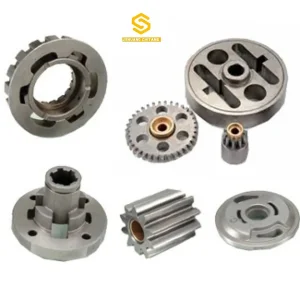
Explore our custom powder metallurgy, metal injection molding (MIM), and die-casting structural parts manufactured for global B2B OEMs.







Global Industry Status & Metallurgy Paradigm Shift
In modern clinical surgery, specialized micro-cutting, and ultra-clean laboratory environments, scalpel handles are no longer viewed merely as manual holding tools; they are critical instruments requiring extreme mechanical damping, fatigue resistance, and total bio-inertness. Globally, the surgical instrument market is undergoing a structural transition from traditional stainless steel (AISI 304, 316L, 420) to high-strength, lightweight Grade 5 Titanium Alloys (Ti-6Al-4V) and Extra Low Interstitial Titanium (Ti-6Al-4V ELI).
As medical OEMs and industrial knife manufacturers scale up production, sourcing custom-designed handles via conventional 5-axis CNC machining incurs astronomical material waste—often turning up to 80% of expensive titanium billet into mill shavings. By leveraging Titanium Metal Injection Molding (TiMIM) integrated with secondary CNC micro-finishing, our factory provides a game-changing 30% to 50% unit cost reduction while keeping dimensional tolerances strictly within ±0.02mm to ±0.05mm.
Material Performance Comparison: Titanium Alloys vs. Traditional Stainless Steels
| Performance Parameter | Ti-6Al-4V (Grade 5 Titanium) | Ti-6Al-4V ELI (Grade 23) | Stainless Steel 316L | Stainless Steel 420 |
|---|---|---|---|---|
| Density (g/cm³) | 4.43 (Ultra-Light) | 4.43 (Ultra-Light) | 8.00 (Heavy) | 7.75 (Heavy) |
| Tensile Strength (MPa) | 950 – 1050 | 860 – 960 | 515 – 620 | 650 – 700 |
| Biocompatibility (ISO 10993) | Exceptional (Bio-Inert) | Supreme (Implant Grade) | Moderate (Nickel Sensitivity Risk) | Fair (Corrodes in Harsh Acids) |
| Magnetism (MRI Safety) | Non-Magnetic (MRI Safe) | Non-Magnetic (MRI Safe) | Slightly Magnetic when cold worked | Magnetic |
| Fatigue & Autoclave Life | > 1,500 Cycles | > 2,000 Cycles | ~ 500 Cycles | ~ 300 Cycles (Pitting Risk) |
Localized Application Scenarios & Specialized Use Cases
Our wholesale titanium scalpel handles (#3, #4, #7, #9, and micro-fit custom geometries) serve high-demand surgical, industrial, and cleanroom sectors worldwide.
Microsurgery & Ophthalmic Surgery
In delicate ophthalmic, neurosurgical, and plastic surgery procedures, surgeon hand fatigue must be virtually eliminated. Titanium scalpel handles reduce handle weight by over 40%, giving surgeons unmatched tactile feedback and tremor-free blade manipulation during intricate incisions.
Intra-operative MRI (iMRI) Environment
Unlike stainless steel handles which distort magnetic imaging and pose ferromagnetic safety risks inside operating rooms with active MRI equipment, Grade 5 Titanium is completely non-magnetic, ensuring 100% MRI compatibility and patient safety.
Electronics Cleanroom & Semiconductor Trimming
High-end fiber-optic cable cleaving, wafer-level tape trimming, and PCB micro-rework require non-contaminating, chemical-resistant scalpel handles. Titanium handles withstand aggressive solvents (IPA, acetone, concentrated acids) without shedding micro-particles.
Aerospace & Composites Cutting
In aerospace manufacturing cleanrooms, technicians hand-trim carbon fiber pre-preg layers. Titanium's high flexural rigidity prevents handle deformation under heavy manual pressure, guaranteeing clean, razor-precise cuts across tough technical textiles.
Forensic Pathology & High-Level Autopsy
Handling highly infectious biological specimens demands medical equipment capable of enduring extreme chemical sterilization (steam autoclaving, hydrogen peroxide plasma, ethylene oxide) without surface degradation or fatigue micro-cracking.
Veterinary Surgery & Field Medicine
Field veterinary surgeons operating in rough environments benefit from titanium's exceptional fracture toughness and rust immunity, providing long-term reliability even when exposed to mud, blood, and saltwater environments.
Technical Roadmap: TiMIM Engineering & Future Outlook
Manufacturing Titanium Scalpel Handles requires mastering reactive metal sintering. Titanium has a fierce affinity for oxygen, nitrogen, and carbon at elevated temperatures. Our Ningbo factory utilizes state-of-the-art TiMIM technical workflows to ensure pore-free, full-density (>98% theoretical density) titanium components.
Core Metallurgy Process Steps for Custom OEM Titanium Handles:
1. Spherical Ti-6Al-4V Powder Atomization & Custom Polymeric Binder Formulation.
2. High-Pressure Injection Molding into Multi-Cavity Precision Molds.
3. Solvent & Catalytic Debinding to Remove Polymer Matrix without Carbon Residue.
4. Vacuum Sintering at 1300°C–1350°C in High-Purity Argon Atmosphere (<10 PPM O2).
5. Secondary 5-Axis CNC Milling for Blade Fit Slot & Micro-Knurling Tactile Surface Finishing.
6. Type II Electrochemical Titanium Anodization (Color-Coding for Handle Sizes #3, #4, #7).
Advanced Surface Ergonomics & Micro-Knurling
Traditional handle cross-hatching can trap biological debris, making cleaning difficult. Our injection molding technology forms anti-slip micro-textures directly into the titanium body. These rounded tactile grooves maximize grip stability even with wet surgical gloves while enabling fast rinse-off during ultrasonic bath sterilization.
Future Outlook: RFID & Smart Sensor Integration
Next-generation surgical suites demand asset tracking and usage auditing. We are developing hollow-core TiMIM handles engineered with sealed internal cavities to embed passive RFID tags or micro-force sensors. This enables automated counting in operating rooms to prevent retained surgical items (RSI) and monitor tool sterilization cycles automatically.
China Factory Supply Chain Resilience & Cost-Efficiency
Located in Ningbo's advanced industrial manufacturing hub, our factory combines raw material sourcing, mold making, TiMIM sintering, CNC finishing, and surface plating under a single Quality Management System. This localized vertical integration gives overseas buyers an unbeatable combination of speed, scale, and cost control.
Rapid DFM & Mold Lead Time
Complete Design for Manufacturability (DFM) analysis in 24 hours. Custom mold building within 20–25 days, supported by in-house metal 3D printing for functional prototyping.
Unmatched Bulk Cost Savings
Near-net-shape molding minimizes raw titanium waste. High-speed automated sintering runs lower per-piece prices by up to 50% compared to European or US machine shops.
100% Raw Material Traceability
Every batch of titanium powder undergoes X-ray fluorescence (XRF) spectrometry and ICP-OES analysis. Material test certificates (MTC) supplied with every shipment.
Flexible MOQ & Scale-Up
We support prototype sampling, pilot batches (from 2,000 pcs), up to mass production runs exceeding 500,000 units annually with zero compromise on precision.
Global Regulatory Compliance & Localized B2B Support
Exporting medical devices and precision technical instruments into regulated markets like North America, the European Union (EU MDR 2017/745), Japan, and the Middle East requires strict compliance documentation. Our quality control system is structured around ISO 13485 (Medical Devices Quality Management) and ISO 9001.
Strict NDA Protection
We strictly honor proprietary intellectual property. Non-Disclosure Agreements (NDAs) are signed before drawing exchange. Custom toolings are customer-owned and segregated in locked mold vaults.
Comprehensive QA Reports
Each delivery lot includes First Article Inspection (FAI) reports, CMM full-dimensional inspection records, surface roughness Ra measurements, and salt-spray corrosion test logs.
Custom Branding & Marking
High-resolution fiber laser marking for customer logo, catalog numbers, lot codes, and Direct Part Marking (DPM) barcodes for automated hospital inventory scanning.
OEM Wholesale Titanium Scalpel Handles FAQ
Everything you need to know about custom ordering, material grades, manufacturing lead times, and quality standards.
Precision Engineering Parts & MIM Component Catalog
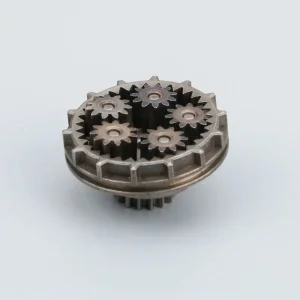
Examine our broader manufacturing capabilities in stainless steel, titanium, powder metallurgy gears, and aluminum die-casting hardware.





Start Your Custom Titanium Scalpel Handle Project Today
Send us your 2D (PDF) and 3D (STEP/IGES) CAD drawings. Our senior metallurgy engineering team will analyze your project and provide a comprehensive quotation & DFM review within 48 hours.